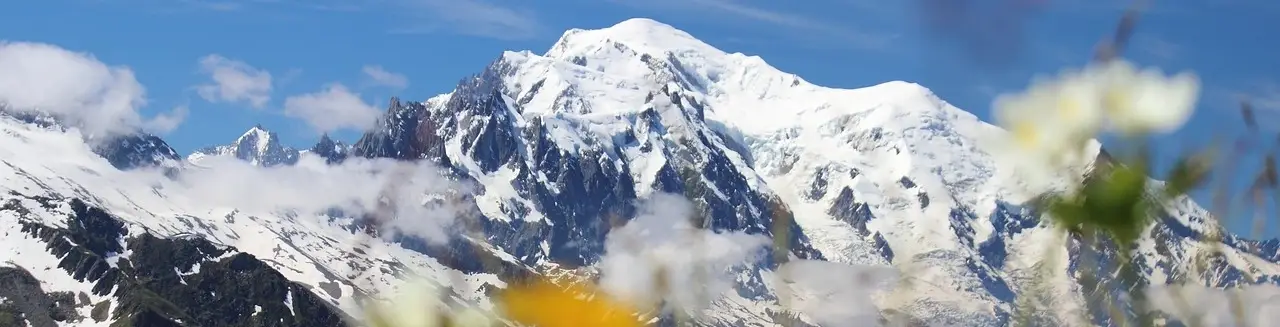
Tour du Mont Blanc
Detailed itineraries, refuge guides, and everything you need to know to hike around Mont Blanc.
Tour du Mont Blanc Itineraries
Stages, variants, and complete itineraries around Mont Blanc - with real field data.
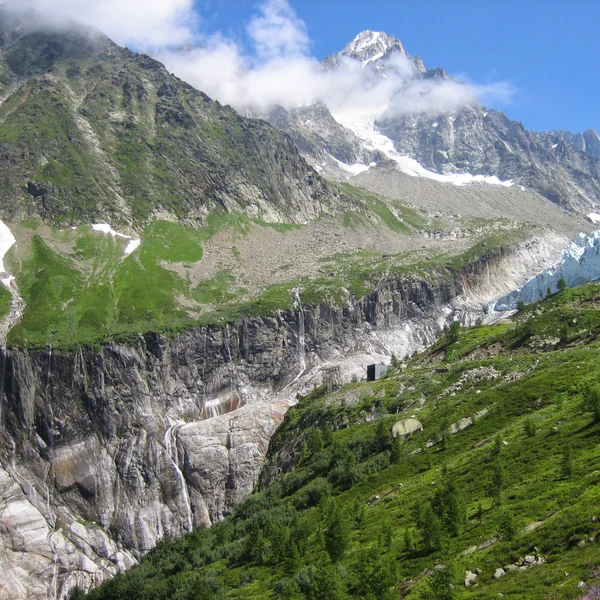
The Argentière Glacier
An easy walk from Lognan, above Argentière, to the viewpoint over the Argentière Glacier serac fall. Check whether the Grands-Montets cable car is running: it was closed all summer 2026.
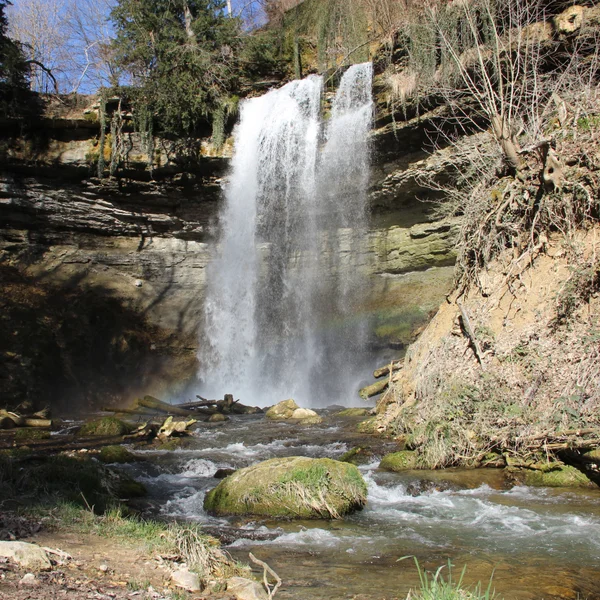
The Cascade du Dard
The Cascade du Dard is a short forest walk in the Chamonix valley to a 20 m66 ft waterfall at 1,233 m4,045 ft. An easy rest-day outing from the TMB.
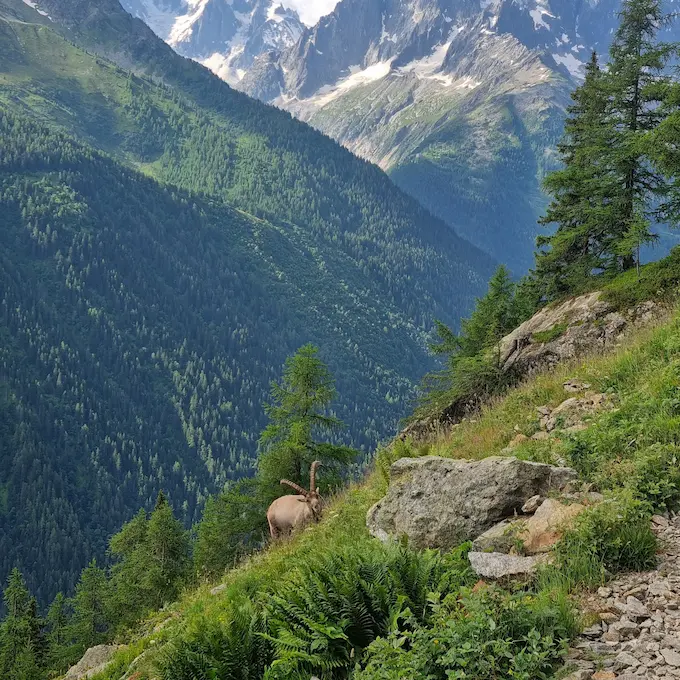
Tour du Mont Blanc in 7 Days
The classic TMB itinerary in 7 stages through France, Italy, and Switzerland. 157 km98 mi of spectacular trails around the Mont Blanc massif.
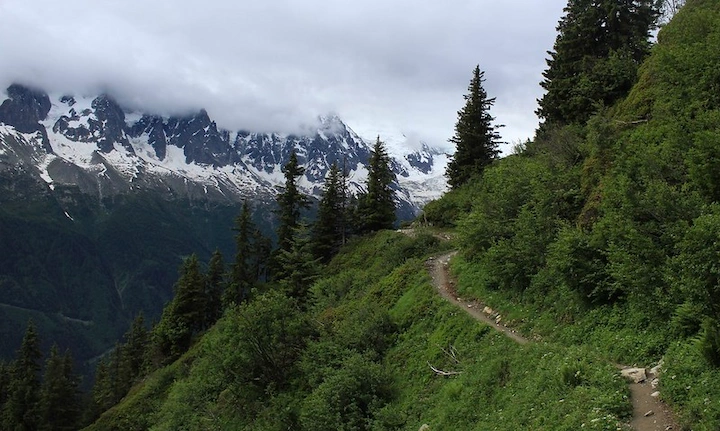
Tour du Mont Blanc in 10 Days
The TMB itinerary in 10 stages to fully enjoy the alpine scenery. A comfortable pace through France, Italy, and Switzerland.
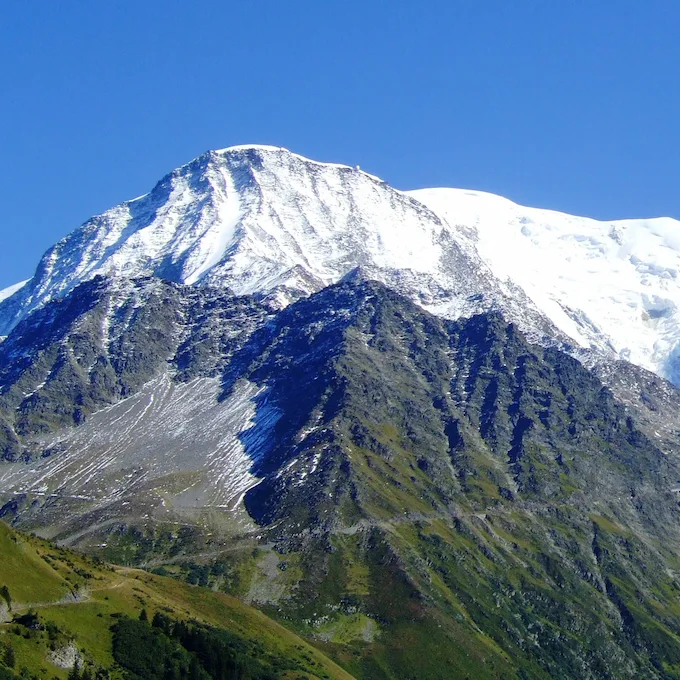
The Col de Tricot
The Col de Tricot variant leaves the classic TMB at the Col de Voza and reaches Les Contamines via the Chalets de Miage and Le Truc, with views of the Aiguille de Bionnassay and the Dômes de Miage.
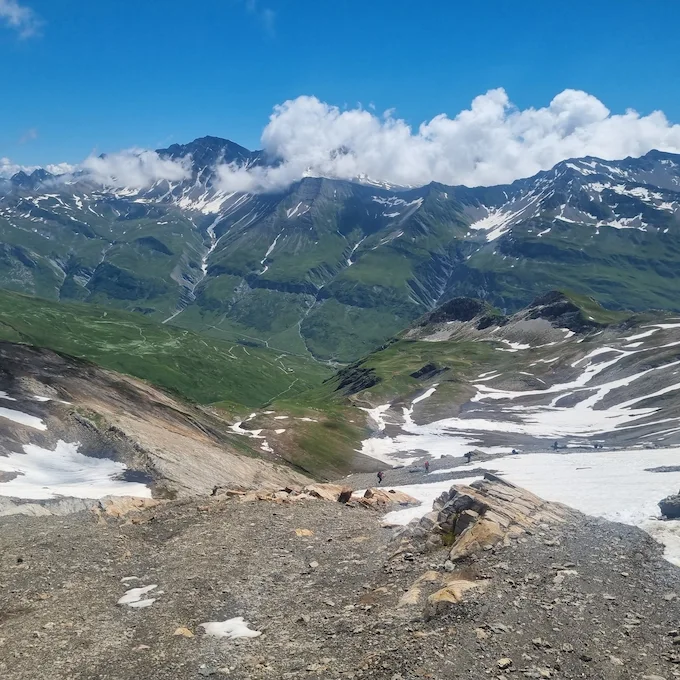
The Col des Fours
The Col des Fours variant, between the Col de la Croix du Bonhomme and the Ville des Glaciers, offers exceptional panoramic views of the Mont Blanc massif.
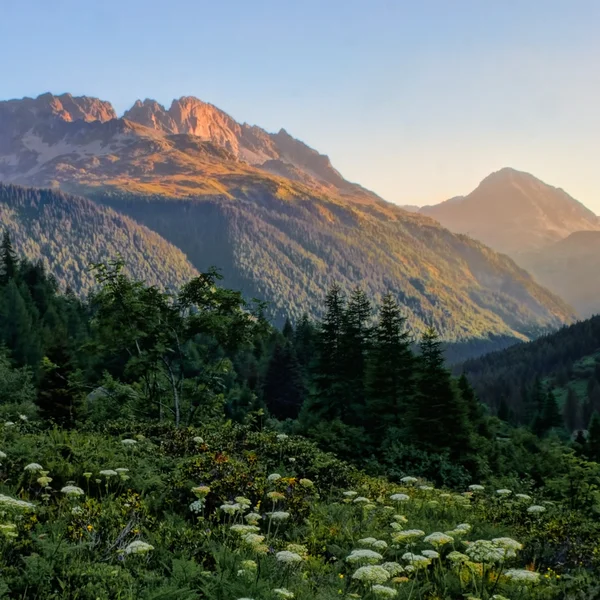
The Col des Montets
The Col des Montets variant crosses the Aiguilles Rouges Nature Reserve between Argentière and Vallorcine, with panoramic views of the Mont Blanc massif from the opposite side of the Chamonix valley.
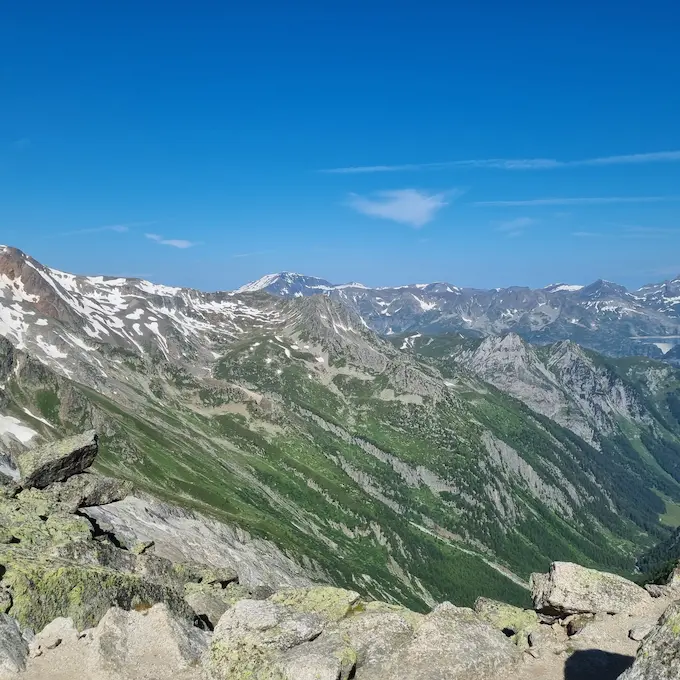
The Fenêtre d'Arpette
Often considered one of the most beautiful variants of the TMB, and one of the most demanding: a wild pass at 2,665 m8,743 ft with views of the Trient Glacier.
What is the Tour du Mont Blanc?
The Tour du Mont Blanc (TMB) is a long-distance hiking trail (GR) that circles the entire Mont Blanc massif, whose summit stands at 4 810 m15,781 ft according to the French mapping agency IGN. The circuit crosses three countries: France, Italy and Switzerland, covering 170 km105.6 mi with a cumulative elevation gain of 10 000 m32,808 ft. Espace Mont-Blanc puts the number of hikers who walked it in 2025 at around 75,000.
The trail connects mountain refuges where you sleep and eat between stages. You pass from French glaciers to Italian pastures in the Val Ferret, then through the Swiss Valais valleys before returning to Chamonix. Anti-clockwise, starting from Les Houches, is "the most classic and best waymarked" direction, say the TMB hut wardens (translated from French).
We handle the logistics so you can focus on the trail. Get in touch with our experts.
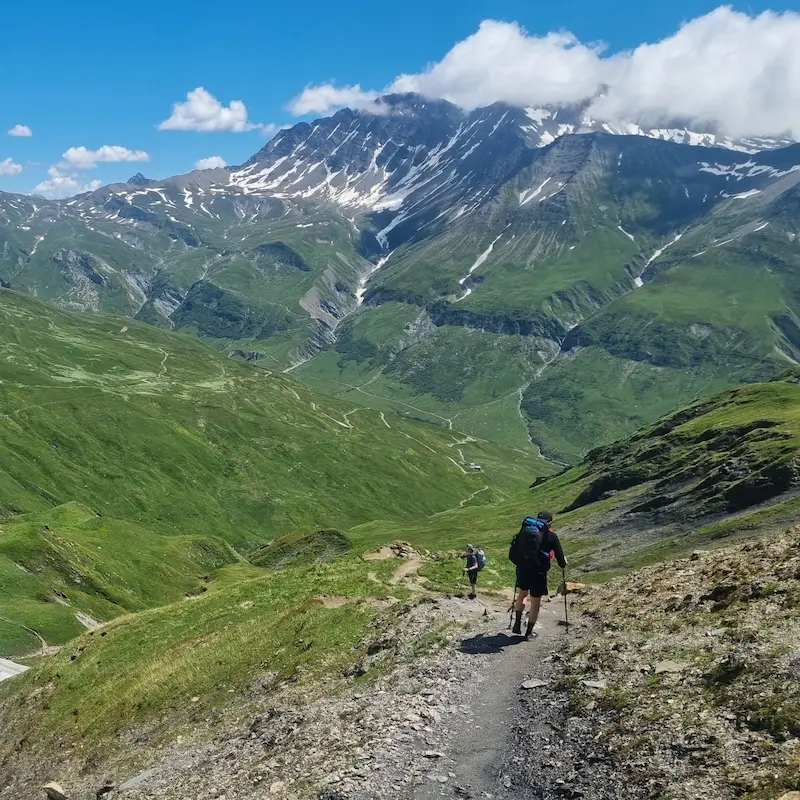
Direct contact with local TMB experts

All our tips and info for your TMB
Practical advice to prepare your Tour du Mont Blanc - from gear to bookings.
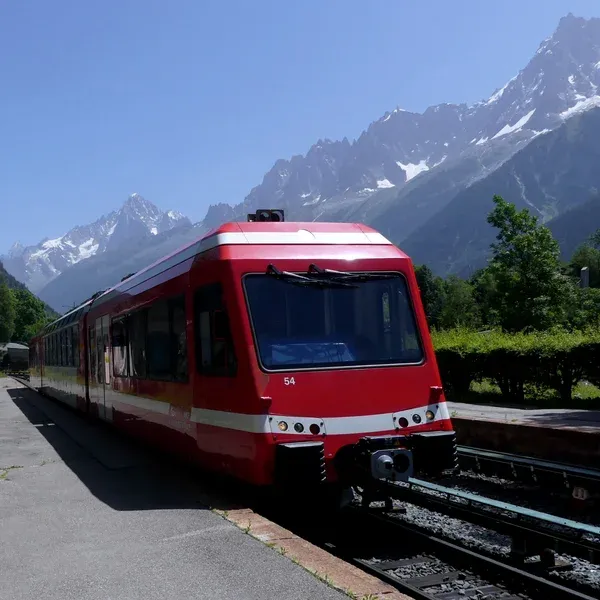
How to get to the Tour du Mont Blanc: trains, buses and shuttles
Train, bus and shuttle options for reaching the start of the Tour du Mont Blanc, getting around valley by valley, shortening a stage by lift and returning to your starting point.
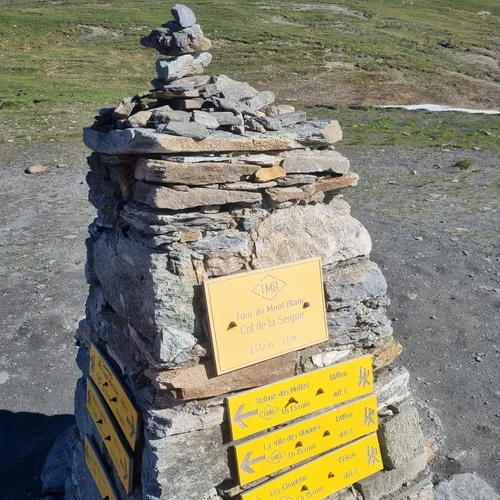
Tour du Mont Blanc Passes: Altitudes, Stages and Variants
The passes of the Tour du Mont Blanc one by one: altitude, the highest point of the route and of the variants, what makes each crossing memorable and when the snow has melted.
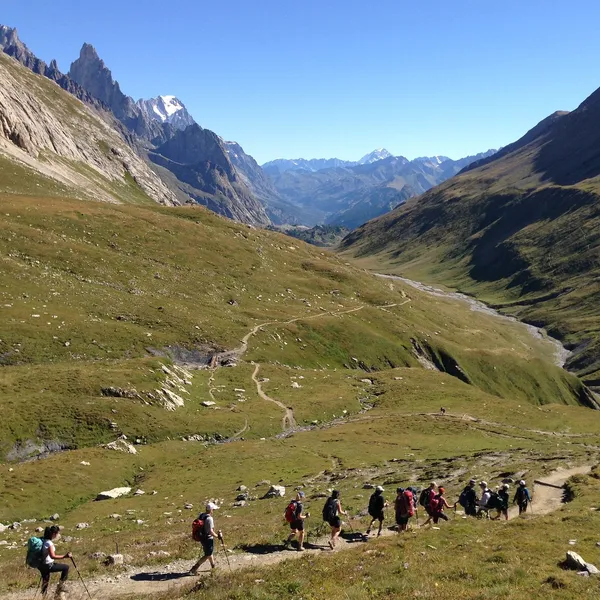
Tour du Mont Blanc with Kids: Age, Stages and Family-Friendly Huts
The recommended age, the number of days, the stages that are too long for children, the huts, hotels and formats suited to families, and which sections of the Tour du Mont Blanc to do first.
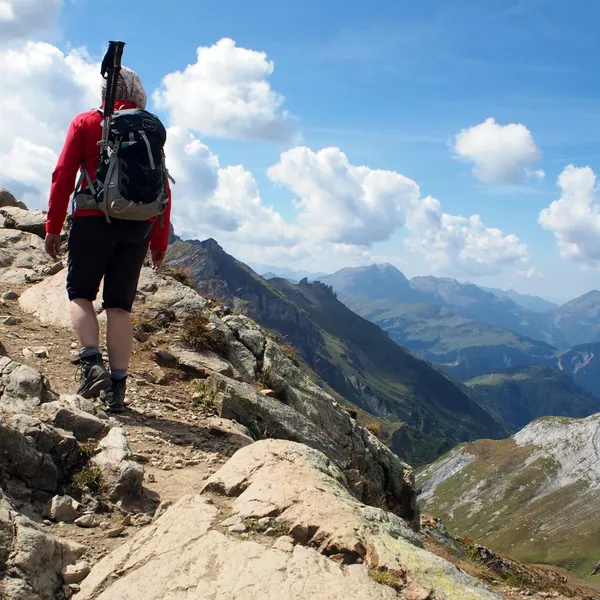
How Many Days to Hike the Tour du Mont Blanc?
How many days to allow for the Tour du Mont Blanc: the usual range, what each format means per day, how your setup (refuge, camping, hotel, luggage transfer) shapes it, and the days worth keeping for sightseeing.
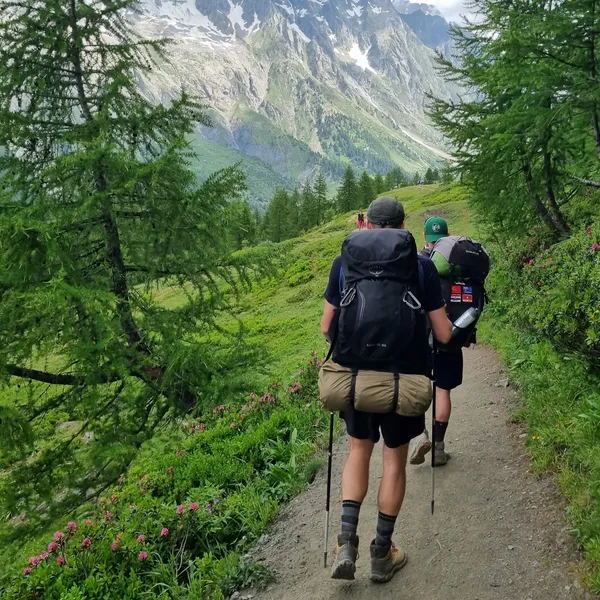
How Do You Train for the Tour du Mont Blanc?
Training for the Tour du Mont Blanc: the fitness level it takes, the level it takes for your format, a three-month training calendar, what a beginner needs to know, and the safety rules to apply before heading into the mountains.
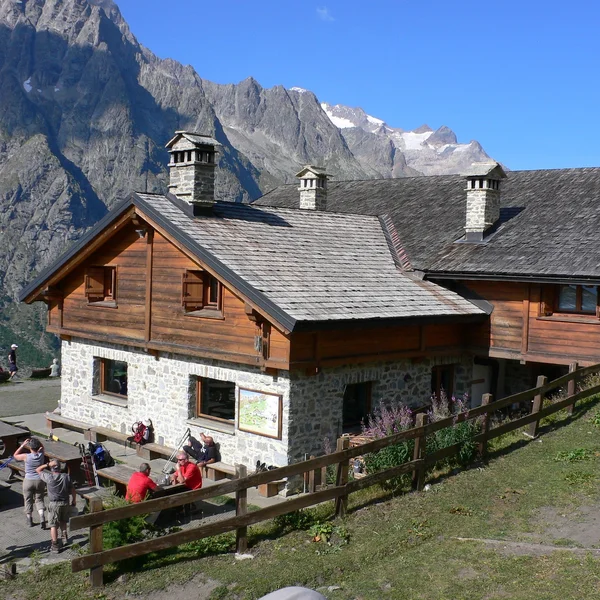
Where to Stay on the Tour du Mont Blanc?
Refuge, gîte, hotel, campsite or bivouac: what awaits you each evening on the Tour du Mont Blanc, the price of a half-board night, the refuges we recommend, the bivouac rules and how to book your nights for summer 2027.
Tour du Mont Blanc 2027: Will Italy and Switzerland Require Bookings Too?
The 2027 booking requirement is French. Where Courmayeur and the Valais communes stand, what Aosta Valley law and Swiss regulations already impose, and what is still undecided.
Tour du Mont Blanc 2027: Everything That Changes
What the Mont Blanc charter agreed in September 2026 changes: mandatory bookings across the whole French crossing, the end of wild camping, checks on reservations, and transfers limited to trekking packs.
Tour du Mont Blanc Cost: Full Budget Breakdown
The complete cost breakdown for the Tour du Mont Blanc: refuge nightly rates by country, transport to Les Houches, gear investment, agency fees, and the practical tips that actually save money.
What Is the Most Beautiful Part of the Tour du Mont Blanc?
Not every section of the TMB is equally spectacular. A no-nonsense guide to the most beautiful part of the circuit and the sections that disappoint - so you know where to focus your energy.
How many days do you need for the Tour du Mont Blanc?
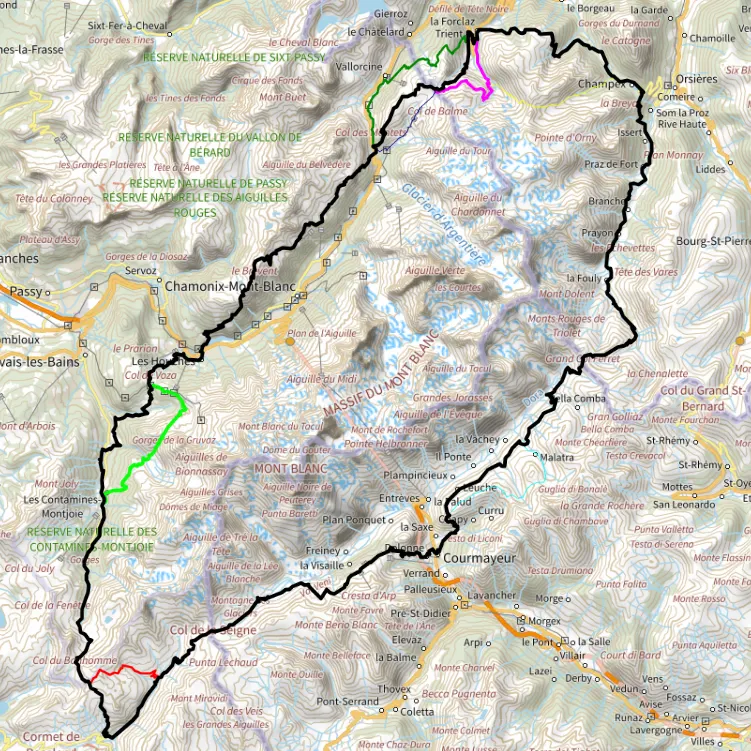
The TMB most often takes 7 to 10 days, anywhere from 5 to 12 days depending on your level and the variants you choose. In 7 days, you cover the classic circuit with stages of around 24 km14.9 mi and 1,400 m4,593 ft of elevation gain per day - that is demanding. In 10 days, the pace drops to around 17 km10.6 mi per day, which leaves time to add variants like the Fenetre d'Arpette.
The waymarks change from country to country (white and red in France, yellow in Italy), but the green "TMB" logo is common to the whole route. The anti-clockwise direction (Les Houches -> Les Contamines -> Courmayeur -> Champex -> Chamonix) is the classic one. Its passes include the Col de la Seigne (2 516 m8,255 ft) and the Grand Col Ferret (2 536 m8,320 ft), on the Italy-Switzerland border, according to the Aosta Valley tourism website; the Fenetre d'Arpette variant climbs to 2 665 m8,743 ft.
What is the total elevation gain on the Tour du Mont Blanc?
The cumulative elevation gain on the classic TMB is approximately 10 000 m32,808 ft over the full circuit. On a 7-day schedule, that works out to roughly 1 400 m4,593 ft of ascent per day. Over 10 days, the daily average drops to 1 000 m3,281 ft, a format the TMB hut wardens find "often more comfortable" (translated from French).
Among the demanding stages, in our view: the climb to the Col du Bonhomme (2 329 m7,641 ft), and the ascent to the Grand Col Ferret (2 536 m8,320 ft) from Rifugio Elena. The Fenetre d'Arpette variant (2 665 m8,743 ft) is one of the most demanding variants on the route.
The TMB in numbers
| Total distance | 170 km105.6 mi |
| Cumulative elevation gain | ~10 000 m32,808 ft |
| Duration | Most often 7 to 10 days (around 60 hours of walking) |
| Main passes | Col de la Seigne - 2 516 m8,255 ft / Grand Col Ferret - 2 536 m8,320 ft / Fenetre d'Arpette - 2 665 m8,743 ft (variant) |
| Start / Finish | Les Houches (classic start) or Chamonix (full loop) |
| Countries crossed | France, Italy, Switzerland |
| Difficulty | Difficult |
Tour du Mont Blanc Refuges
The refuges where you sleep, eat, and recharge between TMB stages.
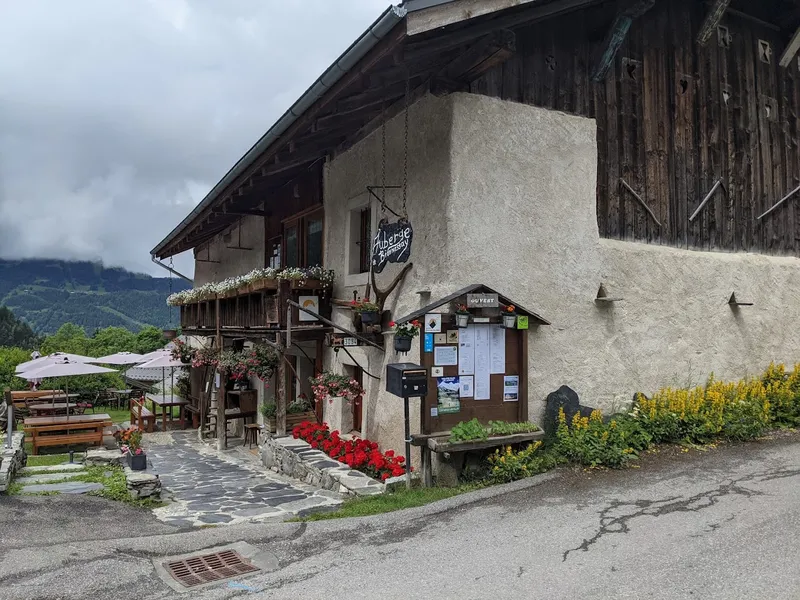
Auberge De Bionnassay (1320m), Saint Gervais - France
Traditional guesthouse in Saint Gervais, a popular stop on the Tour du Mont Blanc.
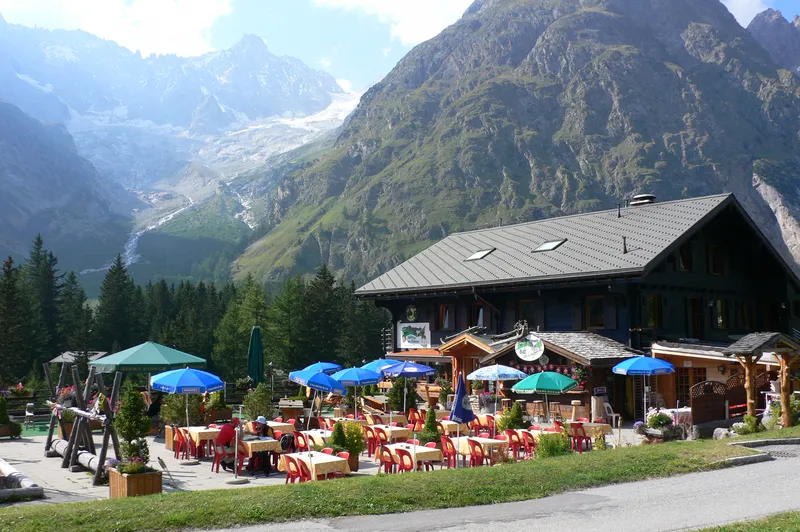
Auberge Des Glaciers (1600m), La Fouly - Switzerland
Welcoming guesthouse in La Fouly, Switzerland, offering mountain comfort on the TMB.
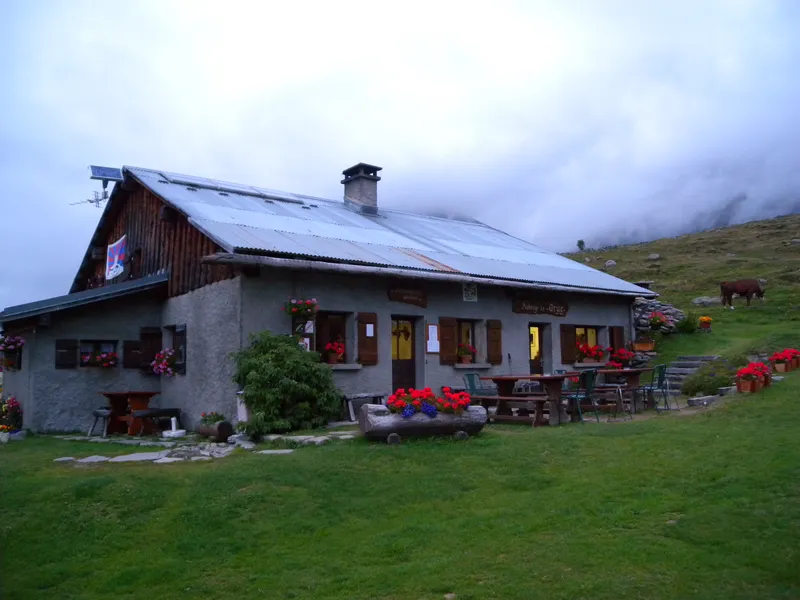
Auberge Du Truc (1750m), Saint Gervais - France
Alpine guesthouse perched at 1750m with exceptional panoramic views of the Mont Blanc massif.
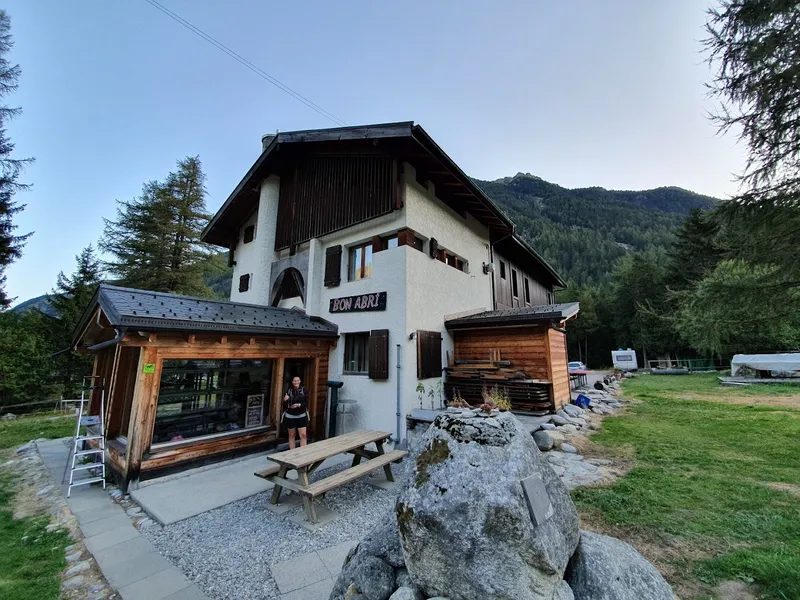
Auberge Gite Bon Abri (1444m), Champex-Lac - Switzerland
A peaceful haven in Champex-Lac, Switzerland, ideal for recharging on the TMB.
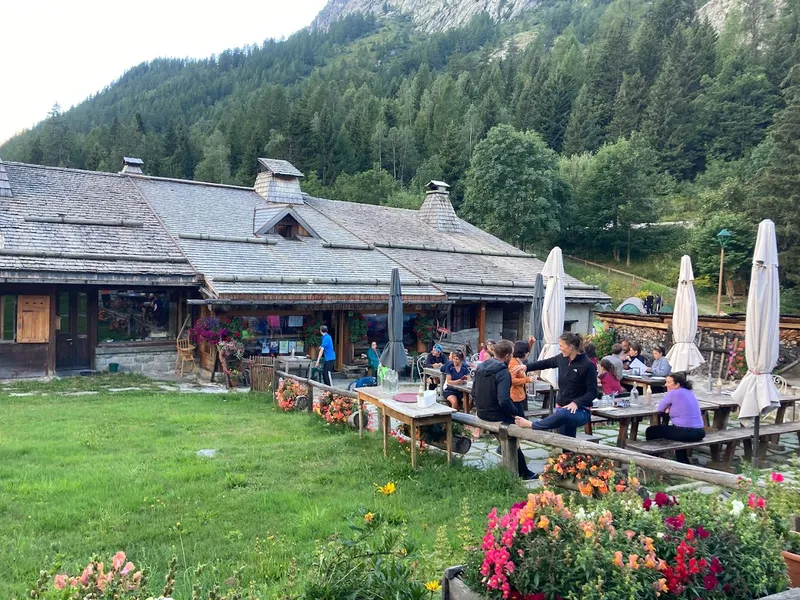
Auberge La Boerne (1395m), Chamonix - France
Historic 18th century chalet in Chamonix, offering warm accommodation on the TMB.
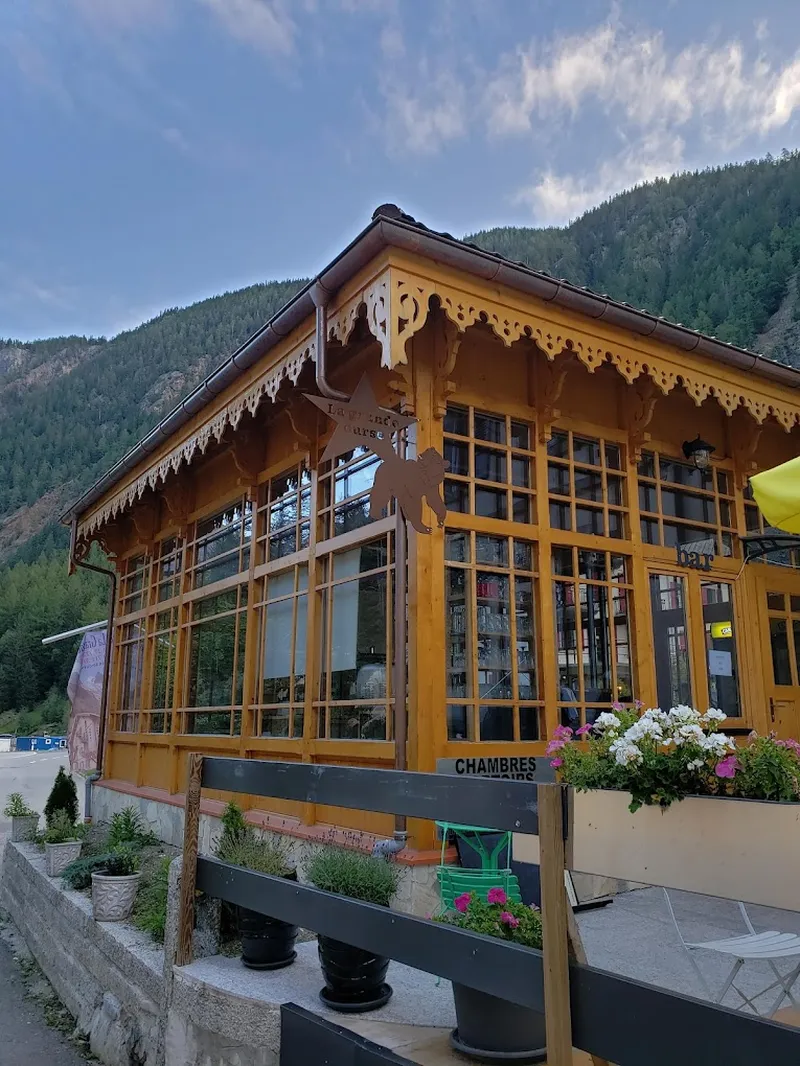
Auberge La Grande Ourse (1300m), Trient - Switzerland
Charming guesthouse in Trient, Switzerland, offering diverse accommodation options on the TMB.
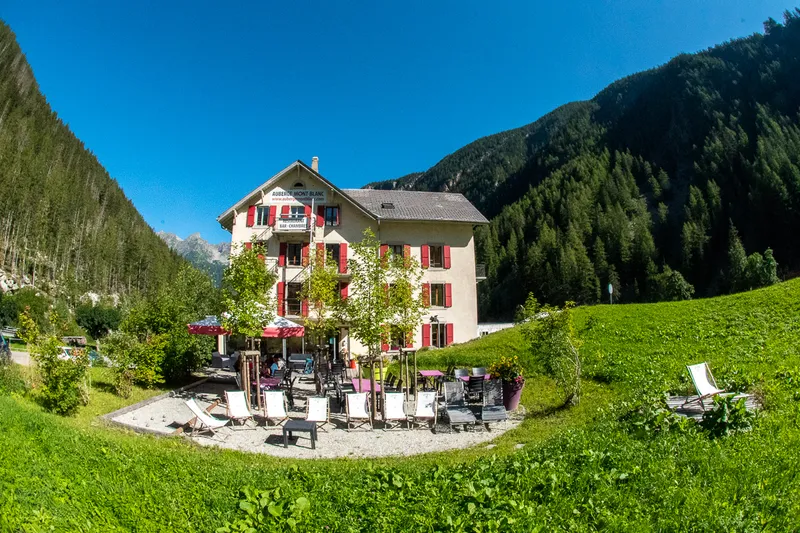
Auberge Mont-Blanc (1300m), Trient - Switzerland
Guesthouse in Trient with comfortable dormitories, private rooms and half-board.
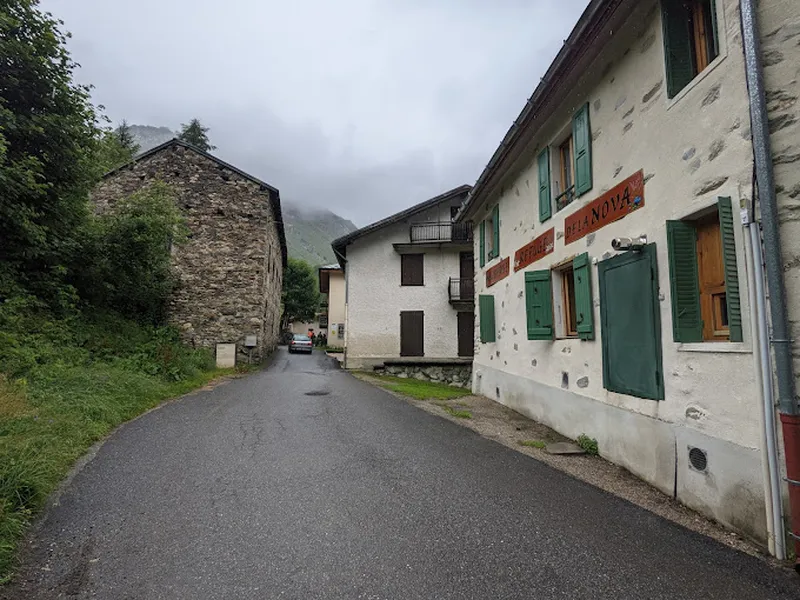
Auberge Refuge De La Nova (1554m), Bourg Saint Maurice - France
Mountain refuge in Bourg Saint Maurice, a stop on the GR TMB with half-board and free hot showers.
Tour du Mont Blanc - Frequently Asked Questions
When is the best time to hike the Tour du Mont Blanc?
The hiking season runs from mid-June to mid-September, when the refuges are open. Early in the season (late June - early July), lingering snowfields can make the passes tricky. From late August to mid-September the trail is quieter, except during the UTMB race week. If you can, avoid 14 July to 15 August: the route is very busy and some refuges are full.
How long does it take to complete the Tour du Mont Blanc?
The full circuit covers 170 km106 mi and most often takes 7 to 10 days, anywhere from 5 to 12 days depending on your level and pace.
Do I need to be very fit to hike the TMB?
You will walk 6 to 8 hours a day (around 4 to 6 hours if you take 10 to 12 days) carrying an 8 to 10 kg pack, water included. Over 10 days, the average day is around 17 km10.6 mi with 1,000 m3,281 ft of elevation gain. You do not need to be an athlete, but you need to be prepared. The TMB hut wardens set the bar at walking 6 hours with 1,000 m3,281 ft of ascent, pack on, and doing it again the next day. Three months of regular training is enough.
Do I need to book refuges in advance?
Yes, in high season. Booking is strongly recommended, even essential, and the most popular refuges are often full several months ahead. Bookings for summer 2027 open on 15 October 2026 for all refuges in the TMB hut wardens' association.
How much does the Tour du Mont Blanc cost?
Expect 65 to 90 EUR$75 to $104 per person per night in a dormitory on half board (bed, dinner and breakfast, 2026-2027 rates): for example 65 EUR$75 at Les Mottets (large dormitory, 2027), 80 EUR$93 at Bonatti and 90 EUR$104 at Lac Blanc. Some refuges, such as Les Mottets, do not accept cards: carry cash in euros and Swiss francs for extras.
Can I hike the Tour du Mont Blanc without a guide?
Yes. The trail is well marked and well maintained, but the waymarks change from country to country: white and red in France, yellow in Italy, two types of marking in Switzerland; the green "TMB" logo is common to the whole route. You should know how to read a map and find your way in bad weather, and check a mountain weather forecast every day.
How do I get to the TMB starting point?
The classic starting point of the TMB is the village of Les Houches.
What gear do I need for the TMB?
Aim for an 8 to 10 kg pack, water included. Essentials: waterproof jacket (most storms break between 2 and 5 PM), fleece, hiking pants, 2 base layers, hat, sunglasses (category 3 or 4), SPF 50 sunscreen, headlamp, and a sleeping bag liner, strongly recommended, often requested and compulsory in dormitories at some refuges such as Bonatti or Arpette. Trekking poles are very useful on the long descents.
Can I camp or bivouac on the Tour du Mont Blanc?
Yes, but not everywhere, and the rules change from one commune to the next. In Chamonix, only high-altitude bivouacking is allowed, from sunset to sunrise; in the Aiguilles Rouges, Carlaveyron and Vallon de Bérard nature reserves, you must book your pitch online. The details, commune by commune and country by country, are in our article on camping on the TMB.
Can I hike the Tour du Mont Blanc with a dog?
Yes, on most of the circuit, on a leash. It is, however, forbidden in the Aiguilles Rouges and Carlaveyron nature reserves on the French side. Bring its ID papers and vaccination record, and ask each refuge whether it accepts dogs.
Can I hike the Tour du Mont Blanc with children?
Yes, from around 10 years old: that is the reasonable age according to La Chamoniarde, which advises keeping a child to no more than 6 hours of walking a day. We recommend short stages and, for a first time, a section of the tour rather than the full loop. All our advice is in our article on the Tour du Mont Blanc with kids.
Which number should I call in an emergency on the TMB?
112 in France and Italy (Aosta Valley), 144 in Switzerland (Valais). Save them before you leave; our article on training for the TMB also explains how to raise the alarm.
From our partner · 400+ Verified Traveler Reviews
"An absolutely stunning trek. The itinerary was perfect, and our guide was extraordinary - knowledgeable, attentive, and passionate about the mountains."
"Well-marked trails crossing three countries with breathtaking scenery. The refuges were comfortable and the mountain cuisine was excellent."
"Flawless organization from start to finish. The luggage transfer allowed us to hike light and truly enjoy every stage of the journey."
"An unforgettable trek around Mont Blanc. Every day brings new surprises - from Swiss glaciers to Italian pastures and the French Aiguilles."
"Excellent service. The roadbook was clear and precise, the accommodation well chosen, and the team available at all times when needed."
"The Tour du Mont Blanc is a classic for good reason. The variety of landscapes between France, Italy and Switzerland is remarkable."
"A fantastic experience. The stages are well balanced, the refuges welcoming, and the views of the Mont Blanc massif are unforgettable."
"An extraordinary journey that showed us Mont Blanc from every angle. The logistics were perfect and we only had to enjoy the trail."
"Superb organization. The variant options allowed us to adapt the trek to our fitness level. I recommend without hesitation."
"A complete and well-thought-out tour. The crossings between the three countries offer a unique cultural and scenic diversity. A must-do at least once in a lifetime."
Over 40 years of alpine expertise
Our partner agency has been operating in the Alps for over 40 years. Their team of passionate experts knows every trail, every refuge, and every season of the Tour du Mont Blanc.
Fully protected trips
Your investment is safe. We work exclusively with a licensed, bonded, and insured operator. 24/7 assistance and travel insurance included.
Itineraries designed by locals
No generic packages. Every itinerary is designed by a team of specialists who hike these trails themselves. Luggage transfer, dietary needs, and every logistical detail are handled for you.
A real team, not a call center
A dedicated team of a dozen specialists is available before, during, and after your trek. You speak directly to the people who designed your itinerary.