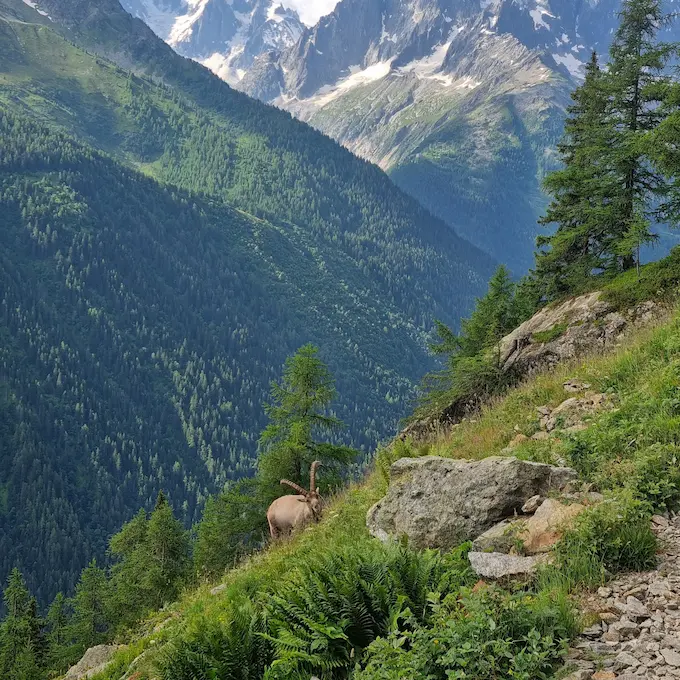
Tour du Mont Blanc in 7 Days
For those seeking adventure, the Tour du Mont Blanc is an epic hiking experience that takes you through three countries - France, Italy, and Switzerland - in one intense week on the high route, offering a unique opportunity to circle the majestic Mont Blanc massif. This adventure invites you to take on the majesty of the Alps, crossing mountain passes such as the Col du Brevet, the Col de la Seigne, and the Col des Fours, while admiring the landscapes, villages (like Trient), and the magnificent trails of Mont Blanc.
Table of Contents
Day-by-day itinerary
Les Houches - Refuge de la Balme
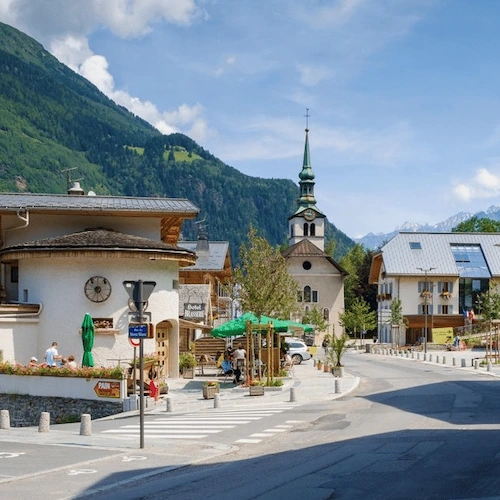
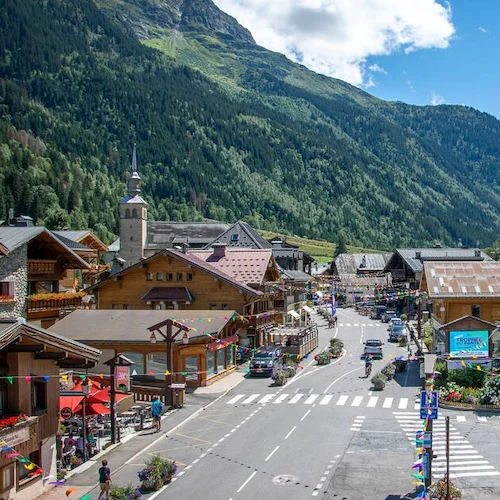
The first stage of the Tour du Mont Blanc, a 25 km15.5 mi adventure, starts at Les Houches and ends at the Refuge de la Balme, following trails that provide an impressive introduction to the beauty of the Alps. After roughly 2h30 of walking from Les Houches, you will reach the Col de Voza, an initial challenge that will get your legs warmed up with approximately 660 m2 165 ft of elevation gain over a distance of 6 to 7 kilometres, depending on your starting point. This first part of the route offers an impressive introduction to the beauty of the Alps and a solid warm-up for the rest of the tour.
After the Col de Voza, you will descend for about 11 kilometres, with roughly 800 m2 625 ft of elevation loss, to arrive at Les Contamines. This charming town is an ideal spot to take a break, cool down with a local beer, and even spend the night if you prefer not to continue to the Refuge de la Balme. For those who choose to press on, there are still about 7 kilometres and 550 m1 804 ft of elevation gain to reach the Refuge de la Balme. There, you can choose to sleep in the comfort of the refuge or have a more rustic experience at the bivouac area.
Points of interest: Col de Voza
Where to sleep?
- Refuge de la Balme
- Bivouac area at the Refuge de la Balme
- Option to stop earlier at Les Contamines (campsite or hotel)
Download the GPX track for this stage: https://www.visugpx.com/mSlFmJ4Qro
Les Houches - Refuge de la Balme (Col de Tricot variant)
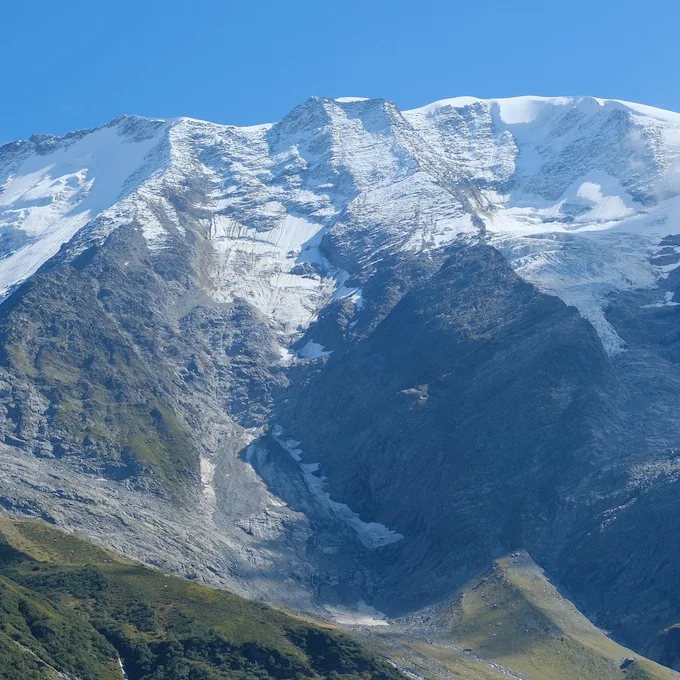
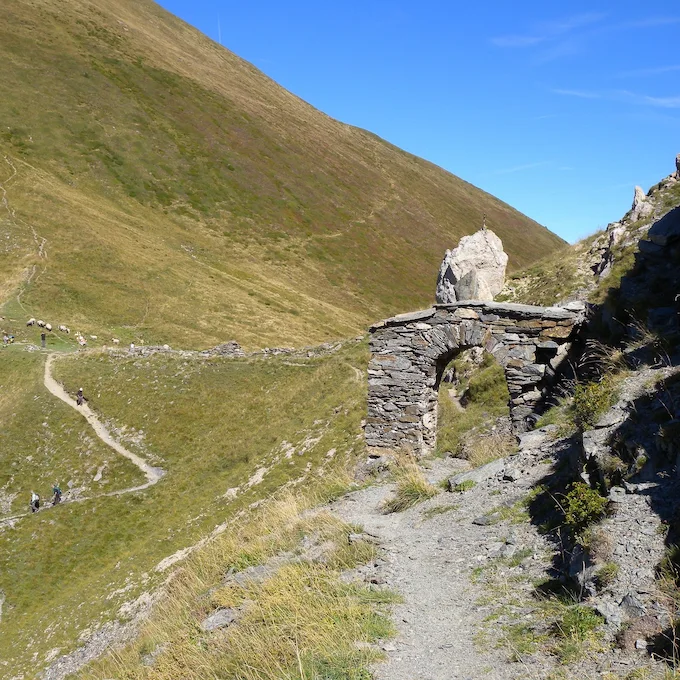
The first stage of the Tour du Mont Blanc offers an exciting variant that goes via the Col du Tricot, adding an extra dimension to this alpine adventure. The first part of the stage remains the same as the classic route, with a walk of about 2h30 from Les Houches to the Col de Voza. This section of the route includes approximately 660 m2 165 ft of elevation gain over a distance of 6 to 7 kilometres, depending on your starting point.
Once at the Col de Voza, you will have the choice between staying on the classic route or taking the variant via the Col du Tricot. If you choose the latter, prepare for approximately 600 m1 969 ft of additional elevation gain over a distance of 6 kilometres to reach the Col du Tricot. This variant offers a more demanding but also more rewarding hiking experience, with spectacular panoramic views of the Alps.
From the Col du Tricot, you have several options for the rest of your day. You can continue to the Refuge de la Balme to spend the night, making for a longer but equally rewarding end to the day. Alternatively, you can head towards Les Contamines to shorten your day and spend the night there.
Points of interest: Col de Voza, Col de Tricot at 2 120 m6 955 ft
Where to sleep?
- Refuge de la Balme
- Bivouac area at the Refuge de la Balme
- Option to stop earlier at Les Contamines (campsite or hotel)
Download the GPX track for this stage: https://www.visugpx.com/rFQWJMXPXN
Refuge de la Balme - Chapieux - Les Mottets
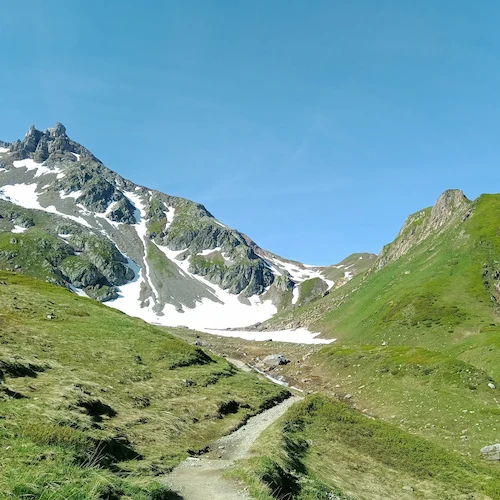
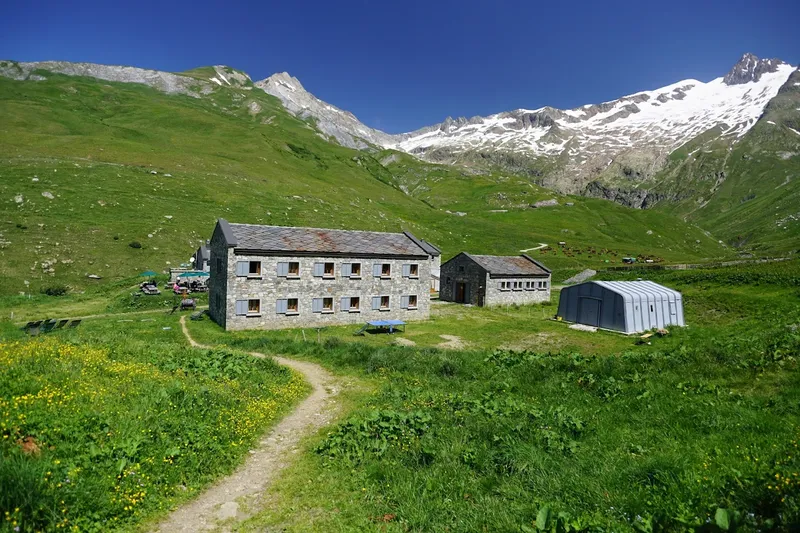
The second stage of the Tour du Mont Blanc starts at the Refuge de la Balme and ends at the Refuge des Mottets. It follows the classic tour route.
Departing from the Refuge de la Balme, you face a climb of 650 m2 133 ft of elevation gain over 4 kilometres to reach the Col du Bonhomme. Once at the pass, you will continue on the classic tour route without taking the variant via the Col des Fours.
After the Col de la Croix du Bonhomme, you will begin a 4-kilometre descent with 800 m2 625 ft of elevation loss to arrive at Les Chapieux. From there, you will continue at a gentle pace for about 6 kilometres to the Refuge des Mottets. On the way, stop at the Ville des Glaciers to receive a portion of local alpine cheese - a small but complete immersion in mountain culture.
Once you arrive at the Refuge des Mottets, you will have completed this stage of the tour. This is your last stop before crossing into Italy the following day. It is recommended to book in advance if you plan to sleep in the refuge. It is important to note that bivouacking is prohibited on the refuge's property, which is quite large. However, you can pitch your tents before the refuge near the ruins (about 5 to 10 minutes before the refuge) or after it by starting the climb towards the Col de la Seigne, just behind the first peak visible from the refuge.
Points of interest: Col du Bonhomme, Col de la Croix du Bonhomme
Where to sleep?
- Refuge des Mottets
- Bivouac near the Refuge des Mottets by the ruins. Pitch your tents quickly as spots fill up very fast.
- Bivouac beyond the Refuge des Mottets (just after the first climb towards the Col de la Seigne)
Download the GPX track for this stage: https://www.visugpx.com/pubLJ5t1su
Refuge de la Balme - Col des Fours - Les Mottets
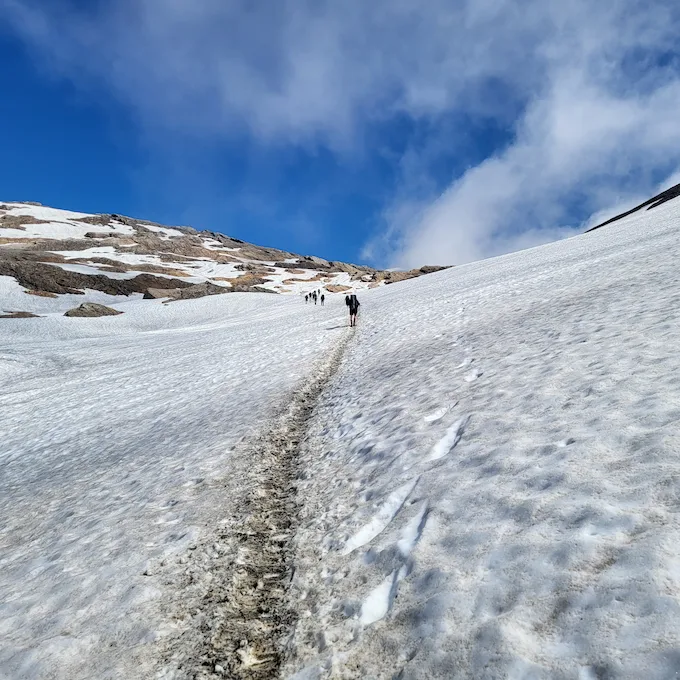
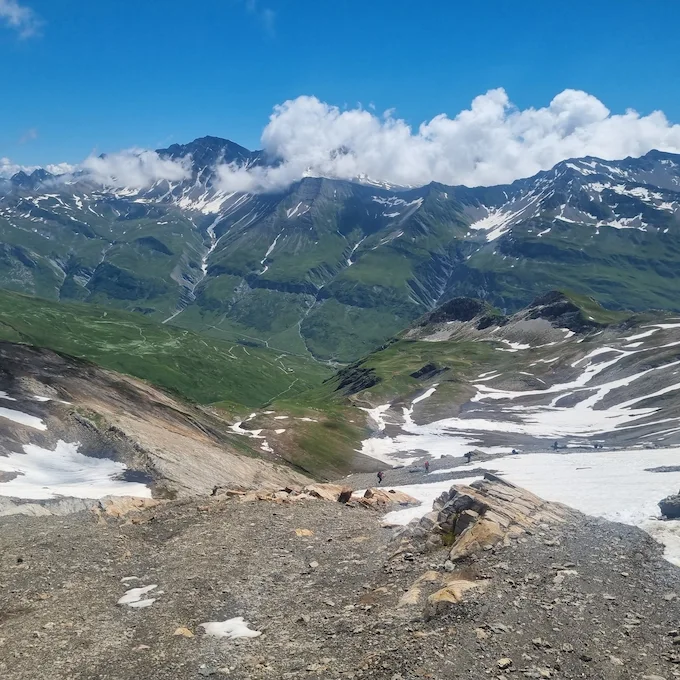
The start of the stage is the same as the classic route, departing from the Refuge de la Balme with a climb of 650 m2 133 ft of elevation gain over 4 kilometres to reach the Col du Bonhomme.
Continuing towards the Col de la Croix du Bonhomme, you will then take the variant leading to the Col des Fours. This variant takes you to an altitude of 2 665 m8 743 ft, offering spectacular views of the surrounding mountains in good weather. Before setting out on this variant, it is essential to check the weather and trail conditions in advance. Depending on the season, there can be significant snow patches, making some sections dangerous even in summer.
Once at the Col des Fours, you will begin a 5-kilometre descent with 900 m2 953 ft of elevation loss to arrive at the Ville des Glaciers. You can stop at the alpine pasture to stock up on local cheese - a true regional delicacy - before continuing to the Refuge des Mottets.
The Refuge des Mottets is your last stop before crossing into Italy the following day. It is recommended to book in advance if you plan to sleep in the refuge. It is important to note that bivouacking is prohibited on the refuge's property, which is quite large. However, you can pitch your tents before the refuge near the ruins (about 5 to 10 minutes before the refuge) or after it by starting the climb towards the Col de la Seigne, just behind the first peak visible from the refuge.
Points of interest: Col du Bonhomme, Col des Fours
Where to sleep?
- Refuge des Mottets
- Bivouac near the Refuge des Mottets by the ruins. Pitch your tents quickly as spots fill up very fast.
- Bivouac beyond the Refuge des Mottets (just after the first climb towards the Col de la Seigne)
Download the GPX track for this stage: https://www.visugpx.com/URWmZQHWLG
Les Mottets - Courmayeur
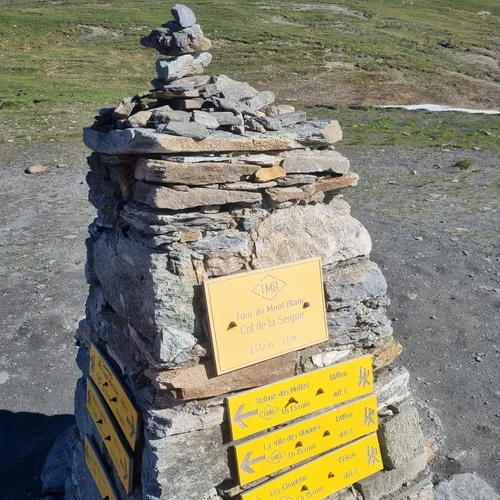
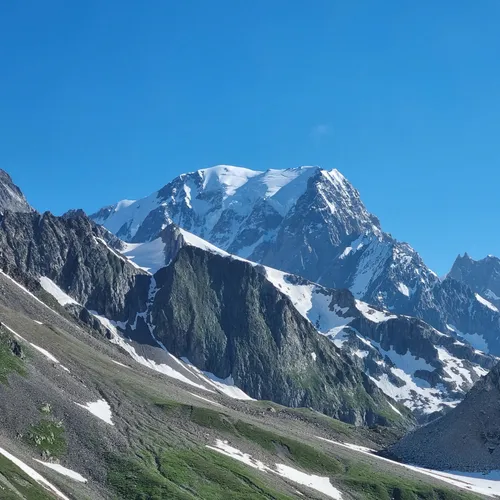
The third stage of the Tour du Mont Blanc takes you from France into Italy, crossing spectacular alpine landscapes. The stage begins at the Refuge des Mottets, and after just 4 kilometres and about 600 m1 969 ft of elevation gain, you will reach the Col de la Seigne. This crossing, perfect for waking up, marks your entry into Italy and offers breathtaking panoramic views of the surrounding mountains.
After the Col de la Seigne, you will continue for about 9 to 10 kilometres through the magnificent Italian valley. This part of the route takes you through varied landscapes, including the picturesque Lac Combal and several mountain refuges. Every step of this stage offers a new view of the Alps, with constantly changing panoramas and opportunities for memorable photos.
Finally, you will begin an 11-kilometre descent with 1 260 m4 134 ft of elevation loss to arrive in Courmayeur. This Italian town is a welcome resting place after this long stage. Courmayeur has plenty of hotels, perfect for recharging and preparing for the next stage of your adventure. Whether you choose to relax in a spa, savour local Italian cuisine, or simply rest, Courmayeur offers a perfect end to this third stage of the Tour du Mont Blanc.
Points of interest: Col de la Seigne, Lac Combal
Where to sleep?
- Hotels in Courmayeur
Download the GPX track for this stage: https://www.visugpx.com/Twvax7D6iA
Courmayeur - Refuge Elena
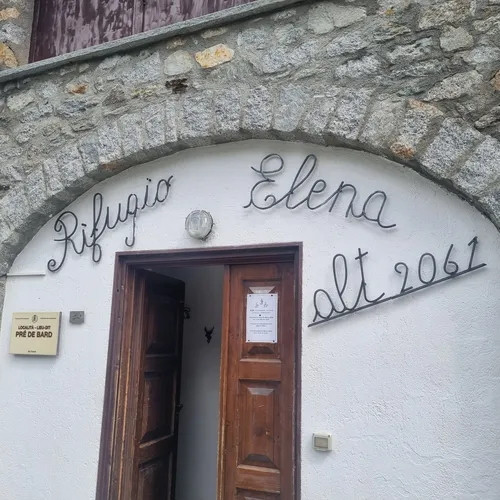
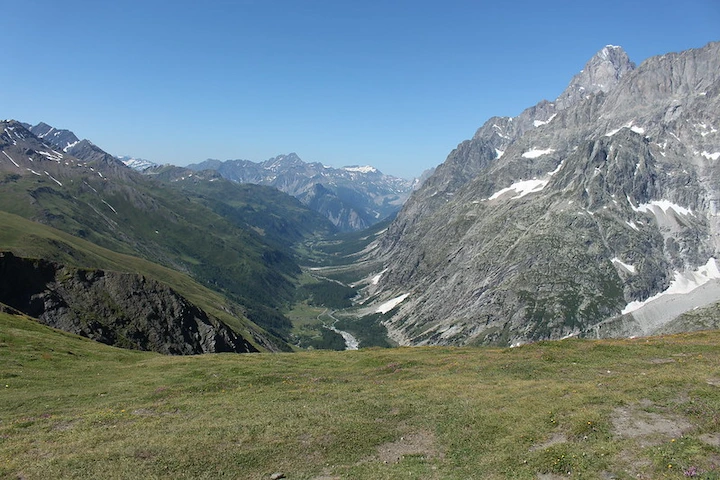
The fourth stage of the Tour du Mont Blanc is a day that offers a mix of challenge and relaxation. Your day begins with a climb of about 800 m2 625 ft of elevation gain over 4 to 5 kilometres, depending on your starting point. This initial climb is an excellent way to wake up and prepare for the day ahead.
Once this climb is done, the rest of the day is fairly relaxed compared to the other stages. You will continue for about 12 kilometres, with 330 m1 083 ft of elevation gain and 600 m1 969 ft of elevation loss. This section of the route takes you through the beautiful Italian valley, offering spectacular views and a relaxing hiking experience.
Before arriving at the Refuge Elena, you will have about 2 kilometres and roughly 300 m984 ft of elevation gain remaining. This final climb is a last challenge before wrapping up the day. The Refuge Elena is a popular spot to spend the night, offering spectacular views of the surrounding mountains.
It is important to note that you will need to book in advance to sleep at the Refuge Elena, as it fills up quickly and there are not many options for sleeping in the area. In Italy, bivouacking is prohibited below 2 500 m8 202 ft altitude, so it is essential to plan ahead. This fourth stage of the Tour du Mont Blanc offers a balanced hiking experience, with physical challenges, magnificent landscapes, and moments of relaxation.
Points of interest: Italian Valley
Where to sleep?
- Refuge Elena
Download the GPX track for this stage: https://www.visugpx.com/B3MhnslfBa
Refuge Elena - Champex
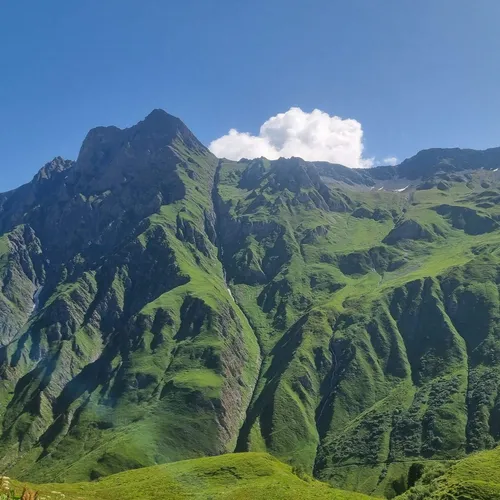
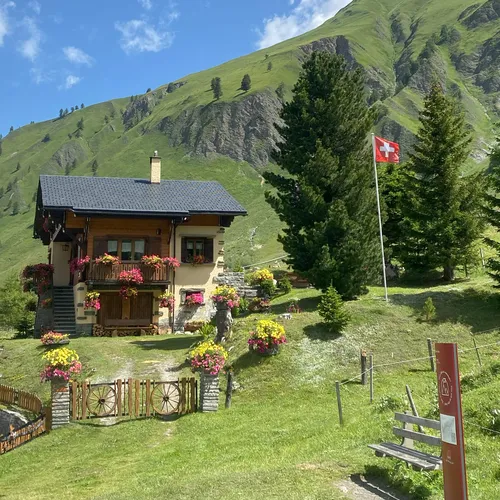
The fifth stage of the Tour du Mont Blanc, from the Refuge Elena to Champex-Lac, is a hiking day that offers both challenges and moments of relaxation. Although this stage is fairly long and some sections are not the most scenic on the tour, it nevertheless provides a rewarding hiking experience.
The day begins with a fine climb of about 500 m1 640 ft of elevation gain over 2 kilometres to reach the Grand Col Ferret. This climb marks your crossing into Switzerland - a moment to celebrate, but also to keep in mind for your mobile data, as Switzerland may not be included in your European data plan depending on your provider.
From the Grand Col Ferret, a descent of about 20 kilometres and 1 600 m5 249 ft of elevation loss awaits. This descent brings you closer to Champex-Lac, your destination for the night. Note that part of this stage can be done by bus, taking the shuttle from Ferret or La Fouly, which can be an attractive option for those wanting to save some energy.
You will then have 6 kilometres and 600 m1 969 ft of elevation gain remaining to reach the Relais de l'Arpette, where you will spend the night. It is also possible to sleep at Camping des Rocailles in Champex, which is located about 45 minutes before the Relais de l'Arpette.
Points of interest: Grand Col Ferret (Italy/Switzerland border), option to take the shuttle from Ferret, small supermarket in La Fouly to restock
Where to sleep?
- Relais de l'Arpette
- Camping des Rocailles (in Champex)
Download the GPX track for this stage: https://www.visugpx.com/v4RKRYwRg3
Champex - Col de Balme (via La Forclaz) - Tre le Champ
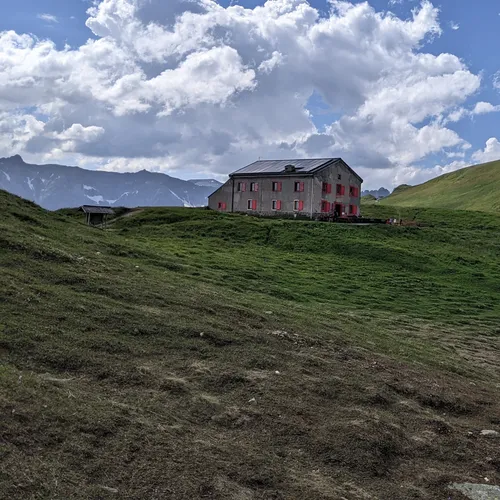
The sixth stage of the Tour du Mont Blanc, from Champex to Tre le Champ, is a fairly tough hiking day even without taking the Fenetre d'Arpette variant. This stage also marks your return to France.
Your day begins with a climb to the Col de la Forclaz, followed by another climb to the Col de la Balme. The Col de la Balme is a high point of this stage, offering spectacular views of the surrounding mountains. The refuge here is a beautiful place to take a break and enjoy the scenery. Crossing the Col de la Balme also marks the border with France - another important milestone on your journey.
After enjoying the Col de la Balme and a drink at the refuge, you will begin a descent of about 6 kilometres with 700 m2 297 ft of elevation loss to reach Tre le Champ and the Auberge de la Boerne. This descent offers another opportunity to enjoy the alpine scenery while getting closer to your destination for the night.
It is important to note that you should book your night at the Auberge de la Boerne in advance, as it fills up quickly. The bivouac area is not the largest, so it is advisable to pitch your tents promptly. Once settled, you can enjoy a wonderful meal at the auberge and use the showers if you wish.
Points of interest: Col de la Forclaz, Col de la Balme
Where to sleep?
- Auberge de la Boerne (dormitory)
- Auberge de la Boerne (bivouac)
Download the GPX track for this stage: https://www.visugpx.com/f8P8nDc8xt
Champex - Col de Balme (via Fenetre d'Arpette) - Tre le Champ
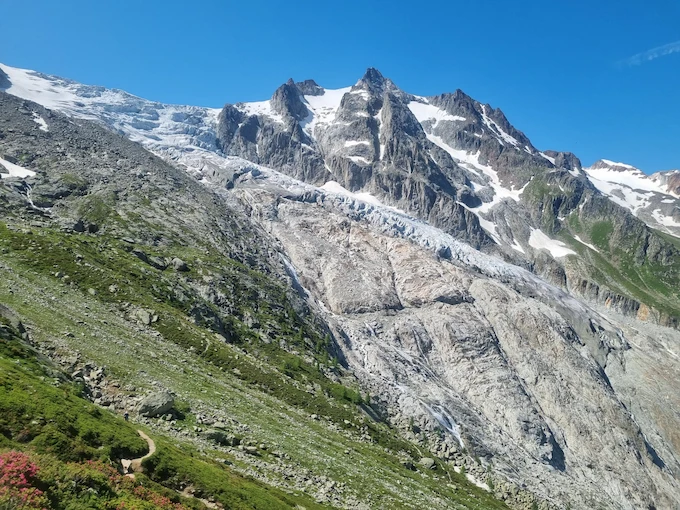
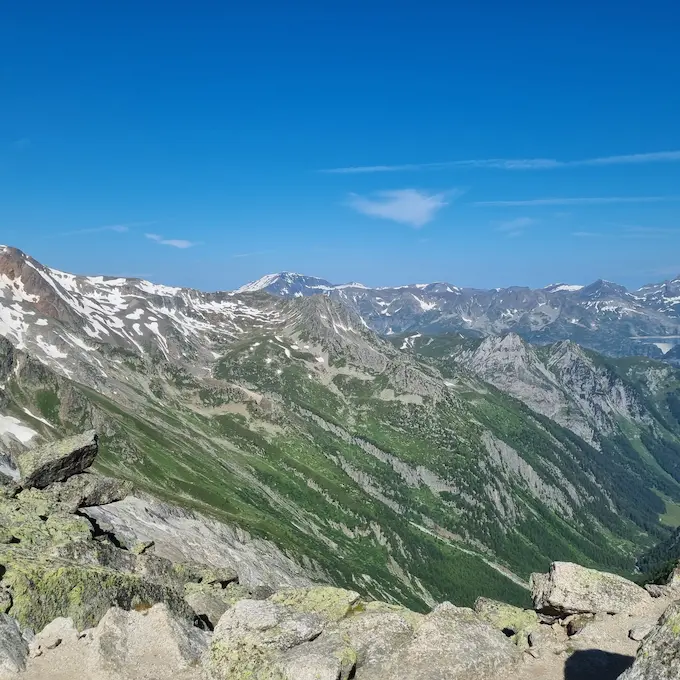
The sixth stage of the Tour du Mont Blanc, from Champex to Tre le Champ, with the Fenetre d'Arpette variant, is considered one of the most difficult stages on the tour - but also one of the most beautiful and rewarding.
Starting from Champex, you will begin a climb over 6 kilometres with 1 100 m3 609 ft of elevation gain. This climb is a challenge in itself, with some passages approaching the Fenetre d'Arpette that can be tricky and where the GR trail can be hard to follow. It is essential to exercise caution on the path and to carefully check the weather and trail conditions before setting out. Some sections may still be snow-covered and dangerous if the weather is not favourable.
Once you reach the Fenetre, take time to rest and savour your achievement. You then have a descent of about 4 kilometres with 1 000 m3 281 ft of elevation loss before arriving at the Chalet des Glaciers. Here, you can reward yourself with a cheese croute and a good beer.
After a well-deserved break, you will begin a new ascent to the Col de la Balme - 2 kilometres with about 600 m1 969 ft of elevation gain. The view and the refuge here are magnificent, and we recommend making the most of them.
Finally, you will have just 6 kilometres and 800 m2 625 ft of elevation loss remaining to reach Tre le Champ. As always, make sure to book your night in advance, whether in the refuge or for bivouac, as these spots fill up quickly. The bivouac area is not the largest, so it is advisable to pitch your tents promptly. Once settled, you can enjoy a wonderful meal at the auberge and use the showers if you wish. This stage of the Tour du Mont Blanc offers an unforgettable hiking experience, with physical challenges, breathtaking views, and well-deserved moments of relaxation.
Points of interest: Fenetre d'Arpette, Col de la Balme
Where to sleep?
- Auberge de la Boerne (dormitory)
- Auberge de la Boerne (bivouac)
Download the GPX track for this stage: https://www.visugpx.com/iIoAINv20C
Tre le Champ - Les Houches
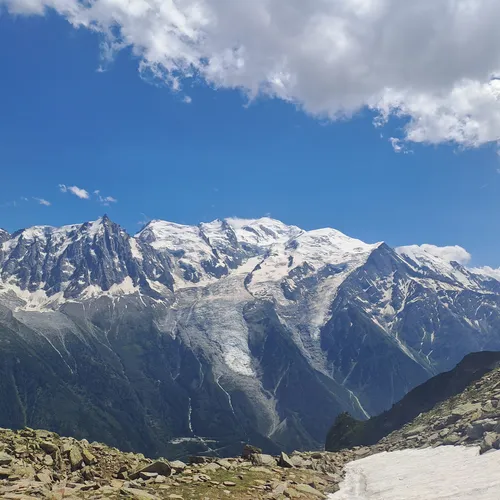
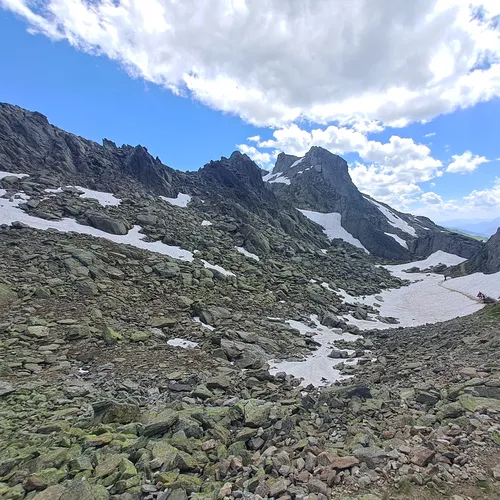
Congratulations! You have reached the seventh and final stage of the Tour du Mont Blanc, from Tre le Champ to Les Houches. This is a flexible day that can be adapted to your needs and preferences, whether in terms of accommodation, transport, or difficulty level.
If you choose to hike all the way back to Les Houches, prepare for a full day. However, numerous exit points are available along the way, allowing you to adjust your day according to your physical condition and preferences.
You will have the option to take the cable car from La Flegere down to Chamonix, offering a quick descent and a stunning view of the valley. Another option is to take the cable car from Le Brevent down to Chamonix - another way to enjoy the views without the effort of the descent.
If you are feeling up to it, you can also choose to descend to Chamonix on foot before the ascent of Le Brevent. This option lets you fully enjoy the natural beauty of the route while giving yourself one last physical challenge.
During this day, you will pass notably through the Aiguillette d'Argentiere and its ladders, as well as the Col du Brevent. These two points offer spectacular views and are highlights of this final stage.
Whichever option you choose, this last stage of the Tour du Mont Blanc is the chance to celebrate your achievements, enjoy the final magnificent views, and finish your adventure in style.
Points of interest: Aiguillette d'Argentiere, Col du Brevent
Where to sleep?
- Les Houches
- Chamonix
- Option to take the cable car from La Flegere to Chamonix
- Option to take the cable car from Le Brevent to Chamonix
- Option to descend to Chamonix before the Le Brevent climb (allow 1h30 to 2h for a steep descent)
Download the GPX track for this stage: https://www.visugpx.com/3kIaPa8PzP
Preparing Your Tour du Mont Blanc
Itinerary Flexibility
The itinerary offers exceptional flexibility with an adaptable average distance for all hikers, allowing you to adjust the difficulty of your trip by changing the number of days. Your choice of gear and equipment - backpack, clothing (fleece, shorts, jacket, sunglasses, etc.) and hiking boots - will be just as important as your choice of itinerary (don't forget your IGN map). A seven-day tour represents a considerable challenge, with stages that are sometimes long and demanding, punctuated by moments where you can watch the sun set behind the massif before arriving at the evening's refuge. For those looking for a less demanding experience, opting for the ten-day tour allows you to enjoy the trek at a gentler pace, with reduced but equally rewarding daily walking time.
Key Facts
Regarding the details of this itinerary: it covers 157km, with a total ascent of 9786m and a total descent of 9462m, crossing the Mont Blanc massif in all its splendour. It is also organised by stage, so you can easily create a summary sheet for each day to keep track. Also, although it runs counter-clockwise, you can also do it in the opposite direction to vary the views.
Practical info
We organize the logistics so you can focus on the trail. Get in touch with our experts today.
Direct contact with local TMB experts

Explore more itineraries
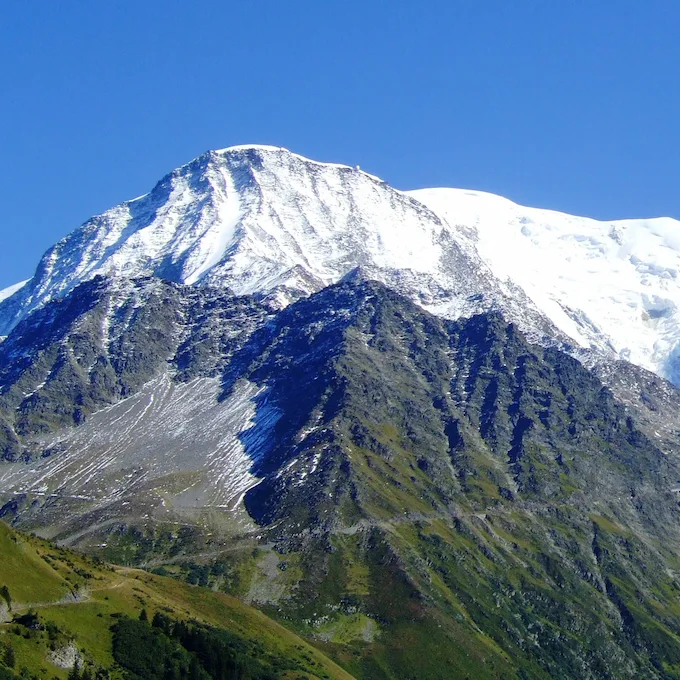
The Col de Tricot
The Col de Tricot variant offers a spectacular alternative with direct views of the Bionnassay glacier.
The Col des Fours
The Col des Fours variant reaches 2,665 m and offers exceptional panoramic views of the Mont Blanc massif.
The Fenêtre d'Arpette
The most spectacular alpine variant on the TMB. A wild pass at 2,665 m offering stunning views of the Trient Glacier.
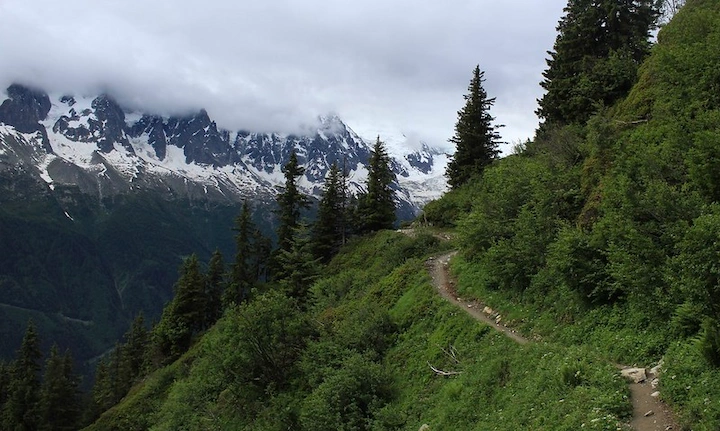
Tour du Mont Blanc in 10 Days
The TMB itinerary in 10 stages to fully enjoy the alpine scenery. A comfortable pace through France, Italy, and Switzerland.
From our partner · 400+ Verified Traveler Reviews
"Un trek absolument magnifique. L'itineraire est parfait, et notre guide etait extraordinaire - competent, attentif et passionnne par la montagne."
"Des sentiers bien balises qui traversent trois pays avec des paysages a couper le souffle. Les refuges etaient confortables et la cuisine montagnarde excellente."
"Organisation impeccable du debut a la fin. Le transfert des bagages nous a permis de marcher leger et de vraiment profiter de chaque etape."
"Un trek inoubliable autour du Mont Blanc. Chaque jour apporte de nouvelles surprises - des glaciers suisses aux alpages italiens en passant par les aiguilles francaises."
"Excellente prestation. Le roadbook etait clair et precis, les hebergements bien choisis, et l'equipe disponible a tout moment en cas de besoin."
"Le Tour du Mont Blanc est un classique pour une bonne raison. La variete des paysages entre la France, l'Italie et la Suisse est remarquable."
"Une experience fantastique. Les etapes sont bien equilibrees, les refuges accueillants, et les vues sur le massif du Mont Blanc sont inoubliables."
"Un voyage extraordinaire qui nous a fait decouvrir le Mont Blanc sous tous les angles. La logistique etait parfaite et nous n'avions qu'a profiter du sentier."
"Superbe organisation. Les variantes proposees nous ont permis d'adapter le trek a notre niveau. Je recommande sans hesitation."
"Un tour complet et bien pense. Les passages entre les trois pays offrent une diversite culturelle et paysagere unique. A faire au moins une fois dans sa vie."
Plus de 40 ans d'expertise alpine
Notre agence partenaire opere dans les Alpes depuis plus de 40 ans. Leur equipe de passionnes connait chaque sentier, chaque refuge et chaque saison du Tour du Mont Blanc.
Voyages entierement proteges
Votre investissement est en securite. Nous travaillons exclusivement avec un operateur agree, cautionne et assure. Assistance 24h/24 et assurance voyage incluses.
Itineraires concus par des locaux
Pas de forfaits generiques. Chaque itineraire est concu par une equipe de specialistes qui parcourent ces sentiers eux-memes. Transfert de bagages, besoins alimentaires et chaque detail logistique sont geres pour vous.
Une vraie equipe, pas un centre d'appels
Une equipe dediee d'une douzaine de specialistes est disponible avant, pendant et apres votre trek. Vous parlez directement aux personnes qui ont concu votre itineraire.