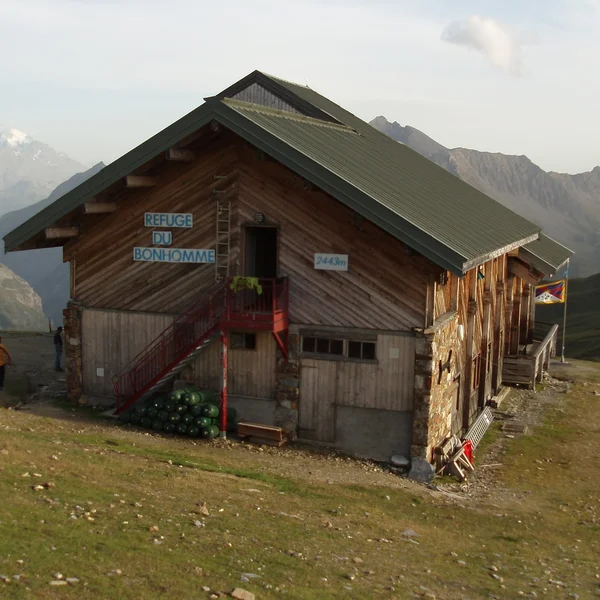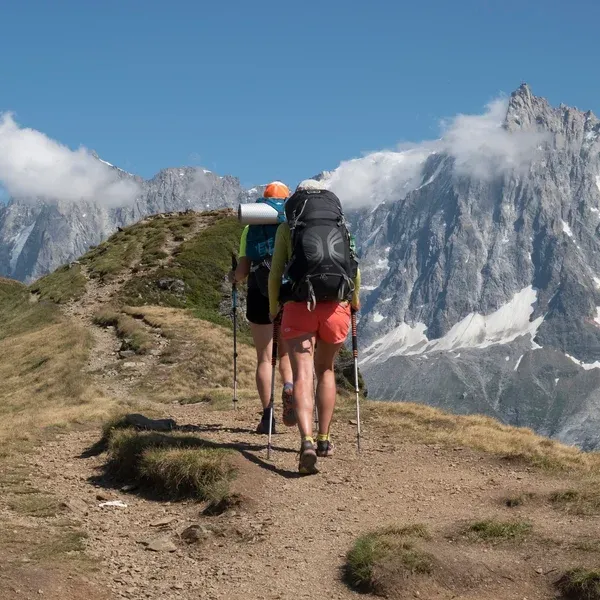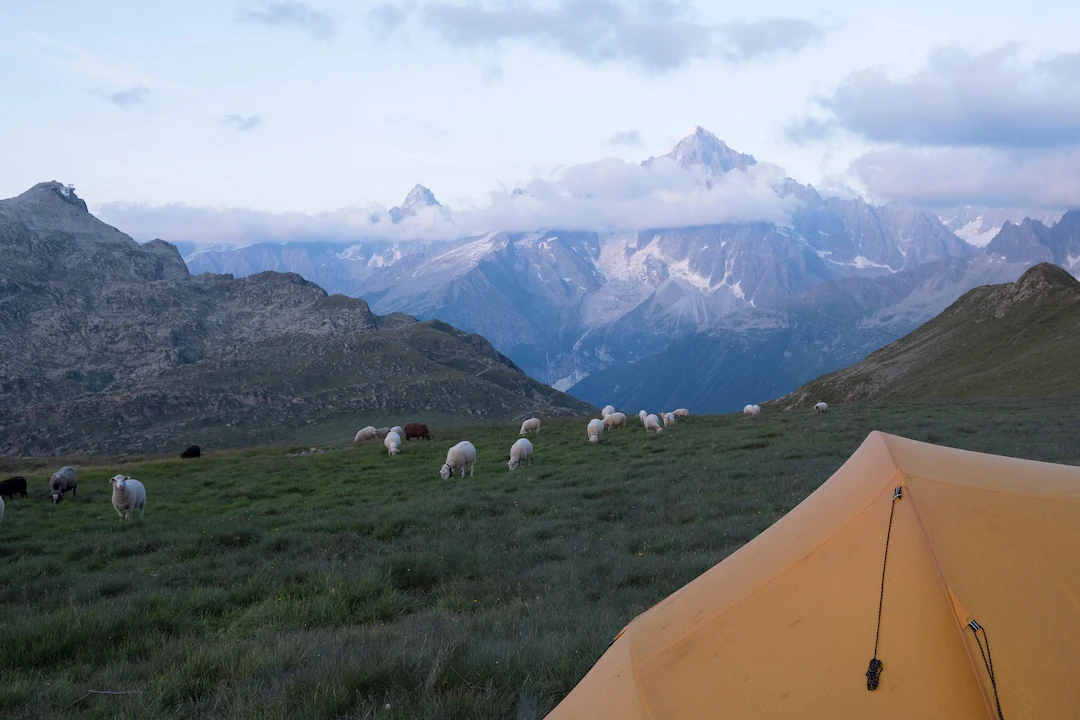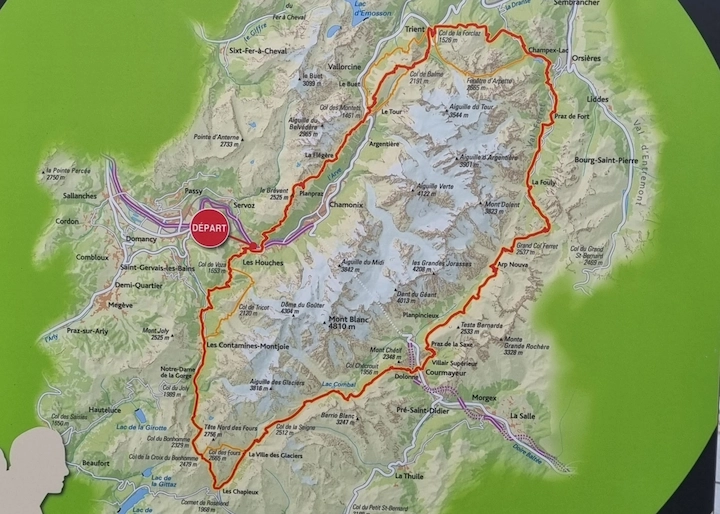
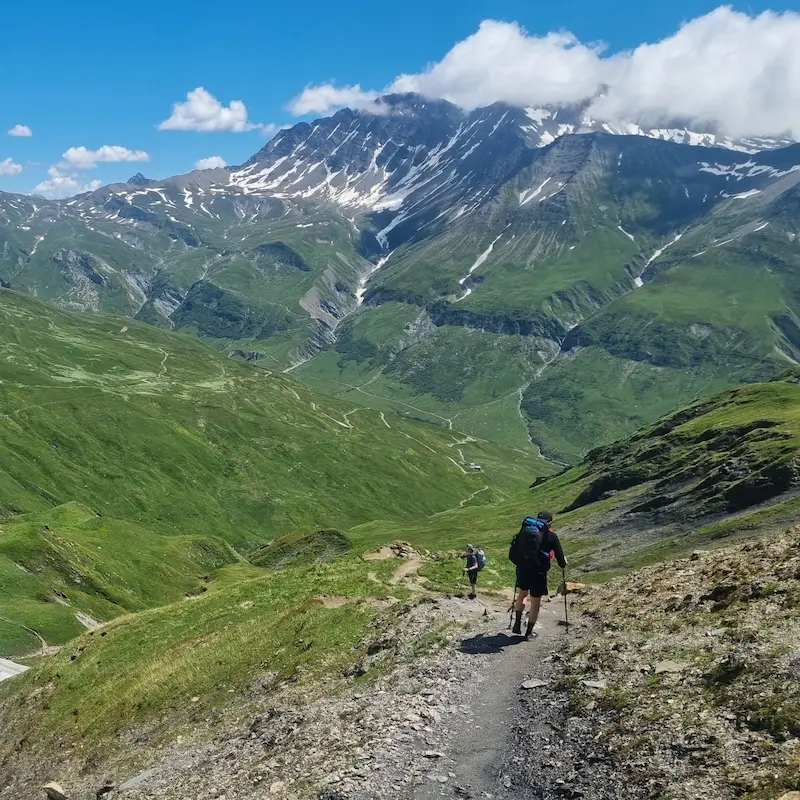
The requirement to book every night, announced for spring 2027, is a French decision. The press release from the Vallée de Chamonix-Mont-Blanc community of communes is explicit: the communes represented were Vallorcine, Chamonix, Les Houches, Saint-Gervais, Les Contamines-Montjoie, Beaufort and Bourg-Saint-Maurice. Yet the Tour du Mont Blanc also runs through Italy and Switzerland. Here is where both countries stand as of 4 October 2026, with the official source for each point.
Why does the 2027 charter only apply to France?
Because it was adopted by the French local authorities and stakeholders of the massif. The press release from the French communities of communes only expresses a wish: all French authorities and stakeholders want “our Valais and Aosta Valley partners to join us on the principles of this charter, in accordance with their national laws”. On timing, it plans to finalise the charter in mid-October, then have it signed by local authorities and partners before the end of 2026, for implementation in spring 2027. The principles themselves, from a booking every night to the green brigade, are covered in our article on what changes in 2027.
What did the mayors meeting in Chamonix on 28 September 2026 decide?
Nothing binding so far. According to the Comune di Courmayeur press release, Courmayeur mayor Roberto Rota met his counterparts from Chamonix-Mont-Blanc, Orsières and Saint-Gervais in Chamonix that day to discuss how the Tour du Mont Blanc is managed. The press release reports two statements from the mayor, translated here from Italian, that set the tone on the Italian side:
- The problem: “about 30% of hikers walk the route without any booking”, with consequences for services, cleanliness and safety.
- The aim: “not to limit access to the Tour, but to steer the flow of hikers towards registered accommodation”.
The next steps are set out in the same press release: over the coming weeks Courmayeur will consult local operators and the Autonomous Region of Aosta Valley, then the mayors will meet again in Chamonix at the end of October to define a joint action plan. The text mentions neither mandatory bookings nor a start date. Some press reports already describe a booking requirement on the Italian side from 2027: no official source confirms this to date.
What does Aosta Valley law already say?
The Aosta Valley did not wait for 2027 to regulate camping. Regional law no. 8 of 24 June 2002, available on the Aosta Valley Regional Council website, sets three rules:
- Article 19: only temporary camps organised by non-profit associations can be authorised by the mayor, and this regime does not apply to mountaineering tent bivouacs pitched above 2,500 m8,202 ft.
- Article 20: outside these cases, “any form of stopping or staying in a tent” is banned, “even for periods of less than twenty-four hours”.
- Article 21: an offence carries an administrative fine of €300 to €1,700$348 to $1,972, issued by the commune where it takes place.
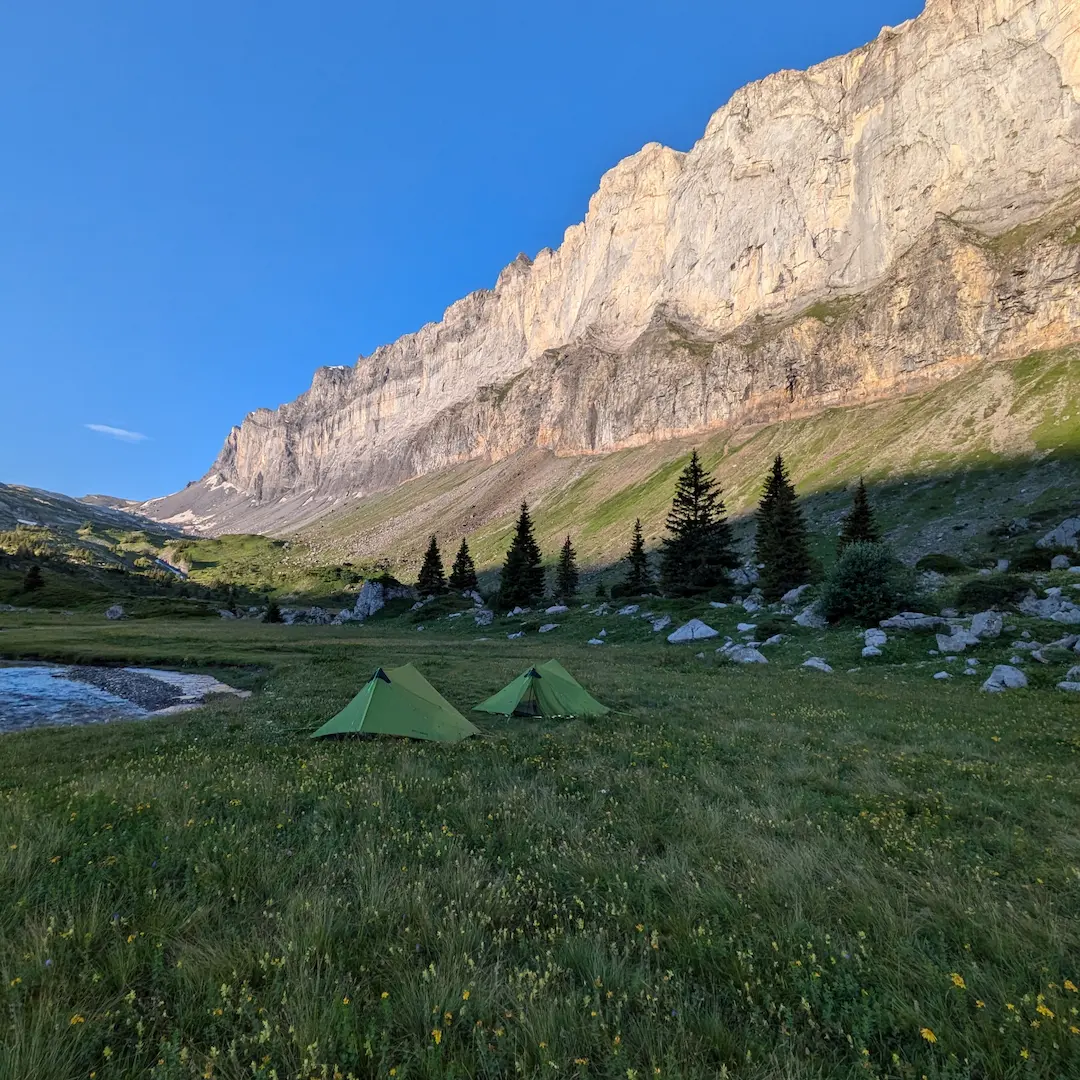
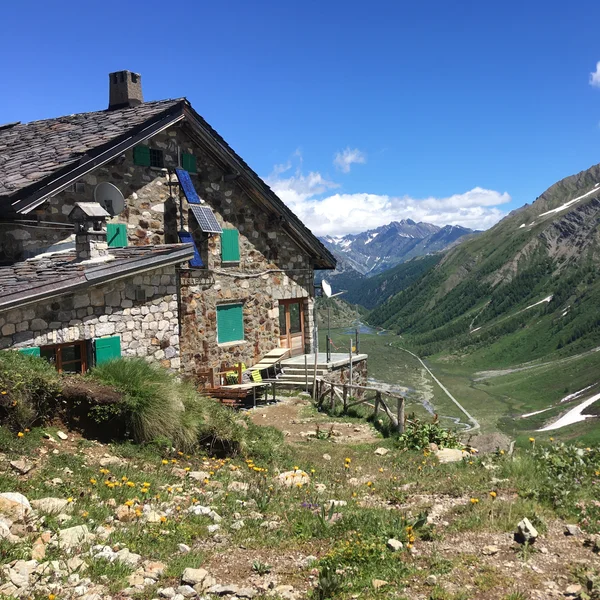
The Region’s official tourism website, lovevda.it, gives the practical reading, with two details that are not in the law: wild camping is only allowed above 2,500 m8,202 ft and from sunset to sunrise, and tent bivouacs are always banned near mountain huts.
On the TMB itself, the message is even clearer. On 3 July 2026, the Fondazione Montagna Sicura, set up by a law of the Autonomous Region of Aosta Valley and counting the Comune di Courmayeur among its members, issued a reminder that wild camping and bivouacking are not permitted along the Tour du Mont Blanc trails in Courmayeur and the Aosta Valley. The reminder cites no legal text and no altitude threshold.
What about Switzerland?
Switzerland has announced nothing comparable. “For now, nothing of the sort on the Swiss side”, Swiss public broadcaster RTS reported in August 2026. Joachim Rausis, president of Orsières, told RTS: “We are not in a situation of marked overtourism”, while stressing the need “to coordinate between Switzerland, Italy and France”. Orsières was represented at the Chamonix meeting on 28 September, according to the Courmayeur press release quoted above. As of 4 October 2026, we have found no official Swiss position published since.
There is no single Swiss rule on bivouacking either. The Swiss Alpine Club explains that the legal situation is not uniform, that many communes have their own rules, and that unless a regulation says otherwise, “a single night spent by a small number of people in the mountains above the tree line is generally not a problem”.
So the Valais communes the TMB crosses set the rules:
- Orsières: under article 59 of the Orsières police regulations, camping is only allowed “in the places reserved for this purpose”, and so-called wild camping may only take place “within the limits set by cantonal legislation”.
- Trient: the Trient commune camping page lists a rest area at Le Peuty, with no booking, “first come, first served”, plus the campsite at the Hôtel du Col de la Forclaz.
- Bovernier: the Bovernier police regulations ban camping “outside authorised sites expressly designated as such by the Authority”.
- Martigny-Combe: the Martigny-Combe police regulations repeat the same ban word for word.
The commune-by-commune detail, campsites included, is in our guide to camping regulations on the TMB.
Will you need to book your nights in Italy and Switzerland from 2027?
Legally, nothing requires it outside France so far. But if you hike the full loop, the question answers itself: the French charter requires a booking every night across the French crossing, which already ties you to fixed dates. Leaving the Italian and Swiss stages to chance only weakens the chain, while Courmayeur is clearly signalling its wish to steer hikers towards registered accommodation.
The next date to watch is the mayors’ meeting planned for the end of October in Chamonix, announced by the Comune di Courmayeur. We will update this article as soon as an official Italian or Swiss text is published.
How do you hike in 2027 without hitting the booking wall?
Bookings for the refuges and gîtes that belong to the Tour du Mont-Blanc Wardens’ Association open on 15 October 2026 for summer 2027, according to the official Mon Tour du Mont-Blanc platform, which advises starting with the most in-demand stages, where some accommodation has limited capacity, and building the itinerary around them. With the French charter, finding a bed is no longer enough: you need one for every night, with no gap in the chain, across three countries.
Two options if you would rather not manage that chain of bookings yourself.
- The self-guided TMB: you walk alone or with friends and family, at your own pace. Nights are booked in advance and luggage is transferred between stages.
- The guided TMB: a mountain leader takes the group, adapts the route to the weather and handles anything unexpected.
Our TMB tours
Pre-booked refuges, luggage transfers, 7-day support.
TMB Classic 8 Days - Self-Guided
Classic Tour du Mont Blanc in 8 days, self-guided. 90 km56 mi trek through France, Italy and Switzerland with hotel accommodation, luggage transport and full assistance.
TMB Classic 12 Days - Self-Guided
Complete Tour du Mont Blanc in 12 days, self-guided. 115 km71 mi trek through France, Italy and Switzerland with hotel accommodation, luggage transport and full assistance.
TMB Classic 10 Days - Guided
Classic Tour du Mont Blanc in 10 days with certified mountain guide. 122 km76 mi trek through France, Italy and Switzerland with hotel accommodation, all meals and luggage transport.
TMB Classic 10 Days - Guided - Women Only
Tour du Mont Blanc in 10 days, guided, women only. 122 km76 mi trek with certified female mountain guide, hotel accommodation, all meals and luggage transport.