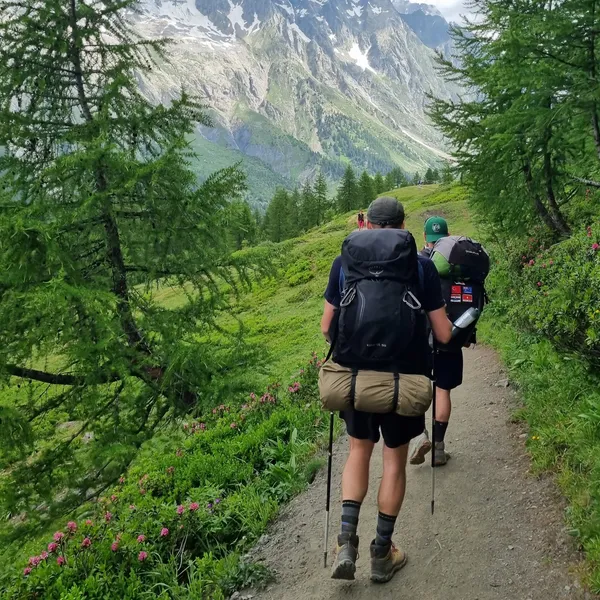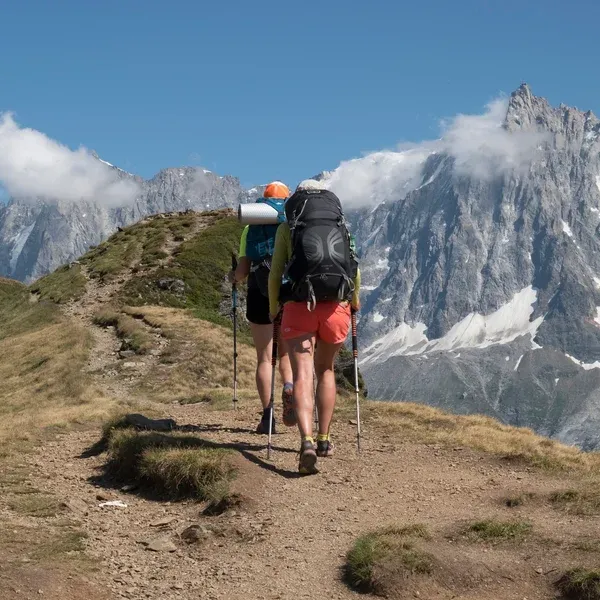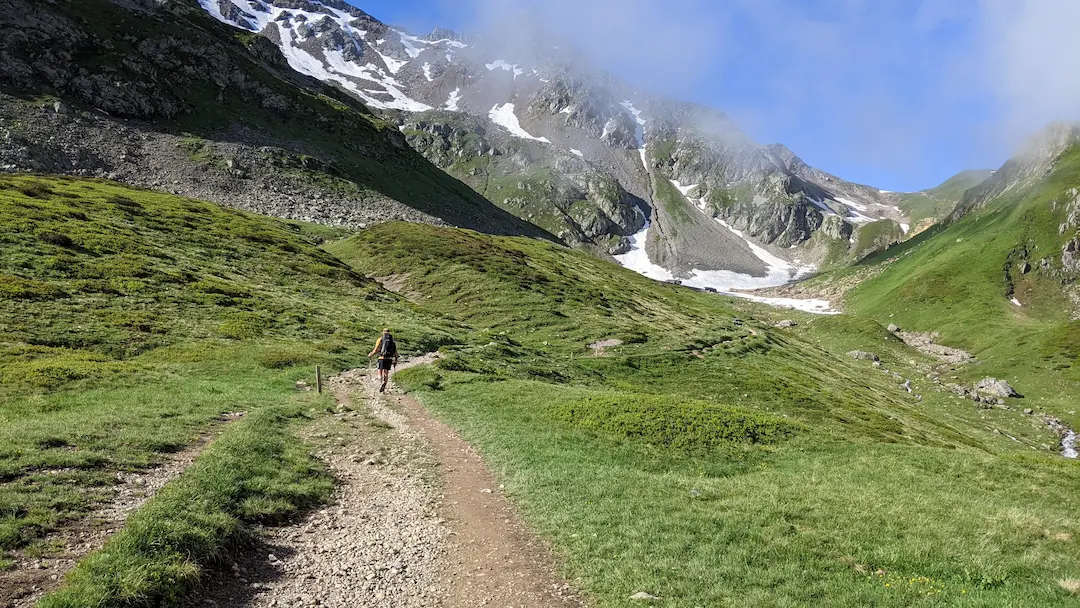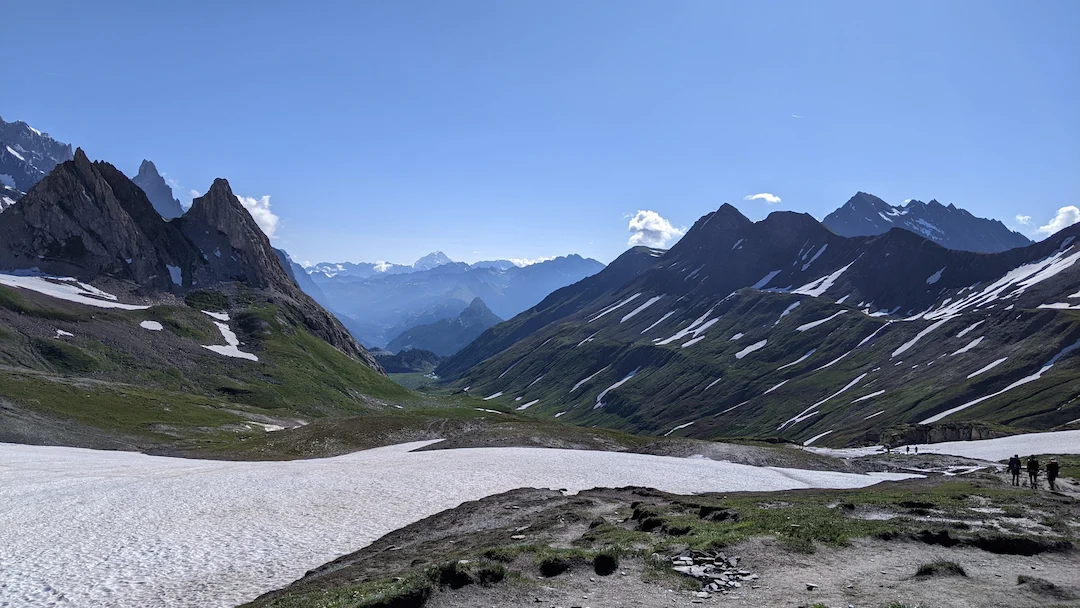
Hiking the Tour du Mont Blanc (TMB) means walking several days with everything you need in one pack, from hut to hut, hotel to hotel or under canvas. In 2025, around 75,000 hikers walked it, Espace Mont-Blanc reports (in French). Here is our base list, and the reasoning behind each choice.
Checklist of Gear to Pack for Your TMB
1. Clothing
Dress in layers: a breathable top, a fleece or light down jacket, a waterproof jacket. Keep the fleece even in summer: at a pass or in the evening, a warm layer changes your day. Waterproof over-trousers depend on the forecast, and a hat and gloves are mostly for early season or bad weather.
2. Boots and Socks
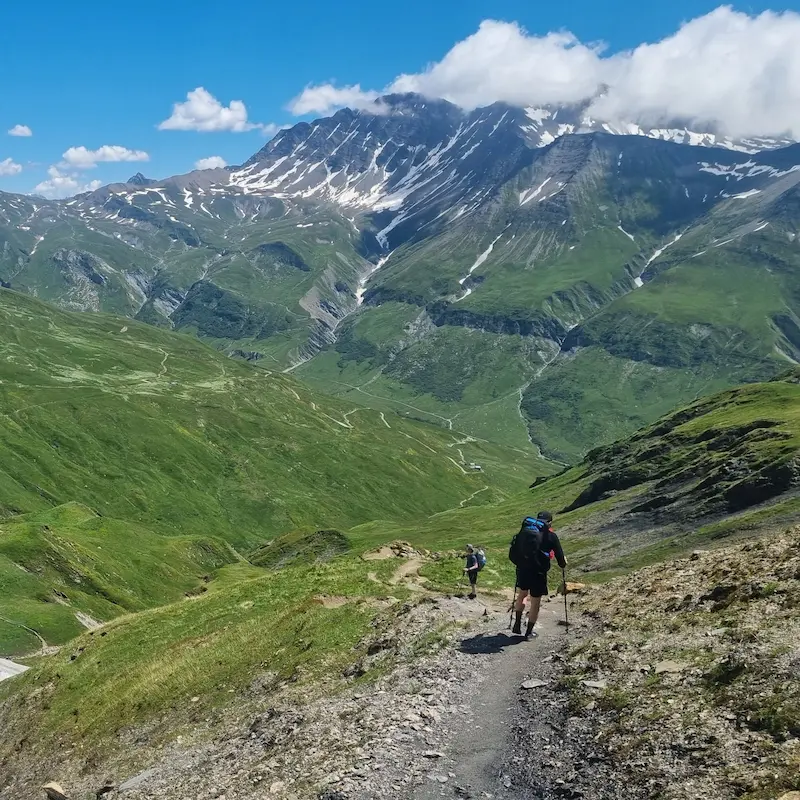
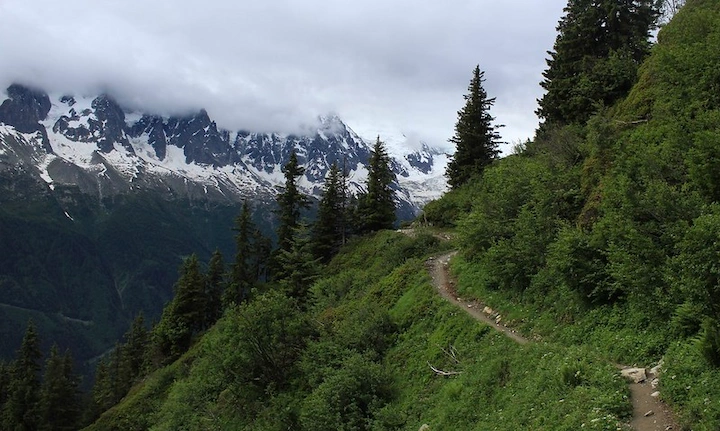
Your feet carry the tour: choose broken-in hiking boots with a grippy sole and a shaft that supports the ankle (our article on the difficulty of the TMB gives an idea of the terrain). Bring two or three pairs of hiking socks. Most huts provide Crocs: no need to pack slippers or sandals; in a hotel, a pair of light shoes for the evening is enough.
3. Technical Gear
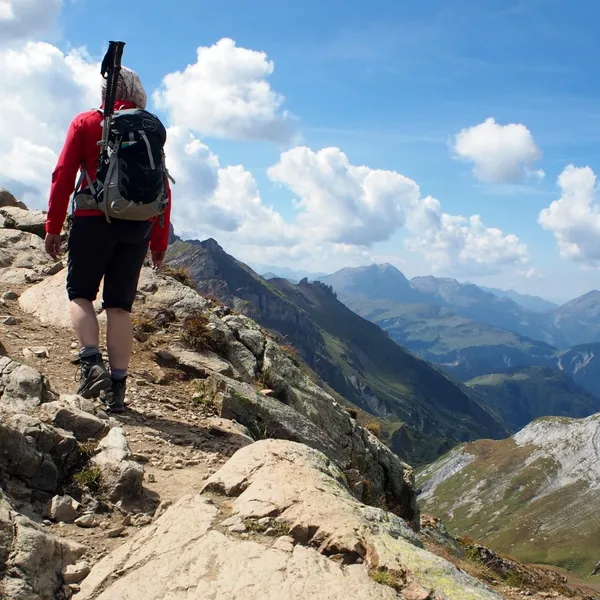
A 40 to 60 L pack is enough for a multi-day tour, with a rain cover and a waterproof liner inside. Carry water bottles for at least 1.5 L and trekking poles, which spare your knees on the descents. To find your way, use a GPX track, an app or a paper map: your choice, but always have one of the three. Category 3 sunglasses are enough, since the tour crosses no glacier, and sunscreen with lip balm protects you at altitude. Early in the season, light crampons can help on passes still under snow, until late June or early July.
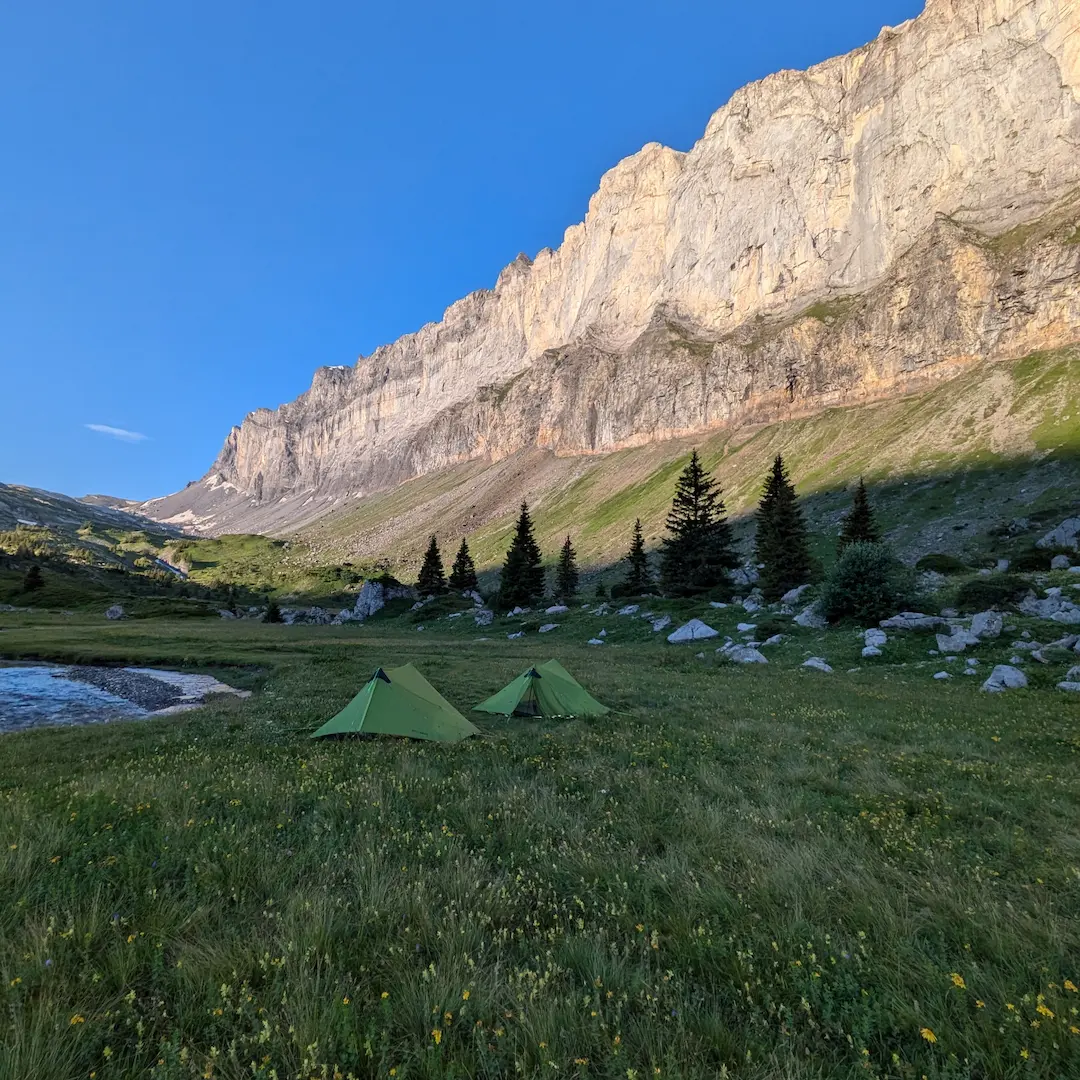
If you plan to bivouac, read our guide to the bivouac regulations first.
4. Miscellaneous Accessories
A few small items make the difference when something goes wrong: an emergency blanket and a whistle, a first-aid kit and your personal medication. Add a toiletry kit. Huts provide blankets but a sleeping bag liner is mandatory: bring your own, with earplugs and a microfibre towel. Pack snacks, even though huts sell packed lunches. For payments, carry cash: not every hut takes cards, and euros are accepted in Switzerland.
Browse All Our Itineraries
What to Bring
A base list: adapt it to your season, your type of trip and the weather forecast.
Pack
- Backpack, 40 to 60 L
- Rain cover and waterproof liner
- Small daypack Hotel
Feet
- Broken-in hiking boots
- Hiking socks (2 to 3 pairs)
- Light shoes for the evening Hotel
Clothing
- Breathable T-shirts (2 to 3)
- Hiking trousers, shorts
- Fleece or light down jacket
- Waterproof jacket
- Waterproof over-trousers (weather permitting)
- Warm hat and gloves (early season or forecast)
- Cap or sun hat
- Underwear, evening clothes
On the trail
- Water bottles: 1.5 L or more
- Snacks
- Trekking poles
- GPX track, app or paper map
- Phone, power bank
- Headlamp
- Emergency blanket, whistle
- Sunglasses (category 3)
- Sunscreen, lip balm
- Light crampons (early season)
Night & hygiene
- Sleeping-bag liner (mandatory) Hut
- Earplugs Hut
- Microfibre towel Hut Bivouac
- Toiletry kit, toilet paper
- Tent, sleeping bag, mat Bivouac
- Stove, pot, lighter Bivouac
- Purification tablets or filter bottle Bivouac
- Bags for your rubbish
Health & papers
- First-aid kit
- Personal medication
- ID card or passport
- EHIC/GHIC, rescue and repatriation insurance
- Cash: euros (accepted in Switzerland), Swiss francs