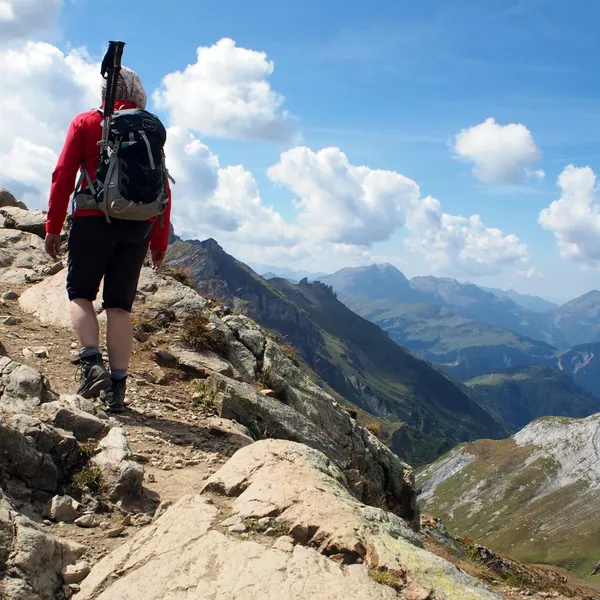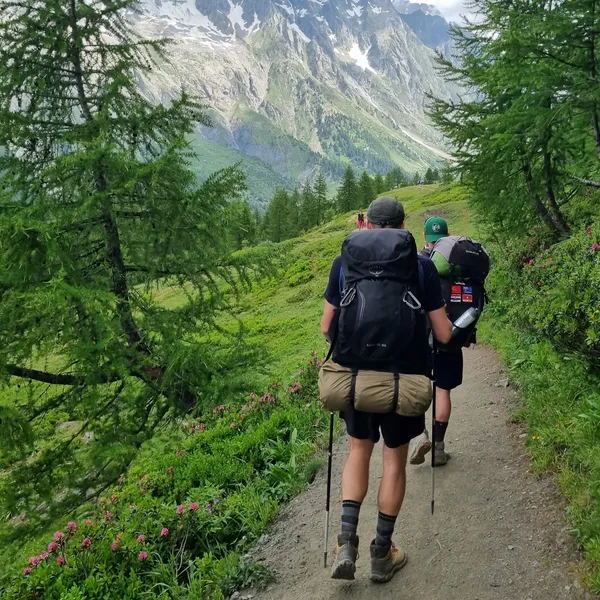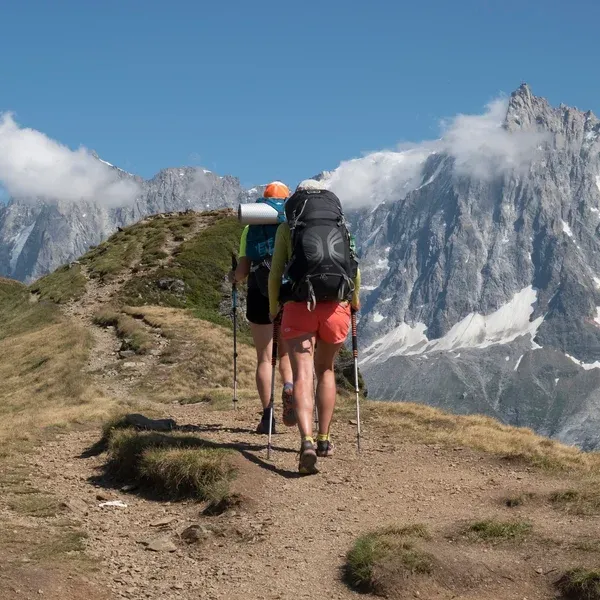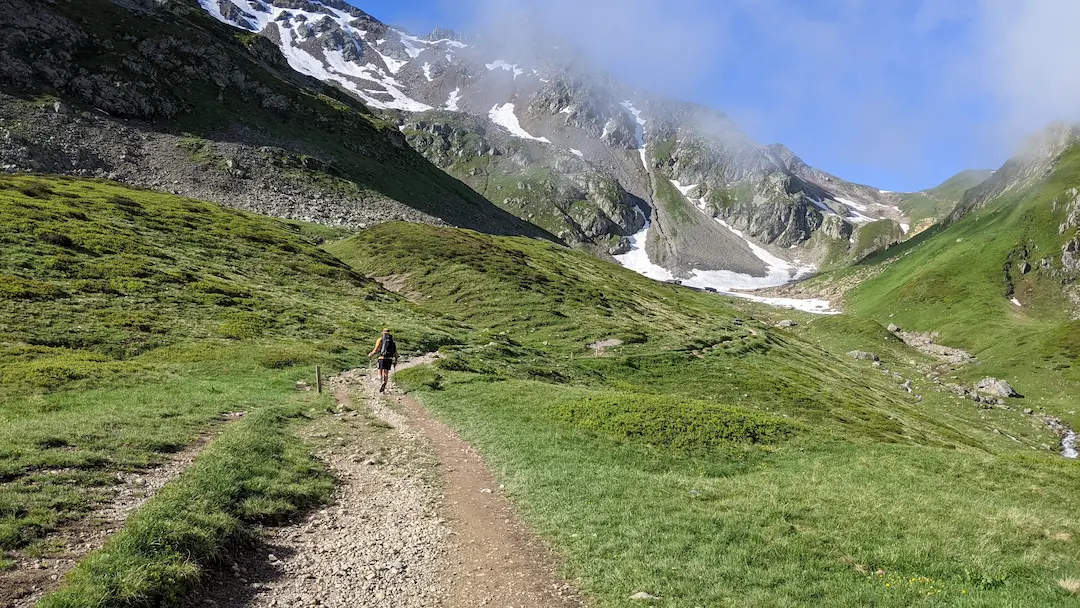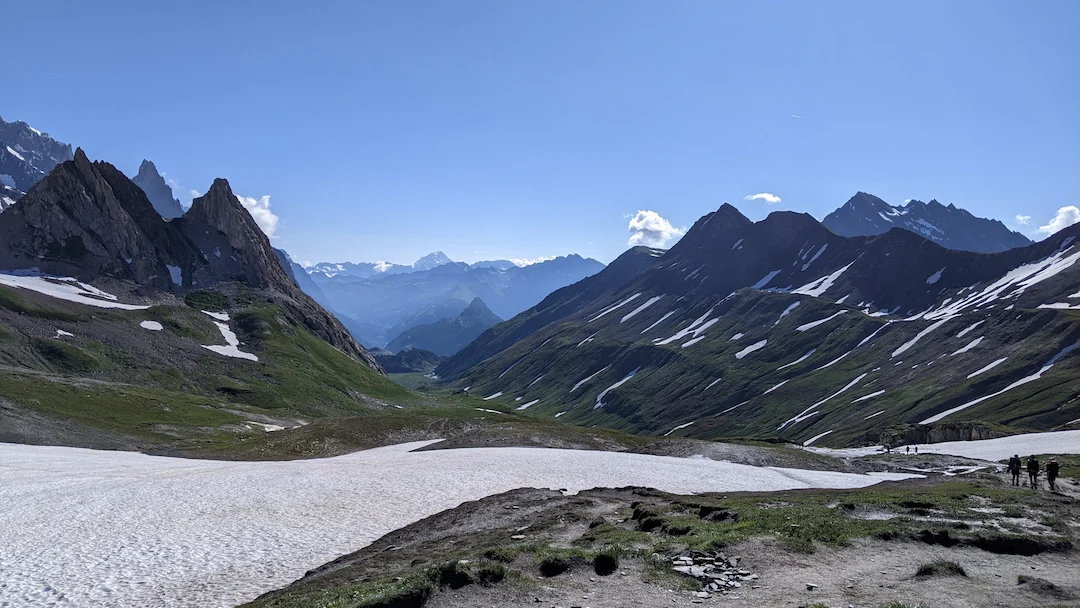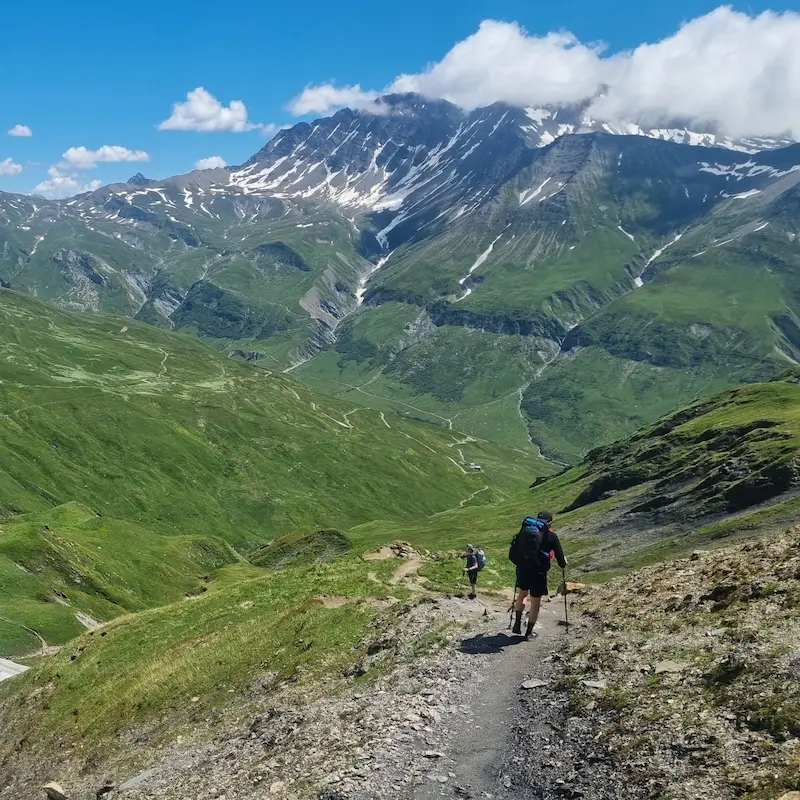
The Tour du Mont Blanc is one of the most iconic treks in Europe and attracts thousands of hikers from around the world every year: Espace Mont-Blanc counted around 75,000 in 2025. Before setting off, one question naturally persists - is this trek difficult?
As a reminder, here are some key figures and facts to know before you begin:
- Total distance: the Tour du Mont Blanc (TMB) covers approximately 170 km106 mi, with an impressive 10,000 m32,808 ft of cumulative elevation gain.
- Duration: the trek is most often completed in 7 to 10 days.
- Daily walking time: expect 6 to 8 hours of walking a day, or around 4 to 6 hours if you take 10 to 12 days.
- Countries crossed: the TMB passes through 3 countries - France, Italy, and Switzerland.
Itineraries and Adaptability
One of the aspects that makes the Tour du Mont Blanc accessible to a wide range of hikers is the possibility of choosing from different itineraries. You can opt for our 10-day itinerary, or a shorter format such as the 7-day itinerary, which makes for more demanding days.
It is worth noting that:
- The variants: for experienced hikers looking for additional challenges, there are more demanding variants, such as the Fenetre d’Arpette, longer and more committing than the classic passage via the Col de la Forclaz. The Col des Fours and the Col de Tricot are other variants of the route.
- Family-friendly options: the TMB can be adapted to include children, provided you plan the stages carefully and respect the abilities of the youngest members: La Chamoniarde (in French) advises waiting until they are 8-10 years old and not having them walk more than 6 hours a day. Do not hesitate to extend your trip to more than 10 days, a format that suits families particularly well, and opt for hotels or guesthouses with a luggage transfer service, available wherever the accommodation can be reached by car.
Explore All Our Itineraries
Tour du Mont Blanc in 7 Days
Stages, route & accommodation
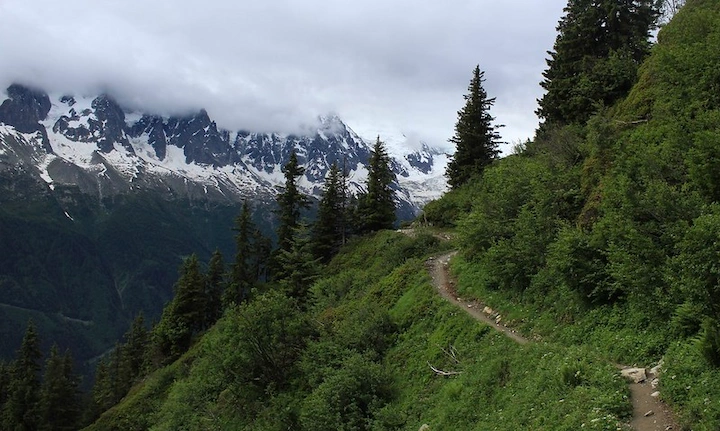
Tour du Mont Blanc in 10 Days
Stages, route & accommodation
What Physical Preparation Is Needed for a Safe TMB?
Good physical fitness is essential to fully enjoy the Tour du Mont Blanc without risk. The TMB is not technical, but it requires you to string together days of climbing. The intense physical efforts, linked to the distance and elevation gain, require adequate preparation:
- Building endurance: practise endurance activities such as running, cycling, or brisk walking several weeks or even months before departure. The goal is to strengthen your cardio to cope with prolonged days of walking.
- Progressive acclimatisation: before setting off, complete hikes on similar terrain, ideally in the mountains. This not only prepares your muscles for the ascents and descents but also helps you get used to weather variations.
- Targeted strength training: focus on exercises for the legs (squats, lunges) and core strengthening to protect your joints and back from the load of your backpack. If you have knee or ankle problems, do not hesitate to consult a physiotherapist before departure.
- Managing pack weight: learn to walk with a loaded hiking pack to get used to the weight, making sure not to exceed 20% of your body weight to avoid excessive fatigue, as the French hiking federation FFRandonnée recommends for multi-day hikes.
How to Equip Yourself Properly for TMB Conditions?
Mountain weather conditions, particularly on the Tour du Mont Blanc, are known for their unpredictability. Even in midsummer, it is not uncommon to encounter low temperatures, sudden storms, or thick fog. To ensure your safety and comfort, careful preparation is essential:
- Follow the weather forecasts: regularly check weather reports before and during your trek: pick a mountain forecast that gives the weather at the altitude of the passes (2,500 m8,202 ft), not the one for Chamonix. They will help you anticipate potential hazards and adjust your itinerary if necessary.
- Choose suitable equipment: invest in technical clothing designed to handle the whims of mountain weather. A good quality outdoor jacket is essential to effectively protect yourself against wind, rain, and cold. Complete your outfit with insulating mid-layers, waterproof trousers, and gloves for cooler days.
Being well equipped means maximising your chances of fully enjoying the TMB while staying sheltered from weather-related discomfort.
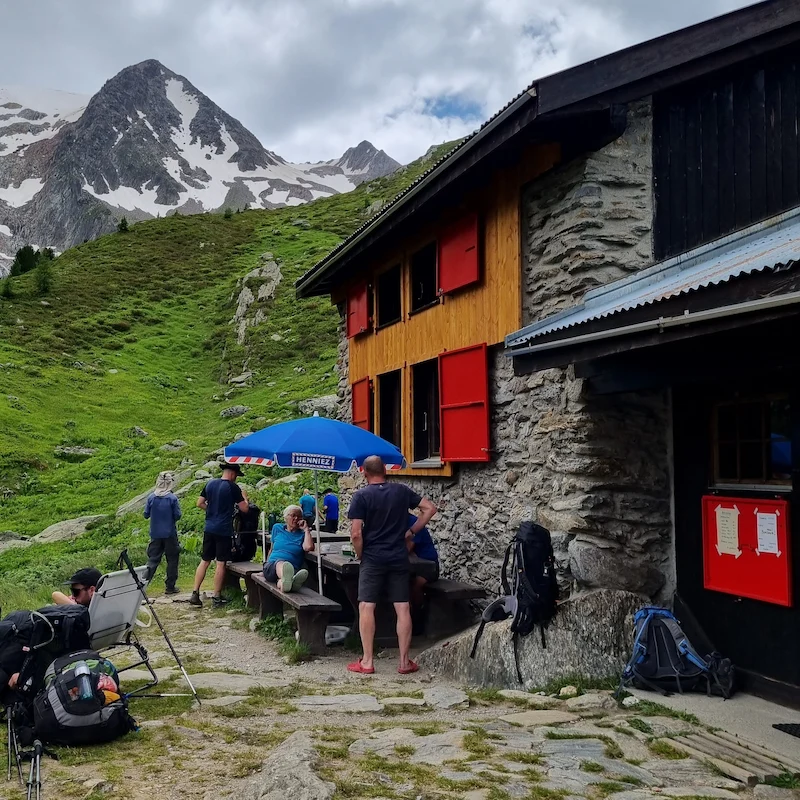
Logistics and Accommodation - The Key to a Successful TMB
Well-planned logistics are essential to fully enjoy the Tour du Mont Blanc. With its many stages and high-season crowds, planning ahead will save you a lot of hassle:
- Book early: refuges and other accommodation fill up quickly, especially during summer. Make sure to book your overnight stays in advance to secure your spot, particularly in refuges on the most popular stages. Bookings for the refuges and guesthouses that belong to the wardens’ association open for the 2027 season on 15 October 2026; between mid-July and mid-August, we recommend booking well ahead.
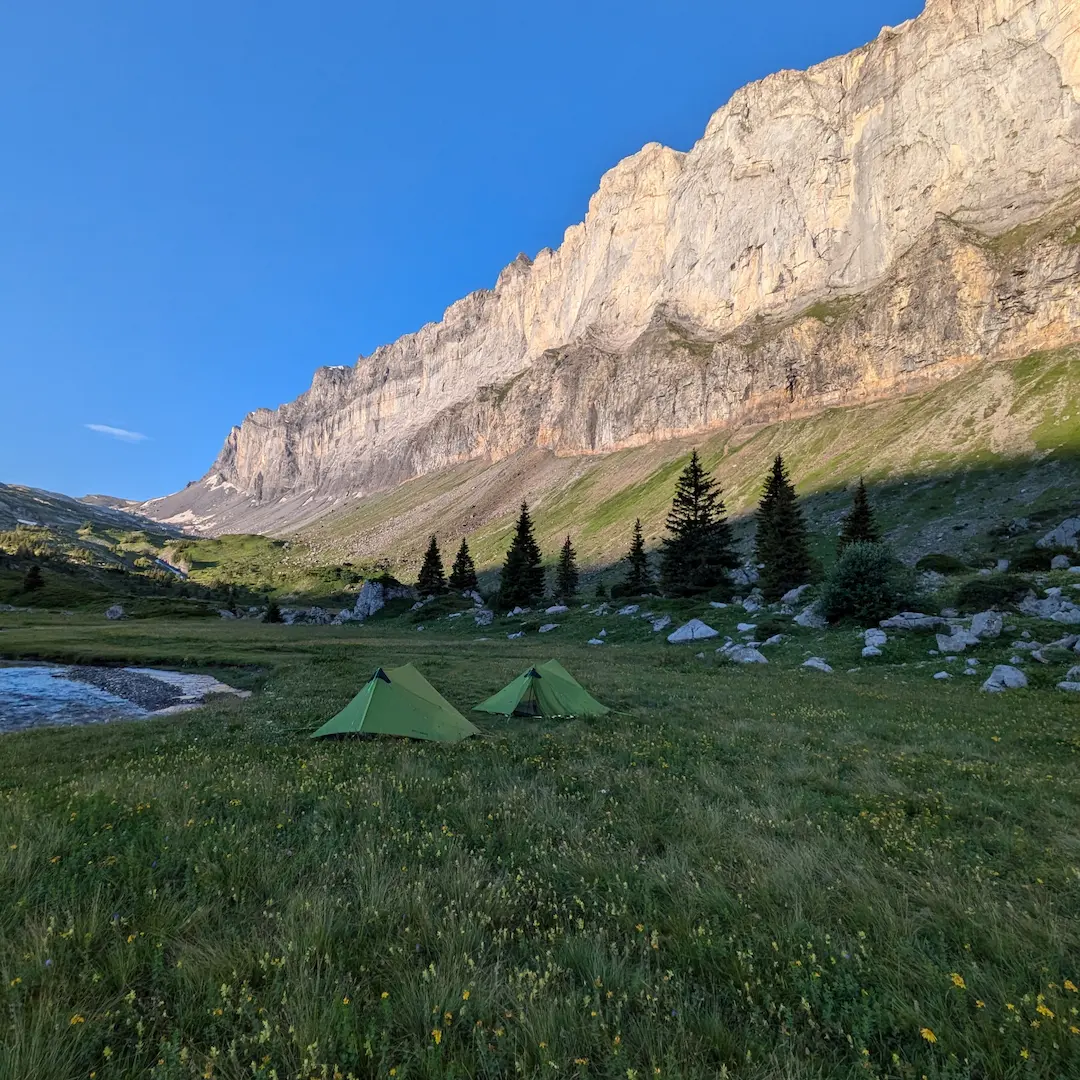
- Varied accommodation options: whether you prefer the comfort of a private room, the friendly atmosphere of a dormitory, or the immersive experience of bivouacking (while respecting local regulations), there are options for all budgets and preferences.
- Customise your trek: adapt your itinerary to your preferences and fitness level. You can opt for shorter stages to savour the scenery at your own pace or choose more demanding variants if you are looking for an extra challenge. A personalised trek guarantees a unique experience, perfectly suited to your physical abilities and expectations.
- Luggage transfer services: if the idea of carrying a loaded pack for several days seems daunting, luggage transfer services are available. These services transport your bags from one refuge to the next, as long as they can be reached by car, lightening your backpack. This gives you optimal comfort to fully enjoy your walking days without the burden of extra weight.