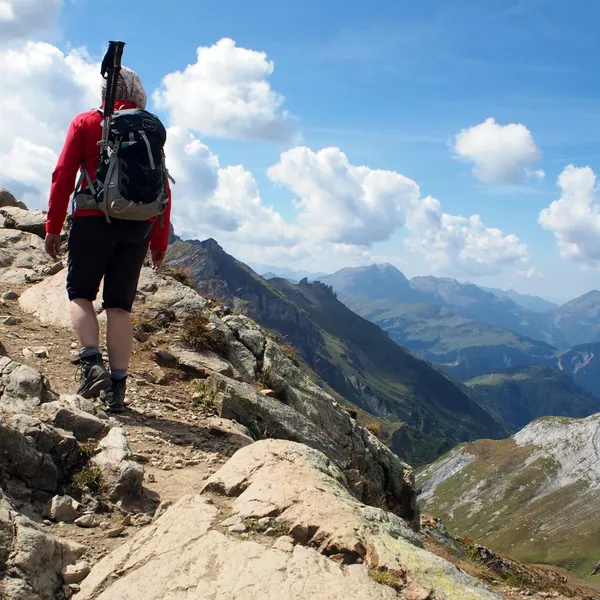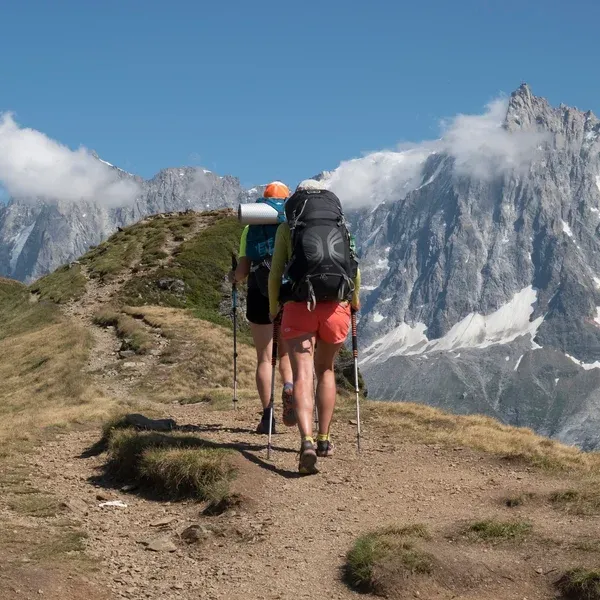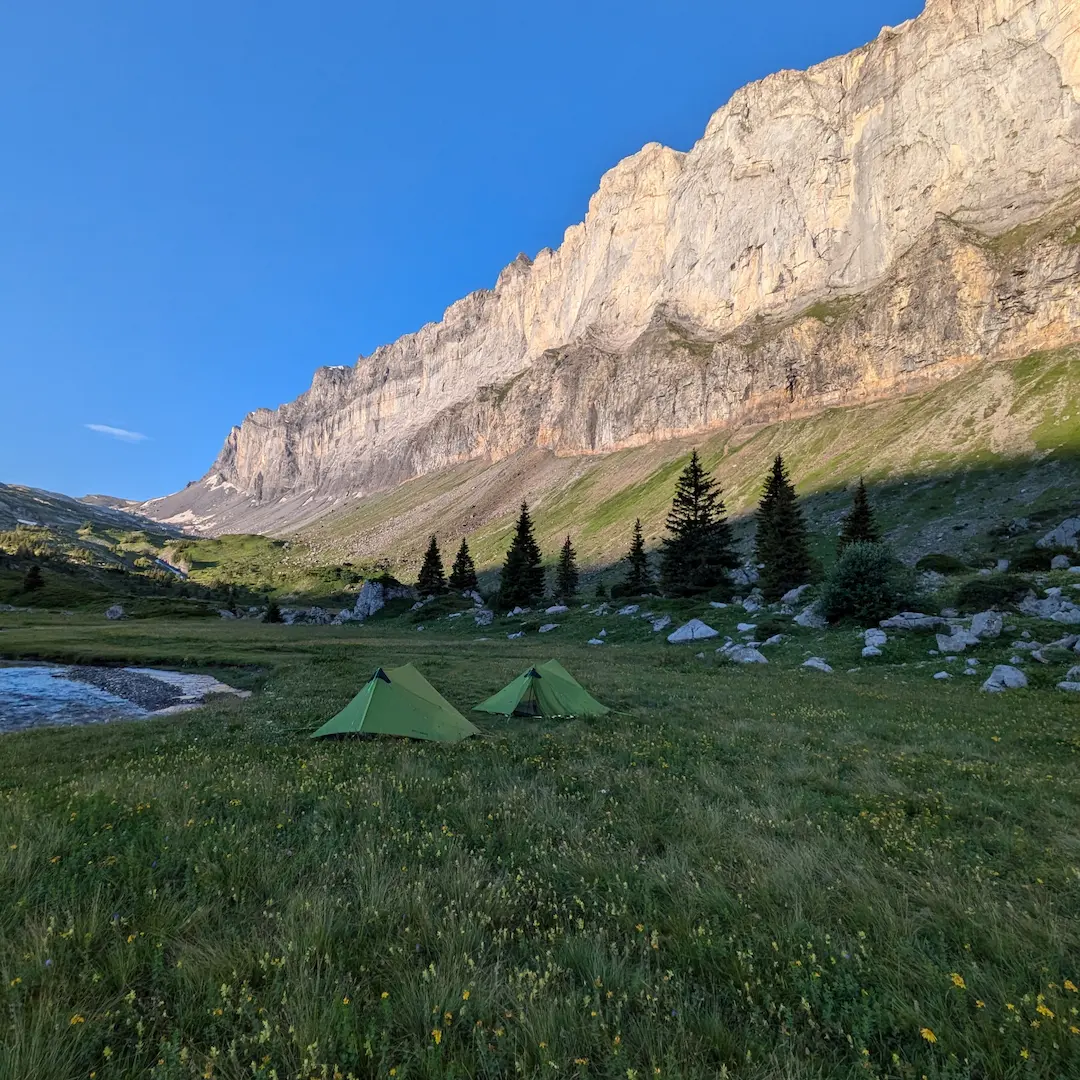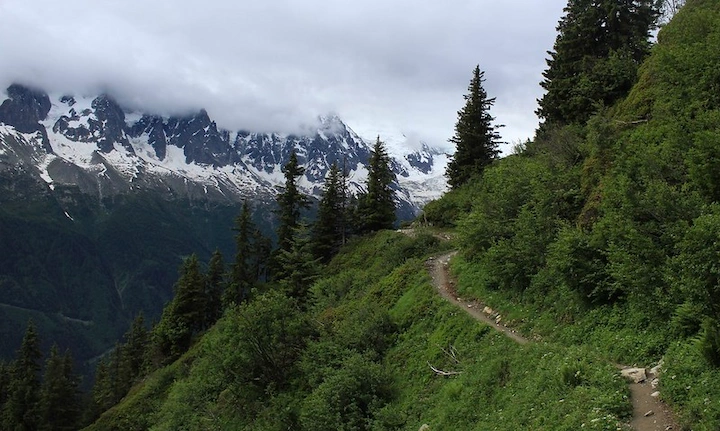
The Tour du Mont Blanc does not require you to be an athlete or to know how to climb. What matters is being able to string together several days of ascent and descent with a pack on your back. Three months of regular training are enough for the trek to remain a pleasure rather than an ordeal. Here is how to organise those three months, what to know if you are a beginner, and the safety rules to apply once you are in the mountains.
How fit do you need to be for the Tour du Mont Blanc?
The benchmark given by the TMB’s hut wardens is simple: be able to walk for 6 hours with 1,000 m3,281 ft of ascent, carrying a pack, and set off again the next day. The route involves no climbing and calls for no technical equipment: above all, it demands endurance and consistency.
That benchmark applies to a tour of around 10 days. If you are aiming for 7 days, train for longer days: more than 1,400 m4,593 ft of ascent and more than 7 hours of walking, as explained in our article on how many days to hike the Tour du Mont Blanc.
The second half of that benchmark matters most. Many hikers can manage one long day; fatigue really sets in on the second and third days, with heavy legs in the morning, the first blisters and a pack that seems heavier than the day before. Training is above all about getting used to that repetition.
La Chamoniarde, Chamonix’s mountain safety and rescue society, describes the tour as “within the reach of any trained hiker who is used to walking on varied terrain and carrying a loaded backpack” (translated from French). On a tour of eight to ten days, expect around six hours of walking a day; stretch the tour to 12 days and the stages come down to 4 to 6 hours.
The number of days and the way you travel therefore change the daily effort considerably: a daypack, with your luggage transferred from one stage to the next, does not tax the body like a camping pack loaded with a tent and food. Our article on how many days to hike the Tour du Mont Blanc compares the formats, and is the Tour du Mont Blanc difficult? looks at the difficulty of the route.
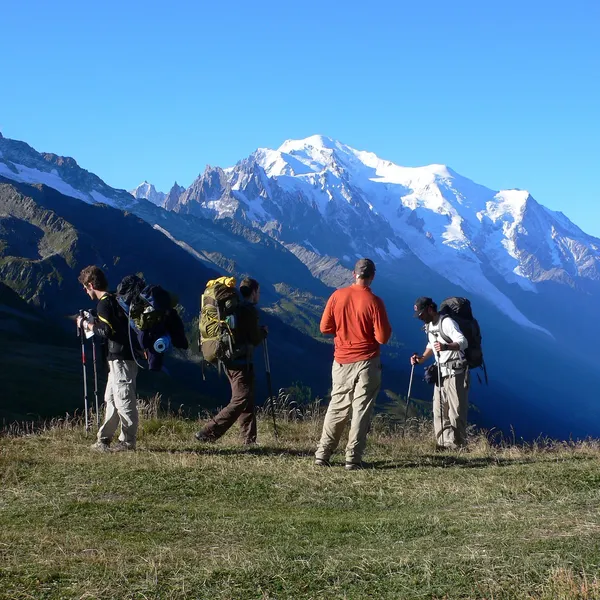
Can a beginner hike the Tour du Mont Blanc?
Yes, and it makes an excellent first trek. The trail is well waymarked and well maintained, and La Chamoniarde points out that “there is no technical section on the classic GR” (translated from French). If you are going without a guide, another skill matters as much as fitness: being able to read a topographic map and find your way in bad weather. When fog settles over a pass, that is what makes the difference.
If you lack experience, we recommend joining a hiking club or taking part in group outings led by mountain leaders. A few weekends in a group are a good way to become familiar with map reading.
For a first experience, start with a 2-day, 1-night introductory stage before committing to the full tour. Two days of walking and one night in the type of accommodation you are planning, refuge or tent, will tell you whether the format suits you.
With children, La Chamoniarde advises waiting until they are 8 to 10 years old, even if they are sporty: “the reasonable age is around 10” (translated from French). On the trail, limit days to 6 hours of walking, make sure they drink and eat regularly, and keep the ascent even from one day to the next. For a family, a tour of 11 or 12 days leaves that margin, as our article on how many days to hike the Tour du Mont Blanc explains.
If navigation worries you, you can also go with a guide: our guided tours let you walk in a group with a qualified mountain guide, who takes care of the route while you enjoy the scenery.
How should you train for the Tour du Mont Blanc?
Train over three months, building up step by step: it is not an athlete’s plan, it relies above all on regularity. In our view, two moderate outings every week are more useful than a single long day once a month.
Three months before: finding your rhythm
If you have not done so already, book your accommodation now as well. On the French side, stakeholders across the massif approved in September 2026 the principles of a charter (in French) that provides for a booking every night from spring 2027; its text is not yet final: our article on what changes in 2027 gives the details. If you are camping, the bivouac areas at Les Contamines-Montjoie and in the Aiguilles Rouges are also booked online, on the Haute-Savoie nature reserves portal (in French); our guide to camping on the TMB covers the rules.
Plan two outings a week, one of them uphill, aiming for 2 to 3 hours of walking without pushing too hard. When the mountains are far away, any endurance exercise will do: brisk walking, cycling, swimming, easy running, stair climbing or the elliptical trainer, at moderate intensity for 45 minutes to 1 hour.
Add a short strength session for the legs, back and stability: squats, lunges, step-ups, core work and balance exercises. This work matters, because the descents on the TMB put heavy strain on the quadriceps and knees. It is often the descents, more than the climbs, that leave you stiff the next day.
Two months before: the weekly long hike
Add one long hike a week of 4 to 5 hours, with 800 to 1,000 m2,625 to 3,281 ft of ascent and a 6 kg13 lb pack. Make it heavier week by week until you reach the load you will carry on the tour. That load depends on how you travel: it will be much higher if you are camping, with the tent and food, than with luggage transferred from one stage to the next. If you can, already walk two consecutive days: it is the best way to prepare for one stage following another.
This is also the time to think about the weight of your pack. For a multi-day hike, the French Hiking Federation (in French) recommends a pack of no more than 20% of the hiker’s body weight: 11 kg24 lb for a person weighing 55 kg121 lb, 16 kg35 lb for 80 kg176 lb. Beyond that, the risk of falls and sprains on rough terrain increases, as does the risk of tendinitis. When camping, this limit is often what forces you to cut weight, since the tent, sleeping bag and stove all count within that 20%.
If your training pack already exceeds that threshold, sort through it: our list of gear for the Tour du Mont Blanc will help you lighten it without leaving anything essential behind.
One month before: the test weekend
This is the dress rehearsal: two consecutive days with the pack and boots you will use on the trek. Test all of your gear: pack, boots, socks, clothing, poles, hydration system and first aid kit. The weekend shows you the rubbing points and the adjustments to make, and it is far better to discover them close to home than on the second day of the tour.
The last ten days: recovering
The goal is no longer to improve, but to recover. Reduce your training volume, look after your sleep and above all, do not try anything new: avoid, for example, breaking in new boots on the first stage.
What safety rules should you follow in the mountains?
The most common danger is also the least spectacular. As the Swiss Alpine Club puts it, “Falls are the main cause of accidents!”, and fatigue and a sustained pace reduce your concentration and the steadiness of your steps. That is one more argument for training: at the end of a stage, less tired legs mean surer footing. Take breaks, drink, eat, and keep to a pace that leaves no one in the group out of breath.
For any hike in the mountains, La Chamoniarde (in French) also recommends that you:
- choose stages suited to your level, to the group’s level, to the terrain and to the weather;
- if you are walking alone, which is never wise, tell someone close to you about your route and your planned departure and arrival times;
- have a plan B when the day’s stage looks ambitious given the weather, the time or how you feel;
- know when to turn back, without overestimating yourself, and match the pace to the least experienced person in the group.
Above all, we recommend that you set off early. In the mountains, most thunderstorms break between 2 pm and 5 pm: aim to reach your stop around 3 pm. Leaving early in the morning also lets you avoid the worst of the heat and keeps a margin in case of a navigation error or a change in the weather. If you like to linger on the passes or explore the villages along the way, it is this early start that gives you the time.
If a storm catches you anyway, head down to get away from high points, do not shelter under an isolated tree and keep away from water. If there is no shelter, insulate yourself from the ground by crouching on your pack, and put down metal objects such as trekking poles, moving away from them.
What should you check in the days before you set off?
Start with the weather, checking a mountain forecast for the altitude of the passes, around 2,500 m8,200 ft, and not the one for Chamonix. Note three things: the freezing level, the time storms are expected to develop and the wind strength on the passes. On the morning you set off, check that the sky matches the previous day’s forecast.
If you are setting off early in the season, then find out about snow conditions. Before mid-June, the Col du Bonhomme, the Col des Fours and the Fenêtre d’Arpette keep snowfields on their north faces, which are slippery and exposed. The route can remain difficult, even tricky, until late June or early July: light crampons, telescopic poles and even an ice axe can then be useful. Our article on the best time to hike the TMB will help you choose your dates.
To find out the actual state of the trail, call the refuge at your next stop: its warden is best placed to tell you. Also check the closures announced by the tourist offices of the three valleys, and ask La Chamoniarde about the snow line and any closure orders, as trail work is frequent.
Before you leave, save the emergency numbers in your phone: 112 in France and Italy (Aosta Valley), 144 in Switzerland (Valais).
When you call, be precise and concise: give the location (altitude, distinctive features, what the people are wearing), the number of casualties, the type of accident and injuries, your name and, if possible, your mobile number. When the helicopter arrives, the standard signal is simple: stand still, upright, with your arms forming a Y.