Most hikers complete the Tour du Mont Blanc in 7 to 10 days. That range covers very different ways of travelling, though: A tour in refuges, under canvas or in hotels with your luggage transferred does not take the same number of days, and neither does a tour built around the walking rather than around the villages and valleys along the way.
The right number of days therefore depends on your fitness, your accommodation setup and what you want to get out of the trek. For a first TMB, we recommend planning on 10 days, then adjusting according to the points below.
How many days does it take to hike the Tour du Mont Blanc?
There is no set duration. The TMB is hiked in 5 to 12 days depending on fitness and pace, most often in 7 to 10. The Aosta Valley gives a more generous estimate: its tourist board states that the route “may be completed over a period of approximately 12 days walking”. The gap is easy to explain: not every estimate has the same hiker in mind.
The number of days comes down to three factors:
- Your fitness: how many hours of walking and how much elevation gain you can handle, and above all for how many consecutive days.
- Your setup: refuge, camping or hotel, with or without luggage transfer. We come back to this below, as it is often the factor that tips the balance towards one format or another.
- What you want from the trip: the TMB is not only a physical challenge. If you also want to visit the villages, take detours or simply make the most of the scenery, allow extra days.
How long is the Tour du Mont Blanc and what is the route?
The circuit covers about 170 km106 mi and 10,000 m32,808 ft of elevation gain across three countries, or around 60 hours of walking in total. The “classic” start is in Les Houches, and the route is rated “Difficult”: not because of any technical passage, but because you have to string together several days of climbing and descending with a pack on your back.
In the classic direction (anti-clockwise), you leave Les Houches over the Col de Voza to reach Les Contamines, then cross the Col du Bonhomme and the Col de la Croix du Bonhomme (2,443 m8,015 ft) before descending to Les Chapieux. The Col de la Seigne (2,591 m8,501 ft) marks the entry into Italy, towards Courmayeur and the Italian Val Ferret. The Grand Col Ferret (2,536 m8,320 ft) leads into Switzerland: La Fouly, Champex, Trient. You return to France over the Col de Balme (2,204 m7,231 ft), and the tour ends via La Flégère and the Col du Brévent (2,368 m7,769 ft) back to Les Houches. The full route is on our interactive map.
Several variants branch off the main route: the Col de Tricot, the Col des Fours, the Petit Col Ferret, Vallorcine and above all the Fenêtre d’Arpette (2,665 m8,743 ft), longer and more demanding than the classic route over the Col de la Forclaz. If you are considering one of them, build some slack into your schedule: this kind of stage is often decided on the morning itself, depending on the weather and how you feel.
How many hours a day will you hike on each format?
The difference between formats shows most clearly at the scale of a single day. Over 7 days, you cover on average 24 km15 mi and 1,400 m4,593 ft of elevation gain per day. Over 10 days, the average drops to about 17 km11 mi and 1,000 m3,281 ft. Over 11 or 12 days, the stages are shorter still.
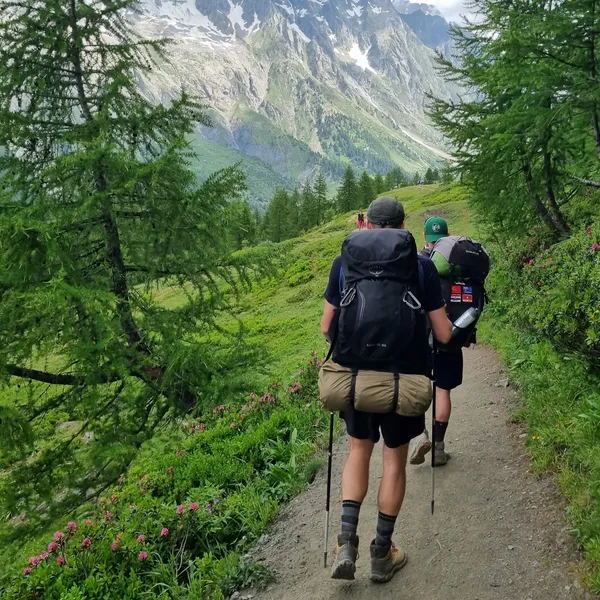
A day on the TMB usually means 6 to 8 hours of walking; over 7 days, the roughly 60 hours of the circuit push the average beyond 8 hours a day. Once you add breaks, the picnic lunch and photo stops, you set off in the morning and arrive in the late afternoon. The main difficulty lies in repeating the effort over several consecutive days. What you carry matters a great deal too: with a daypack and your luggage transferred, those hours of walking are far less tiring than with a tent on your back.
Not all stages are alike. From Bonatti to Rifugio Elena, allow 2 hours 30 minutes of walking, a half-day that is almost restful. From Les Contamines to Les Chapieux over the Col du Bonhomme, it takes 7 hours 20 minutes: one of the longest stages of the whole tour, according to the Aosta Valley (in French and Italian). A good itinerary alternates long and short stages.
Is the Tour du Mont Blanc in 7 days difficult?
Yes, it is a demanding format. It means about 24 km15 mi and more than 1,400 m4,593 ft of elevation gain every day, with days that easily exceed 7 hours of walking, not counting breaks. The association of TMB hut wardens reserves it for regular hikers who are already comfortable with long days in the mountains.
The descents are often underestimated: over several days, they put heavy strain on the knees and ankles. This format also leaves very little margin: a day of bad weather, a blister or a poor night’s sleep can complicate the rest of the trek, with no spare day to adapt.
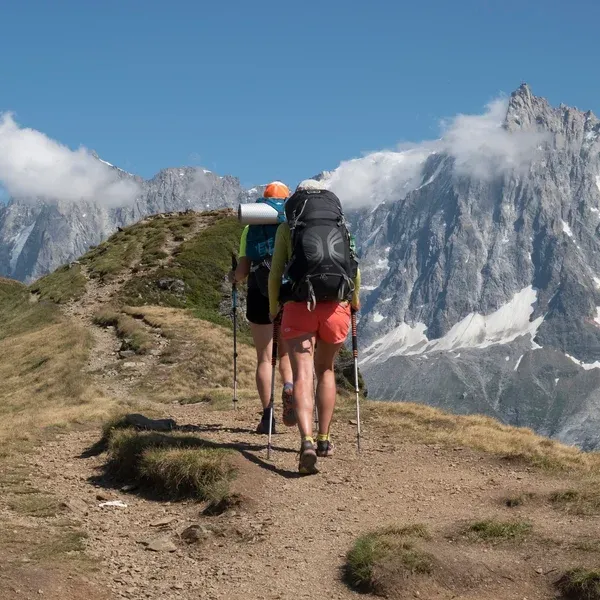
Your setup plays an important role as well. In 7 days, with luggage transfer and a few nights in hotels, the tour remains within reach of a strong hiker. Camping, with the tent and food to carry, it remains feasible, but calls for a well-lightened pack and good fitness.
Who we recommend it for: hikers who already string together outings of 1,000 to 1,500 m3,281 to 4,921 ft of elevation gain several days in a row. If you are torn between 7 and 10 days, the 10-day format will often be more comfortable. To assess your level, read our article Is the Tour du Mont Blanc difficult?
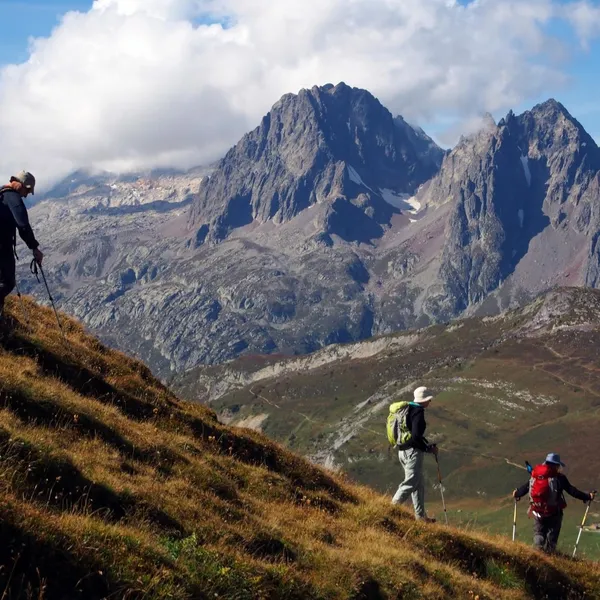
7 days or 11 days: what really changes?
These two formats offer a very different experience. In 7 days, the days are long: an early start, arrival at the stage in the late afternoon, whether that is a refuge, a hotel or a campsite, then rest before setting off again. In 11 days, shorter stages let you arrive in the early afternoon, linger on the passes, take a variant when the weather allows or absorb a rainy day without reworking the whole schedule. It is the format best suited to families, active seniors and hikers who prefer shorter walking days.
Between the two, the 10-day format offers the best balance, and it is the one we recommend for a first TMB: the days remain well filled while leaving room to enjoy the route.
Longer formats do come at a cost, however: more nights of accommodation, and therefore a higher budget, plus more days off work. They also mean more bookings: read what changes in 2027 before setting your dates.
The day-by-day breakdown is in our itineraries Tour du Mont Blanc in 7 days and Tour du Mont Blanc in 10 days. If you would rather hand over the organisation, our tours run self-guided, over 8 or 12 days, and guided, over 10 days.
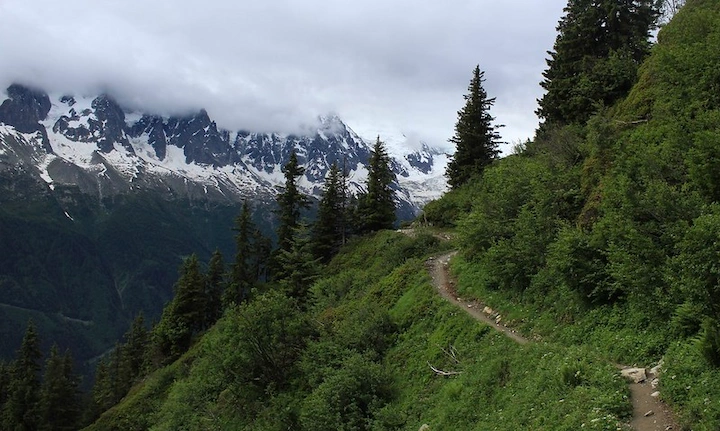
Refuge, campsite, wild camping or hotel: how many days for your setup?
In refuges, the most common setup, you are on half-board and carry a pack of 8 to 10 kg, water included. The itinerary follows the location of the refuges, and the classic TMB stages are designed for this pace, over 7 to 10 days. To choose your accommodation, read our article where to stay on the Tour du Mont Blanc.
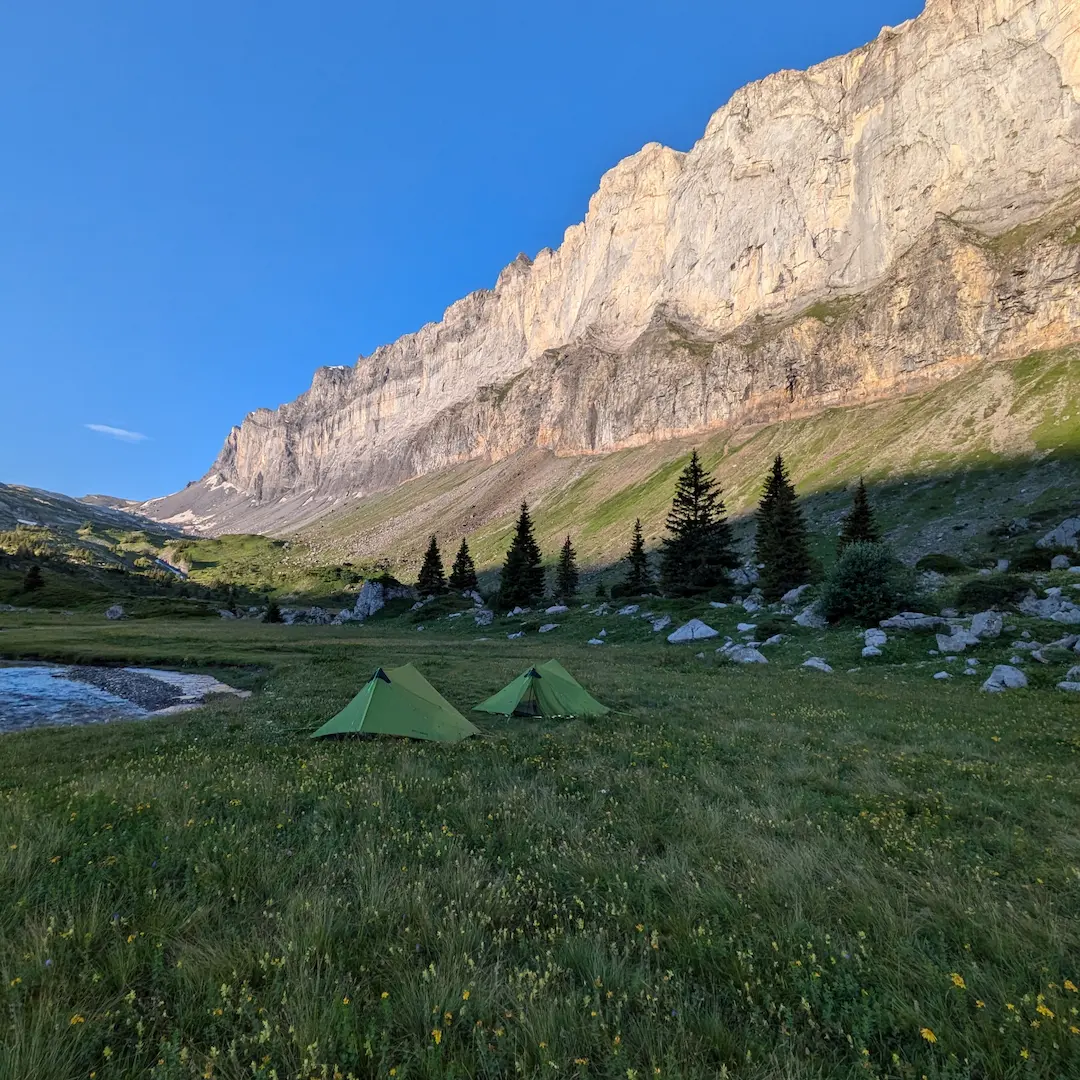
At campsites or wild camping, you gain independence, but the pack is much heavier: tent, sleeping bag, stove and food. Wild camping is also tightly regulated: banned in the Vallée des Glaciers, limited to designated areas and by reservation in the Contamines and Aiguilles Rouges nature reserves, banned in Italy except for mountaineering bivouacs above 2,500 m8,202 ft, and generally banned in Switzerland. The mayors of the municipalities along the route have agreed in principle on a charter that would replace wild camping with designated sites from 2027. On a good part of the tour you will therefore sleep at campsites, and these set your stages as much as the refuges do; on the Italian crossing, where the campsites are off the route, most hikers with a tent spend those nights in refuges or in Courmayeur. A tour of 7 to 10 days remains entirely feasible under canvas: read our guide to camping on the TMB and our article where to stay on the Tour du Mont Blanc before planning your stages.
In hotels, with luggage transfer, this is the most comfortable setup: you walk with a daypack, your belongings wait for you at the end of the stage, and a night in a private room makes recovery easier. The long stages become more manageable, and a shorter format can suit a strong hiker. Our self-guided tours include daily luggage transfer.
With a guide, the pace is set by the group, your luggage is transferred, and both navigation and the planning of the stages are taken care of. Our guided tours run over 10 days.
How much time should you allow for sightseeing?
The TMB is more than a physical challenge. It crosses three countries, with villages and valleys that deserve a stop. A few extra half-days let you make the most of them.
- Courmayeur: half a day to discover the village, at the foot of the Italian side of Mont Blanc, before heading into the Val Ferret.
- The Italian Val Ferret and Rifugio Bonatti: in our view, the most beautiful section of the tour. A night at Bonatti belongs in your plans from the very start.
- Champex-Lac: an end of stage by the lake, ideal for recovering halfway round the tour.
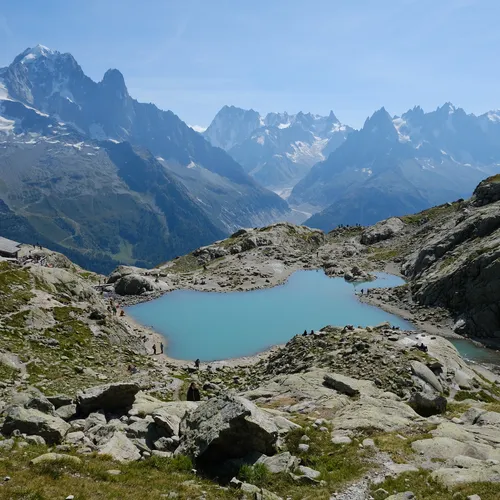
- Lac Blanc: close to the main route, above Chamonix, it is well worth the detour, provided you allow the time for it.
- A spare day: useful for waiting for a better weather window before a pass, or for attempting the Fenêtre d’Arpette in good conditions.
Allow half a day to a full day for each place you want to explore.
Which duration suits your profile?
Our recommendations by profile:
- First long trek, fit hiker with little multi-day experience: 10 days, or 11 to 12 days for a more relaxed pace.
- Regular hiker, used to multi-day outings: 9 or 10 days, or even 7 if you are comfortable with long days back to back.
- Very well-trained hiker, at home in the mountains: 7 days.
- Family with teenagers, active seniors: 11 or 12 days. For children’s ages and walking times, see how to train for the Tour du Mont Blanc.
- Camping, tent on your back: 7 to 10 days is entirely feasible, provided you plan the stages around campsites and the spots where camping is allowed.
- To visit, take photos and enjoy the villages: 11 or 12 days, keeping one or two half-days free.
- Only one week available and little experience: better not to aim for the full circuit and to split it in two (see below).
Can you hike the Tour du Mont Blanc in 3 days?
Not as a hike: the shortest duration the hut wardens put forward is 5 days, for very well-trained hikers. Completing the full circuit in under three days is a matter of racing: the UTMB covered 174 km108 mi and 9,700 m31,824 ft of elevation gain in 2026, with a time limit of 45 hours 30 minutes.
In three days, however, you can hike part of the tour. It is actually a good way to start: a 2-day, 1-night discovery outing lets you test your level, your gear and refuge life before committing to the full circuit.
If a full week in one go seems too long, the tour can also be done in two parts, over two years: the northern loop (Chamonix, Courmayeur, Champex, Trient) one year, the southern loop (Chamonix, Les Contamines, Les Chapieux, Courmayeur) the next.
For a three-day trip, we recommend the Italian Val Ferret: from Courmayeur, climb to Rifugio Bonatti for the first night, continue to Rifugio Elena the next day, then climb to the Grand Col Ferret for the view into Switzerland, and come back down on the Italian side to the head of the Val Ferret; plan to return to Courmayeur by public transport. We explain why in our article on the most beautiful part of the TMB.
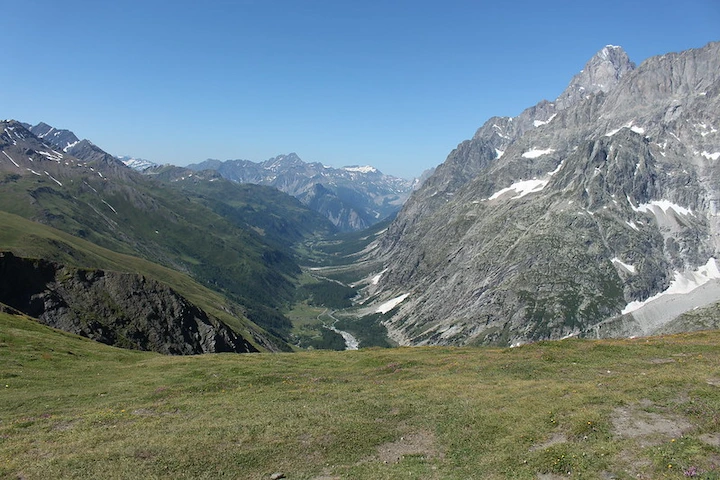
How can you shorten the Tour du Mont Blanc?
The TMB can be started from many places (Les Houches, Chamonix, Courmayeur, Les Contamines, Champex, Trient…) and hiked in either direction. The Aosta Valley itself suggests using public transport and cable cars to shorten some sections. Taking a bus along a valley section to keep a day in hand is an entirely reasonable option.
The most useful shortcut is in Switzerland. The crossing of the Swiss Val Ferret is long and less spectacular than the rest of the tour; the TMR Tour du Mont Blanc bus links Ferret, La Fouly, Orsières and Champex-Lac. In 2026, it ran daily until 27 September, for CHF 12 or 14 EUR$16 per adult.
On the Chamonix side, the Les Houches - Saint-Gervais and Flégère lifts, both on the classic route, let you skip a climb or a descent. In 2026, the Compagnie du Mont-Blanc (in French) opened the first from 6 June to 13 September and the second from 20 June to 13 September, dates “given as an indication” (translated from French): check them before you set off.
Finally, a bus links Chamonix and Courmayeur every day in high season, which lets you do the tour in two loops or get back to your starting point if needed.