On the Tour du Mont Blanc, choosing where you sleep matters almost as much as choosing your route. Refuges, gîtes and inns line the entire circuit, and a handful of campsites and bivouac areas also make it possible to travel with a tent. Much of the experience happens in the evening: dinner at the refuge after the stage or a meal cooked beside the tent, a night in a dormitory, a private room or under canvas, then setting off the next morning facing the peaks.
Here is what to expect from each type of accommodation, what a night costs, the refuges we recommend, how to book your stages and the rules to know if you are bringing a tent.
Where to stay on the Tour du Mont Blanc?
The route offers four main types of accommodation: the refuge, the gîte, the hotel and the campsite. Refuges cover the high-altitude stages, gîtes and inns are found in the villages, and in the valleys some hotels offer packages designed for TMB hikers. A few campsites complete the picture. Then there is the bivouac, which is not accommodation at all: a night in a tent out in the open, with no services whatsoever, and tightly regulated on the TMB.
Many hikers combine several options: refuge nights for the atmosphere and the views, and a night in a hotel or a village gîte to enjoy a proper shower and a room of their own. In our view, this is the best balance. The right mix depends on how you like to travel, however: if you want time to explore Courmayeur or Champex, a night in the village suits you better than an isolated refuge; if the mountains are what you came for, favour the refuges; if independence matters most, a tent remains an option, at a campsite or bivouacking where it is permitted, at the cost of a considerably heavier pack.
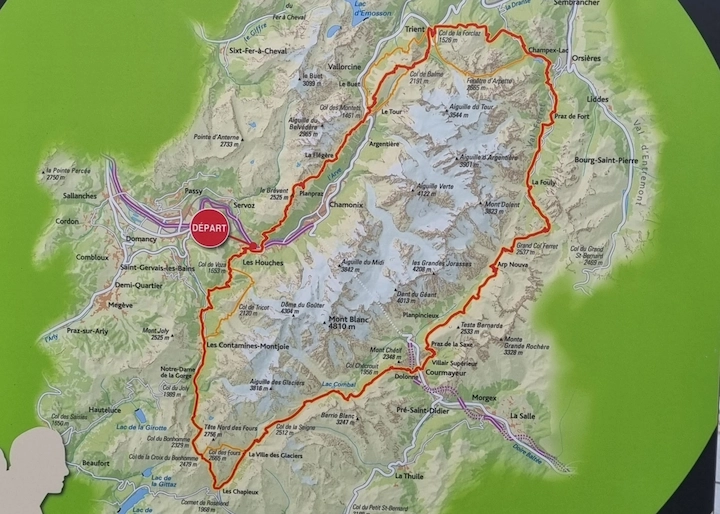
All our accommodation pages along the route are gathered on the TMB refuge map.
Refuge, gîte, hotel, campsite or bivouac: what can you expect?
These options differ in comfort, but also in the atmosphere of the evening and in what you have to carry from one stage to the next.
The refuge: the quintessential TMB experience
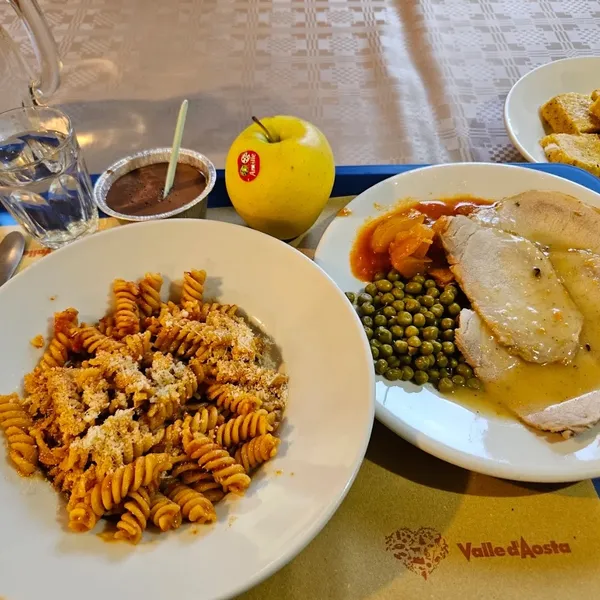
The refuge is the iconic accommodation of the Tour du Mont Blanc. You arrive in the late afternoon, and the evening follows a well-established routine: dinner, bed and breakfast, in other words half board, the standard arrangement on the TMB. Blankets are provided, but you need to bring a sleeping bag liner: in some refuges, such as Rifugio Bonatti or the Relais d’Arpette, it is even mandatory in the dormitories.
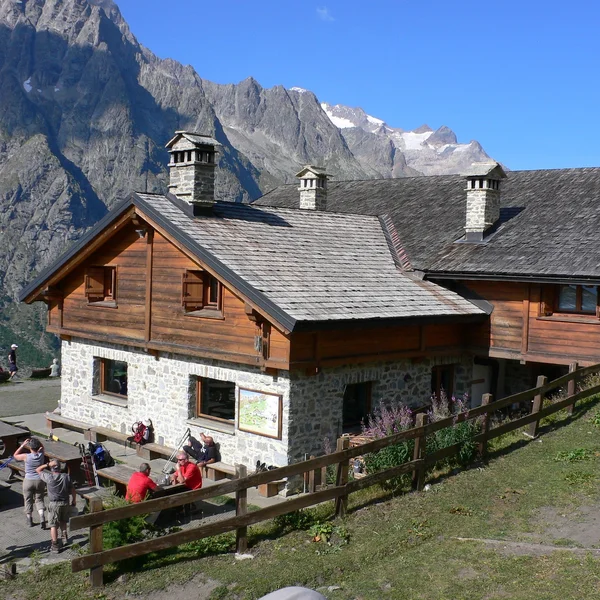
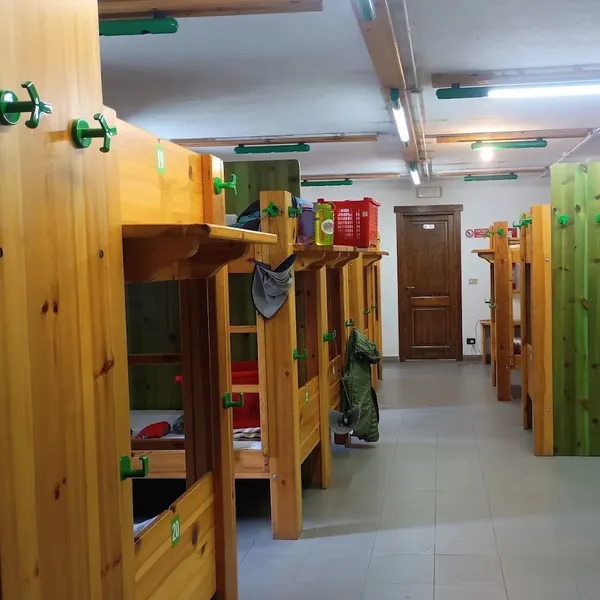
Most nights are spent in a dormitory, but the word covers very different realities: from the large shared dormitory to the small four-bed dormitory at Les Mottets, by way of the comfort dormitory for 4 to 8 people at the Relais d’Arpette, with a duvet and pillow. Most of the refuges we recommend also offer private rooms with two to four beds, more expensive but much quieter if you are a light sleeper. Whatever you choose, we recommend packing earplugs.
Shower access varies a great deal from one refuge to another. At Les Mottets, the shower is hot and located in an annexe building. At Rifugio Bertone, a shower token is included in the price. At the Refuge du Lac Blanc, there is no shower at all, for environmental reasons. It is best to expect simple comfort and to treat every hot shower as a bonus.
Who the refuge suits: hikers who want to experience the TMB in the mountains rather than descending to the valley every evening. The refuge is where you share a table with hikers you passed during the day and enjoy the evening light on the glaciers, without having to get back on the trail.
The gîte and the inn: the same formula, in the village
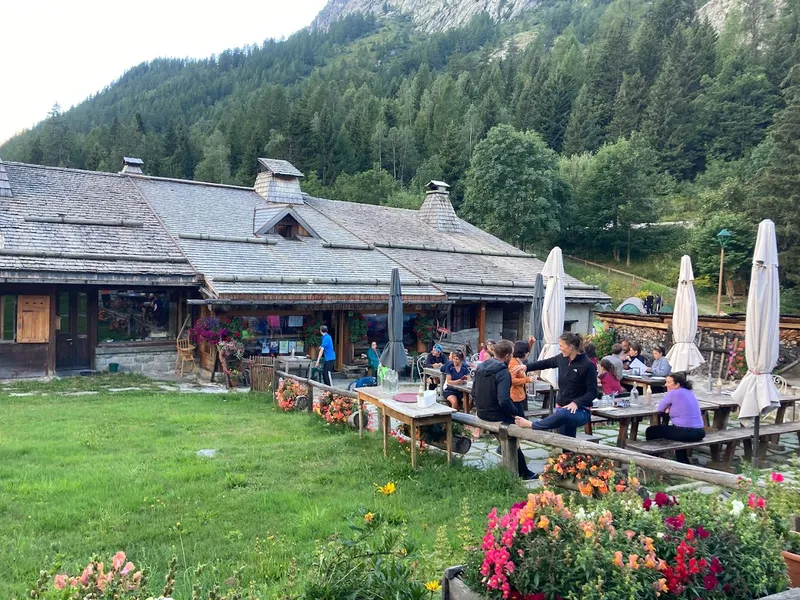
A gîte works like a refuge, with the same half board, but it sits in a village, which makes it easier to stock up and rest. Capacity varies widely: La Fouly Lodge, formerly the La Fouly gîte, takes only 19 guests, with an almost family feel, while the Auberge Mont-Blanc in Trient accommodates 120.
Who the gîte suits: hikers who enjoy the spirit of the refuge with a little more comfort, who want to do some shopping before the next day’s stage, or who like to take time to discover the villages along the way.
The hotel: the recovery night
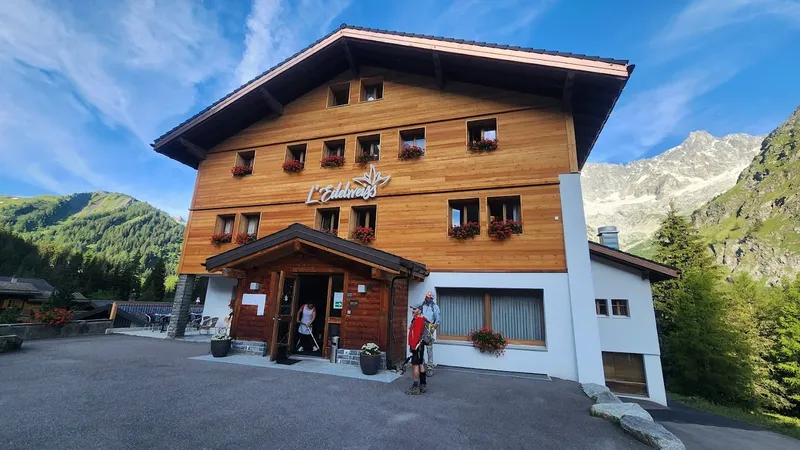
In the valley villages, some hotels offer packages designed for TMB hikers. A private room, an en-suite bathroom and a proper bed are particularly welcome after several nights in a dormitory or a tent. We suggest placing this night around the middle of the tour, when fatigue starts to build up. If you hike with a daypack and have your luggage transferred from one stage to the next, these road-accessible village hotels will shape your itinerary.
Who the hotel suits: couples, families and anyone who sleeps poorly in shared rooms. It is also the best option if you want to enjoy the overnight villages in the evening or travel with consistent comfort from start to finish. The trade-off is that you lose some of the mountain atmosphere that gives the circuit its charm.
The campsite: a tent, on ground meant for it
Camping means pitching your tent on a dedicated site, in a village or at the bottom of a valley. You gain independence, but you carry the tent, the sleeping bag and often the cooking gear for the whole route, and booking is sometimes strongly recommended. We recommend this option to fit hikers who are comfortable with a multi-day pack.
The bivouac: a night in the wild, tightly regulated
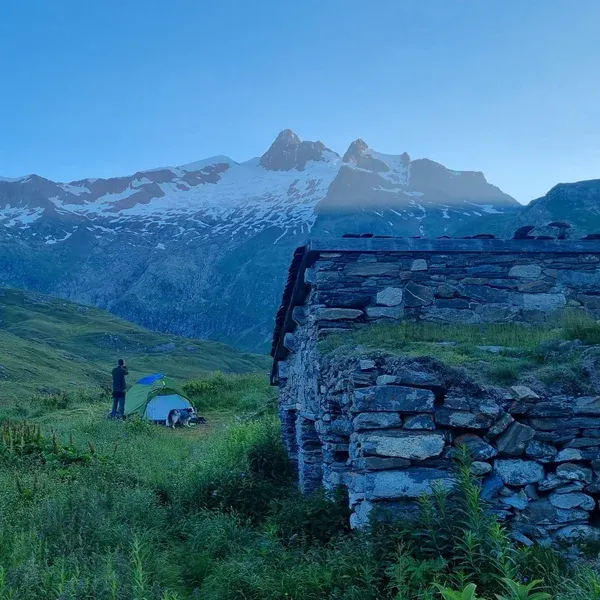
Bivouacking is not camping: the tent goes up in the evening and comes down in the morning, away from any dedicated site, with no water point and no bins. It is the freest option on paper and, on the TMB, the most constrained in practice: banned on much of the route, it must be booked in advance in the French nature reserves. We recommend it to self-sufficient hikers who have planned every one of their nights; the rules are detailed below.
How much does a night in a refuge cost on the TMB?
For half board in a dormitory, budget between 65 EUR$75 and 90 EUR$104 per person per night on the French and Italian sides. The low end of the range is the large dormitory at Les Mottets, the high end the Refuge du Lac Blanc, where you pay for the setting (drinks extra).
In a private room, allow rather 90 EUR$104 to 135 EUR$157 per person. The difference is significant, but it is often the price of a proper night’s sleep. Each refuge’s rates are detailed on its page.
In Switzerland, prices are listed in Swiss francs: at the Relais d’Arpette, in Champex-Lac, the comfort dormitory costs CHF 88 per person with half board, or CHF 46 for the night only.
Some 2027 rates have not been published yet and may vary slightly, so we advise checking them when you book. Depending on the refuge, a small tourist tax is added, from less than one euro to a few Swiss francs. Also check which payment methods are accepted: the Refuge des Mottets does not take cards, only cash and French cheques.
Carry cash in euros and Swiss francs for extras: drinks are not always included in half board, and these small purchases are often what pushes up the bill.
To estimate the full cost of a tour, see our guide to the cost of the Tour du Mont Blanc.
What is the best refuge on the Tour du Mont Blanc?
Here is our selection, with our preferences. These are not necessarily the most comfortable refuges, but they are the ones that leave the deepest mark on a Tour du Mont Blanc.
Our favourite: Rifugio Bonatti. If you sleep in only one refuge on the entire circuit, make it this one. We explain why in our article on the most beautiful part of the TMB; all the practical details are on the Rifugio Bonatti page.
The most authentic: Refuge des Mottets. This former alpine dairy farm, comfortably restored in 2010, stands in the Vallée des Glaciers, at the foot of the Aiguille des Glaciers and the Col de la Seigne. You spend a genuine evening in the high pastures, the night before the climb to the col. In our view, the small four-bed dormitory offers the best balance between price and quiet. See the Refuge des Mottets page.
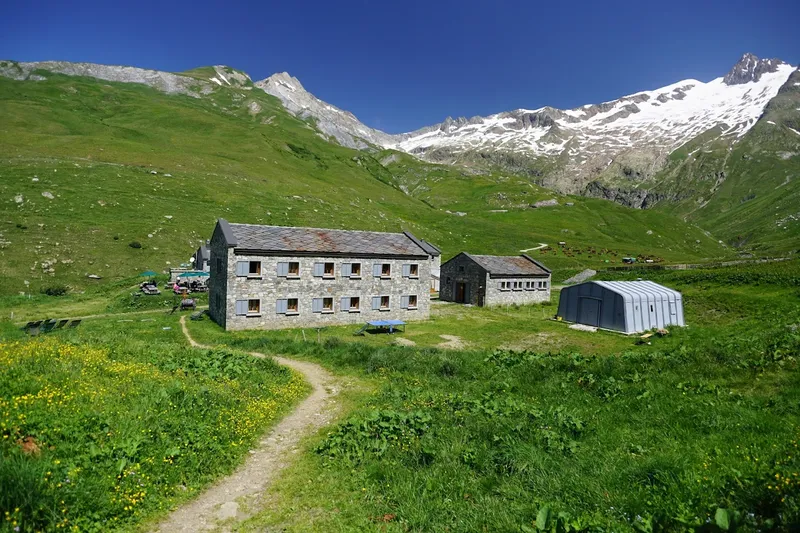
Booking essential: Rifugio Elisabetta Soldini, at 2,195 m7,201 ft in the Val Veny. Booking is mandatory here: do not turn up without a reservation. See the Rifugio Elisabetta Soldini page.
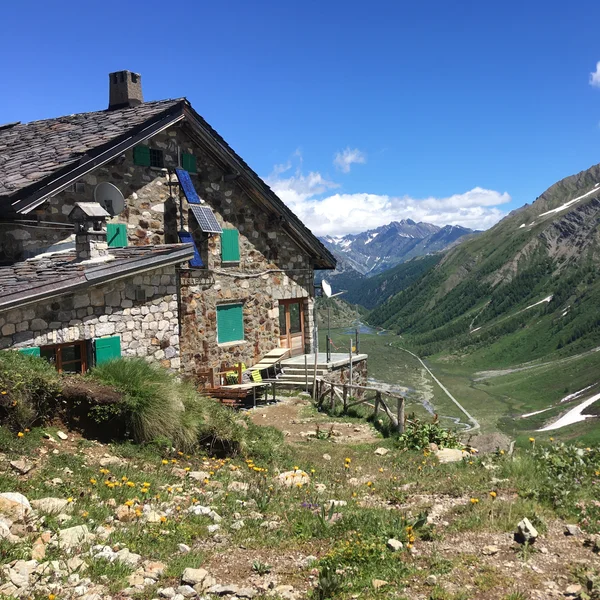
To avoid sleeping in Courmayeur: Rifugio Bertone, on the Mont de la Saxe. Rather than spending the night in town, you can climb up at the end of the day and start the next stage already at altitude. The 16-bed dormitory is the cheapest option, and the shower is included. If, on the other hand, you would like to enjoy Courmayeur in the evening, a night in town remains a good choice. See the Rifugio Bertone page.
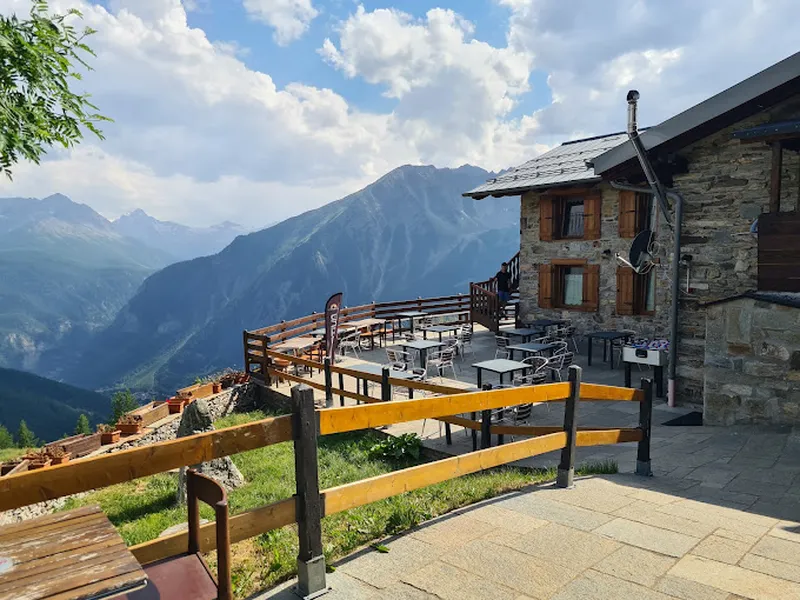
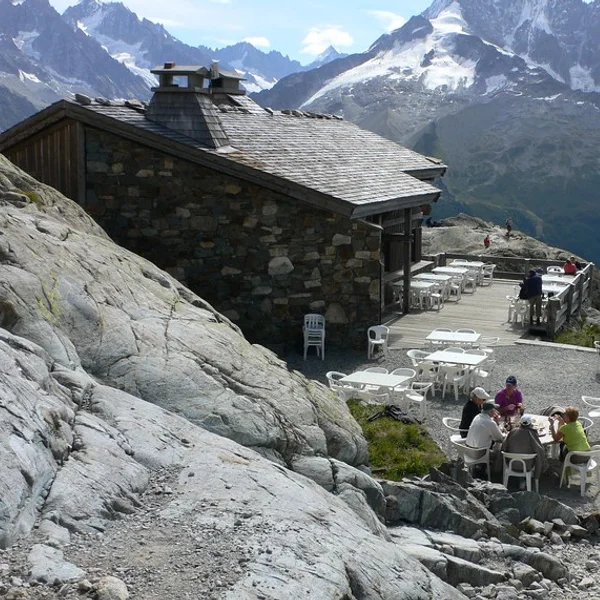
For the setting, at the cost of a detour: Refuge du Lac Blanc, at 2,352 m7,717 ft above Chamonix. It is not on the main route, but close to it. It is one of the most expensive nights in our selection and the most spartan (no shower, no children under 8), but the location justifies the detour. Booking is online only, on the refuge’s website. See also the Refuge du Lac Blanc page.
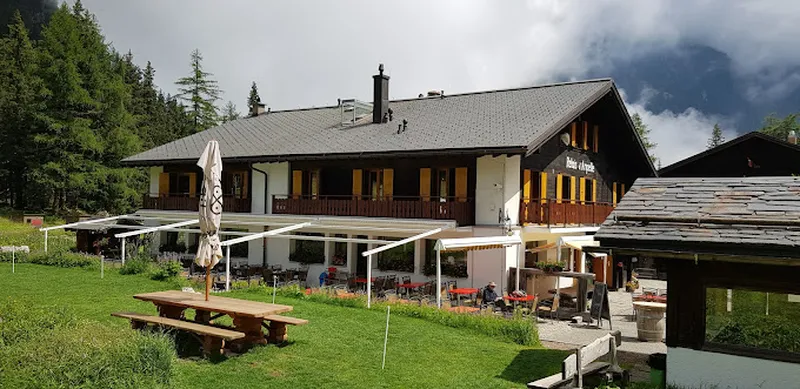
The most comfortable on the Swiss side: the Relais d’Arpette, in Champex-Lac. With 100 beds, it is not an intimate refuge, but its comfort dormitories, with duvet, pillow and a shower on the same floor, are ideal for recovering before the rest of the tour. See the Relais d’Arpette page.
The refuge to rule out in 2027: the Croix du Bonhomme. The refuge owned by the French Federation of Alpine and Mountain Clubs (FFCAM) has been completely closed to the public since 17 August 2026 for renovation work, and will only reopen in summer 2029. No overnight stay will be possible there in 2027: continue to Les Chapieux, where the Auberge de la Nova and Les Chambres du Soleil are the alternatives. See the Croix du Bonhomme refuge page.
How and when should you book your nights for 2027?
We recommend booking as early as possible. For summer 2027, the refuges and gîtes that belong to the TMB hut wardens’ association can be booked from 15 October 2026 on their platform, Mon Tour du Mont-Blanc, which lets you book your entire itinerary in one go. It also lets you filter accommodation by the comfort you are after: private room, dormitory or camping.
Start with the most constrained stages, those where accommodation has few beds, then build the rest of your itinerary around them. One popular refuge showing full can push your entire tour back by a day. If you are setting off in June or September, also check opening dates: at those times of year, some refuges are not yet open or have already closed.
Not all accommodation is booked in the same place: only members of the association are listed on the platform, and for the others you need to contact the establishment directly. For a departure between mid-July and mid-August, book as soon as reservations open.
For the rules specific to 2027, see our articles on what changes in 2027 and on what Italy and Switzerland are planning.
If you would rather not deal with the platforms, the exchanges with hosts and the opening dates yourself, we can handle your bookings: our partners hold allocations in accommodation along the route every year. Our self-guided tours include the nights we book for you and daily luggage transport between stages; our guided tours add a mountain guide.
Can you camp on the TMB?
Yes, and it is the simplest way to travel with a tent: you sleep on a site designed for it, without worrying about bivouac rules. The best known is the Camping des Glaciers, in La Fouly, Switzerland, where booking is strongly recommended. Its opening dates and the areas open to campers can change from one season to the next, so check them before you set off.
In the Swiss Val Ferret, between Prayon and Branche, where the trail was diverted in summer 2026, camping and bivouacking are strictly prohibited. Sleep instead at the Camping des Glaciers, Les Rocailles or the Relais d’Arpette, the last two in Champex-Lac.
In Trient, the municipality (in French) provides a rest area at Le Peuty, next to the Refuge Le Peuty, with no booking: first come, first served. In high season, we advise arriving early.
Elsewhere on the route, La Chamoniarde’s guide to campsites and bivouac areas (in French) lists, among others, the Bellevue campsite in Les Houches, the Pontet campsite in Les Contamines and a wide choice of campsites in Chamonix and the neighbouring villages.
Can you wild camp or bivouac on the Tour du Mont Blanc?
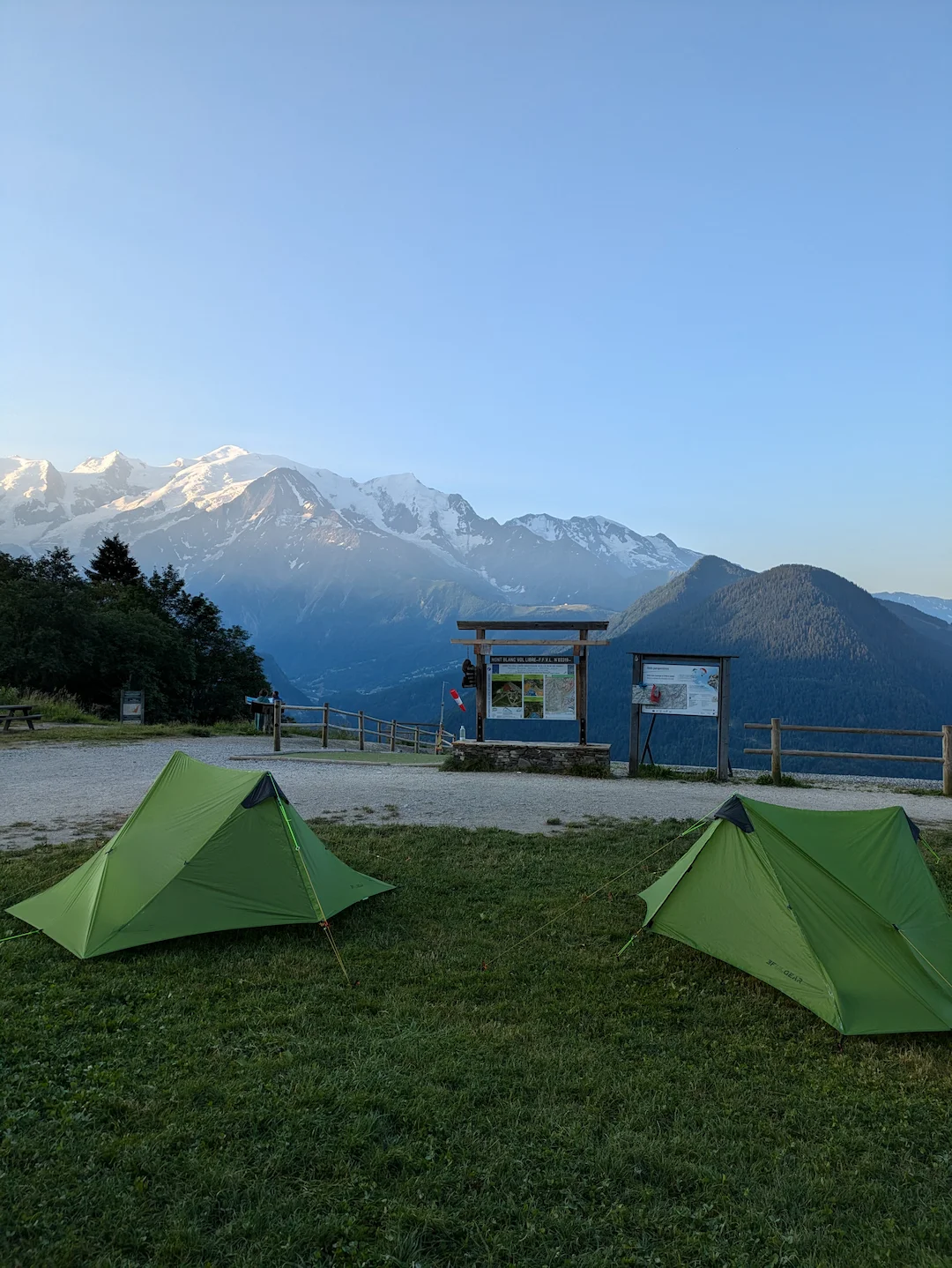
Yes, but mainly on the French side, in set areas and at set times: bivouacking is banned in Italy and generally banned in Switzerland. In the Haute-Savoie nature reserves, the tent goes up at 7 pm and comes down at 9 am, and each night must be booked on the Haute-Savoie nature reserves portal (in French), with one booking per tent. This booking does not include any services: it is not a campsite.
On the French side, the rules change from one reserve and one municipality to the next. In the Contamines-Montjoie reserve, a prefectoral order of 4 June 2026 bans bivouacking below 2,500 m8,202 ft from 15 June to 15 September, except in the La Giettaz / Pont de la Rollaz and La Balme areas. In the Aiguilles Rouges reserve, between Tré-le-Champ and the Col du Brévent, a second order only tolerates it in designated zones. In both reserves, bivouacking outside the authorised zones or hours carries a fixed fine of 68 EUR$79. Each order is valid for one season only: the Contamines-Montjoie order runs until 31 December 2026, the Aiguilles Rouges order covers summer 2026. Check the 2027 orders before you go.
Elsewhere in the municipality of Chamonix, camping and bivouacking have been banned since 1992, except high-altitude bivouacking between sunset and sunrise.
In the Vallée des Glaciers, around Les Mottets and on the climb to the Col de la Seigne, bivouacking is banned: the municipal area at Les Chapieux is the only authorised spot.
On the Italian side, bivouacking is banned on the TMB. Aosta Valley regional law no. 8 of 24 June 2002 prohibits all forms of camping, except mountaineering bivouacs above 2,500 m8,202 ft, and the Fondazione Montagna Sicura (in Italian) reiterated on 3 July 2026 that wild camping and bivouacking are not permitted along the Tour du Mont Blanc trails. On the Italian crossing, between the Col de la Seigne and the Grand Col Ferret, there is therefore almost no place for a tent: the campsites in the Val Veny and the Val Ferret all lie off the route. We advise sleeping in a refuge or in Courmayeur.
In Switzerland, bivouacking is generally banned, with exceptions such as a single night, in a small group, above the tree line. The Swiss Alpine Club (in French) points out that many municipalities set their own rules, and those along the Valais section of the TMB ban wild camping: in Orsières, Trient, Bovernier and Martigny-Combe, tents may only be pitched in designated areas.
These rules are likely to change again: at the end of September 2026, the mayors of the municipalities along the route agreed in principle on a charter that would replace wild bivouacking with dedicated areas from spring 2027, the French Hiking Federation (FFRandonnée) (in French) announced.
What bivouacking changes for your pack and your stages. On top of standard hiking gear, you add the tent, a sleeping bag suited to altitude, a sleeping mat, warm clothing and a headtorch. Fires are banned, but portable stoves are allowed. Refuges do not collect bivouackers’ rubbish: everything comes back down with you. Above all, your stages are no longer set by how you feel on the day but by the authorised areas and the nights you have booked, and the Italian crossing has to be done without bivouacking in any case.
The municipality-by-municipality detail, the capacity of each area and maps of the authorised zones are in our guide to bivouac regulations on the TMB.