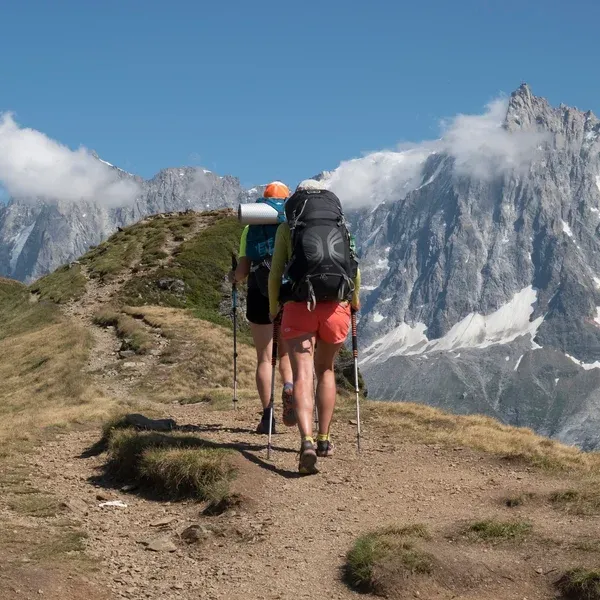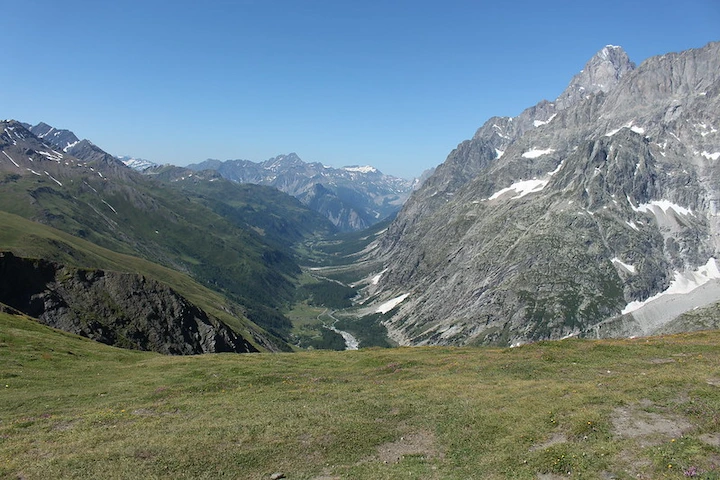
The Tour du Mont Blanc has long been the big European trek you could start on a whim, pack on your back, improvising your nights as you went. That era is ending. On 16 September 2026, French stakeholders across the massif unanimously agreed the principle of a charter that will require every overnight stay to be booked in advance. Signature is expected by the end of 2026, for a spring 2027 rollout.
Here is what has been decided, what is still being drafted, and what it means for your trip.
What does the Mont Blanc charter actually decide?
The draft charter was approved in principle, with no substantive objection, by every French stakeholder group meeting on 16 September: municipalities, state services, refuge wardens, campsite operators, guides, mountain leaders and transport companies. It rests on four pillars.
- A cap on carrying capacity. The number of thru-hikers will be limited by the number of existing beds across refuges, hotels, campsites and bivouac areas.
- A confirmed booking for every night. Without accommodation secured for the whole route, you are not cleared to start. If nothing is available, you move your dates.
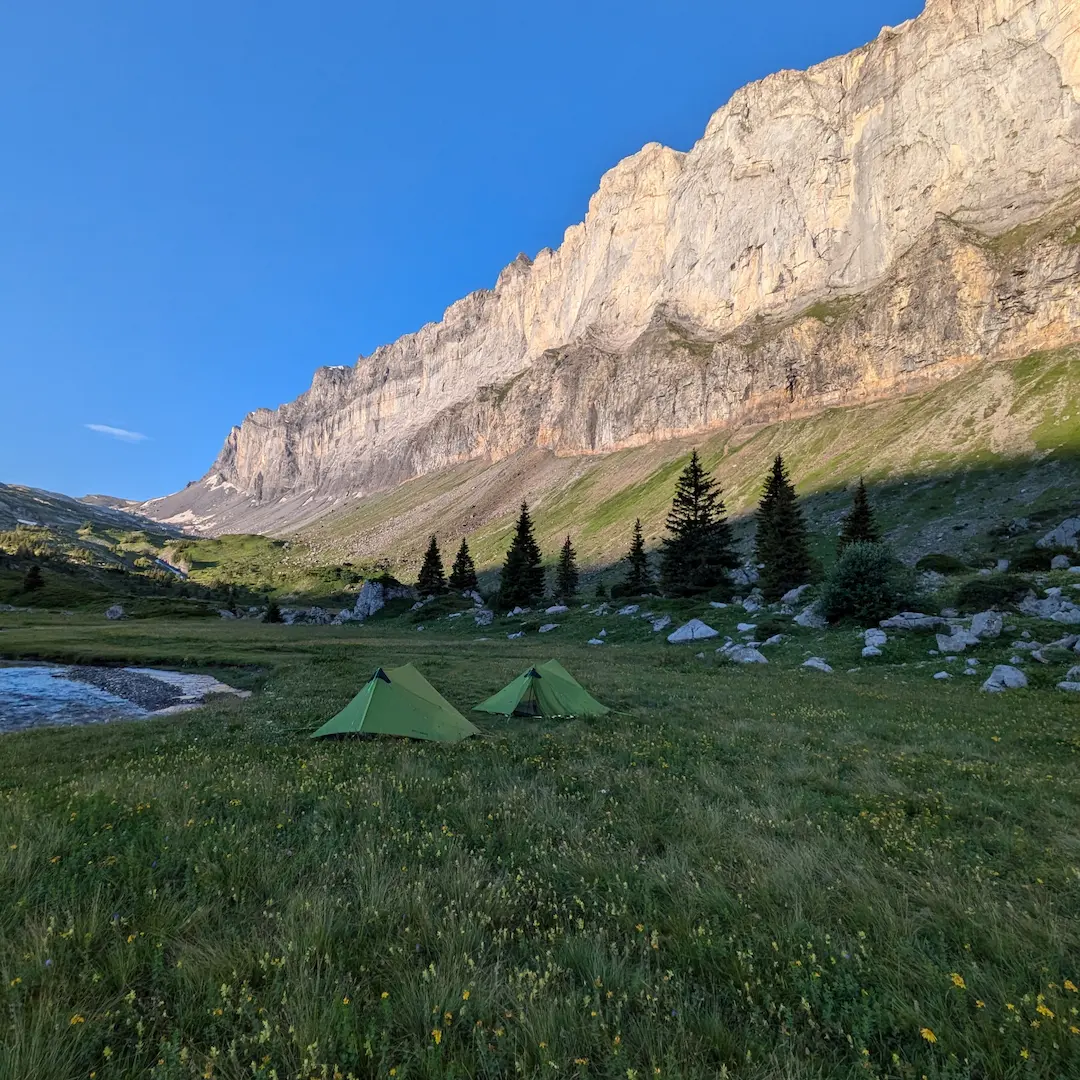
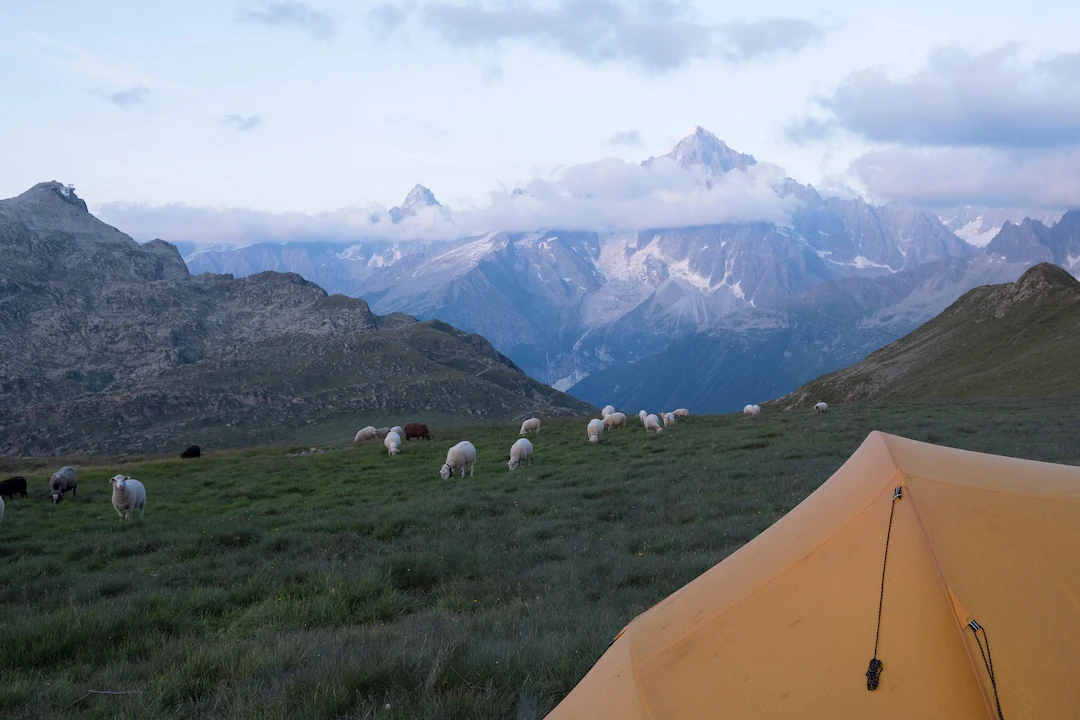
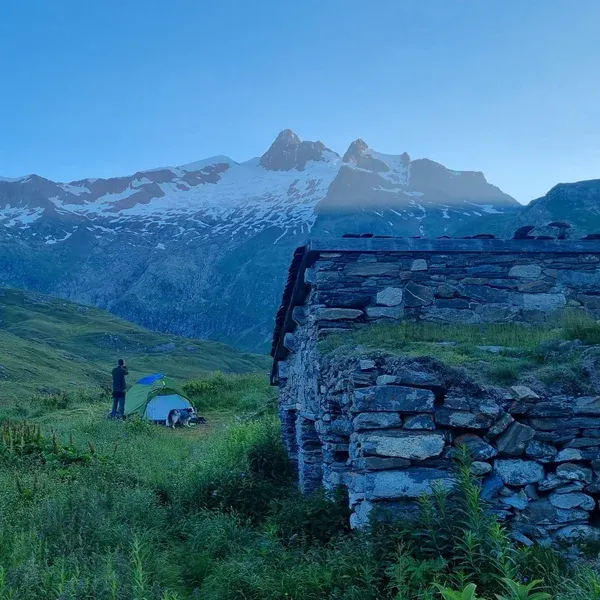
- A ban on wild camping, replaced by managed areas with limited capacity, toilets and water points, and a fee per pitch.
- Regulated luggage transfer, restricted to set hours on mountain roads.
One word matters here: this is a charter, not yet a published decree. The principle is agreed and backed by local officials, but the text is still being finalised and will be enforced through municipal decrees. Checking procedures and penalties have not been set. Be sceptical of articles presenting every detail as settled.
Which part of the Tour du Mont Blanc is affected?
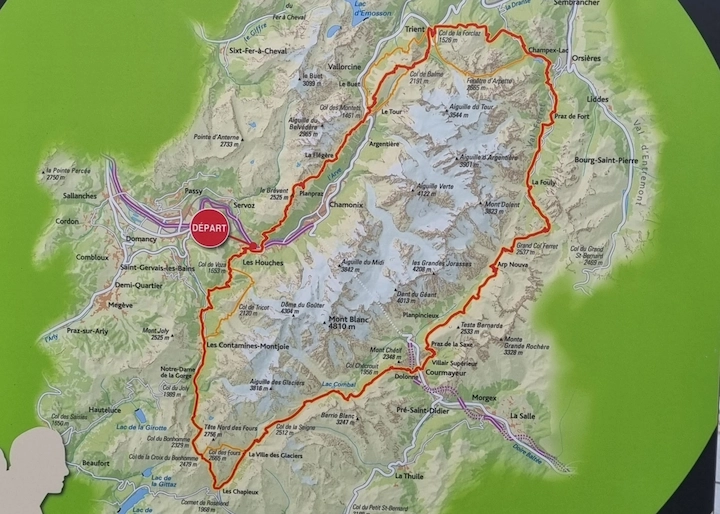
The charter is French and covers seven communes across two departments: Vallorcine, Chamonix, Les Houches, Saint-Gervais-les-Bains and Les Contamines-Montjoie in Haute-Savoie, then Bourg-Saint-Maurice and Beaufort in Savoie. In other words the entire French crossing of the circuit, not just the Chamonix valley.
The work is led by the Pays du Mont-Blanc and Chamonix-Mont-Blanc Valley communities of communes.
The Italian and Swiss sections are not covered by this text. They already have their own restrictive rules: the Aosta Valley bans bivouacking below 2,500 m8,202 ft, and Switzerland prohibits it in general, with very few exceptions. Coordination across the three countries has been raised, with no announced timetable.
In practice, anyone walking the full 170 km106 mi circuit will pass through at least one strict regime, whether they split it over 7 days or 10 days. On direction, nothing changes: as our piece on which direction to walk the TMB explains, most hikers go anti-clockwise from Les Houches.
Is wild camping really disappearing?
On the French section, yes, in principle. The charter replaces today’s tolerance with a network of managed pitches that are paid for and booked in advance.
This is not a sudden break but the end point of a shift that started two seasons ago. Two prefectoral decrees dated 4 June 2026 already govern camping in the nature reserves along the route, and capacity there is counted tent by tent.
In the Contamines-Montjoie reserve, decree DDT-2026-0474 bans camping below 2,500 m8,202 ft from 15 June to 15 September. Only two areas stay open in that window, between 19h and 9h and on mandatory booking: Pont de la Rollaz, 40 tents, and La Balme, 50 tents.
In the Aiguilles Rouges, Carlaveyron and Vallon de Bérard reserves, which the TMB skirts along the Grand Balcon Sud, camping is booking-only from 1 June to 30 September, with 30 tents at Lacs des Chéserys, 25 at Lac du Brévent, 15 at Ruines d’Arlevé and 15 at Combe du lac Cornu. The French state services in Haute-Savoie publish the detail reserve by reserve, and booking goes through reserve-bivouac74.fr. Camping is also banned throughout the Vallée des Glaciers.
One detail that matters for what comes next: this decree only runs to 31 December 2026. The 2027 regime will need fresh legal texts, and that is where the charter will take legal form.
The full sector-by-sector detail is in our guide to TMB camping regulations.
What 2027 adds is scope: booking will no longer apply to a handful of nature reserves but to every night on the French stretch, campsites and bivouac areas included.
Who will check reservations on the trail?
A green brigade will patrol the route to verify that hikers hold confirmed accommodation and that camping rules are respected. Its make-up, its power to issue fines and the level of those fines have not been made public.
Checks already exist, but over a narrow area: the nature reserves along the route are managed by Asters, the Haute-Savoie conservatory of natural areas, which runs the bivouac booking system and has sworn wardens on the ground. What the charter adds is the extension of checks to the whole French route, and the fact that you will be asked for proof of booking.
Why is the massif tightening the rules now?
Because traffic is now measured, and the count settled the argument. Between May and October 2025, a study run by the Amis de l’Ultra-Trail Mont-Blanc association established the first objective count across the whole route: roughly 75,000 hikers over the season, with days reaching 1,000 passages. That frequentation survey is published by Espace Mont-Blanc, the cross-border cooperation body linking France, Italy and Switzerland, and has since become the shared reference for authorities in all three countries. For comparison, traffic was estimated at 36,000 hikers in 2019, and local stakeholders report more than 90,000 for summer 2026, a figure still to be confirmed.
The effects are visible on the ground: unbroken queues on narrow sections, refuges full six months out, litter and trampling off-trail. Capping numbers through bed capacity is the simplest lever available, because it relies on a resource that is already counted.
If avoiding crowds is your priority, the window has not changed: early and late season. Our article on the best time to hike the TMB sets out the trade-offs between weather, snow cover and traffic.
Will luggage transfer be restricted?
This is the least discussed point and one of the most concrete. The measure has two parts. First, licensed taxis will commit to no longer carrying large suitcases from refuge to refuge: transfers will be reserved for trekking packs. Second, those transfers will have to respect set hours on mountain roads, to cut the shuttle traffic serving refuges and valley villages.
The stated aim is to restore the feel of a route walked on foot, rather than a circuit where suitcases follow by car from hotel to hotel. Having a trekking pack forwarded between stages therefore remains possible. What disappears is the wheeled suitcase.
For an independent hiker, that can still mean fewer time slots and fewer operators. On an organised trip, the logistics are arranged upstream by the operator, working with carriers already built into the system.
How do you hike in 2027 without hitting the booking wall?
Bookings for summer 2027 at refuges belonging to the Tour du Mont Blanc wardens’ association open on 15 October 2026. Refuges on the busiest stages sell out months ahead, and the charter adds a further constraint: finding a bed is no longer enough, you need one for every night, with no gap in the chain.
Two options if you would rather not manage that chain of bookings yourself.
- Self-guided TMB: you walk alone or with your own party, at your own pace. Nights are booked in advance and bags are moved from stage to stage.
- Guided TMB: a mountain leader takes the group, adapts the route to the weather and handles the unexpected.
Our TMB tours
Pre-booked refuges, luggage transfers, 7-day support.
TMB Classic 8 Days - Self-Guided
Classic Tour du Mont Blanc in 8 days, self-guided. 90 km56 mi trek through France, Italy and Switzerland with hotel accommodation, luggage transport and full assistance.
TMB Classic 12 Days - Self-Guided
Complete Tour du Mont Blanc in 12 days, self-guided. 115 km71 mi trek through France, Italy and Switzerland with hotel accommodation, luggage transport and full assistance.
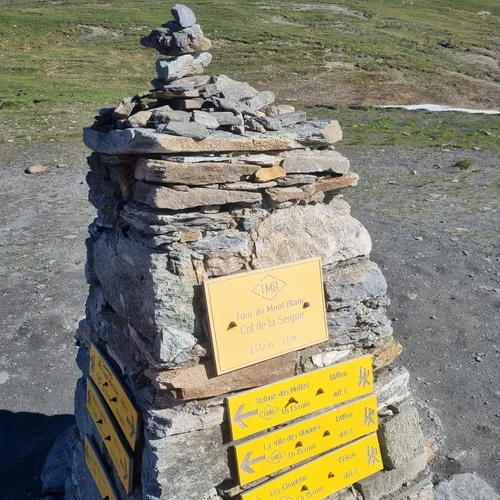
TMB Classic 10 Days - Guided
Classic Tour du Mont Blanc in 10 days with certified mountain guide. 122 km76 mi trek through France, Italy and Switzerland with hotel accommodation, all meals and luggage transport.
TMB Classic 10 Days - Guided - Women Only
Tour du Mont Blanc in 10 days, guided, women only. 122 km76 mi trek with certified female mountain guide, hotel accommodation, all meals and luggage transport.