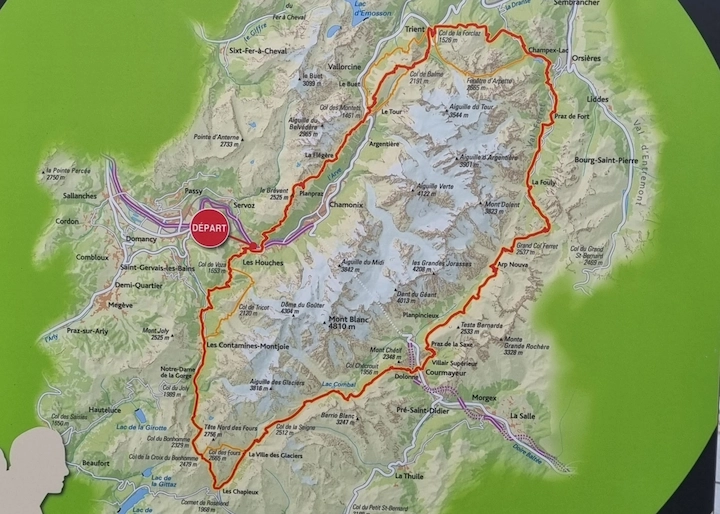
Tour du Mont-Blanc: What is the best direction to start?
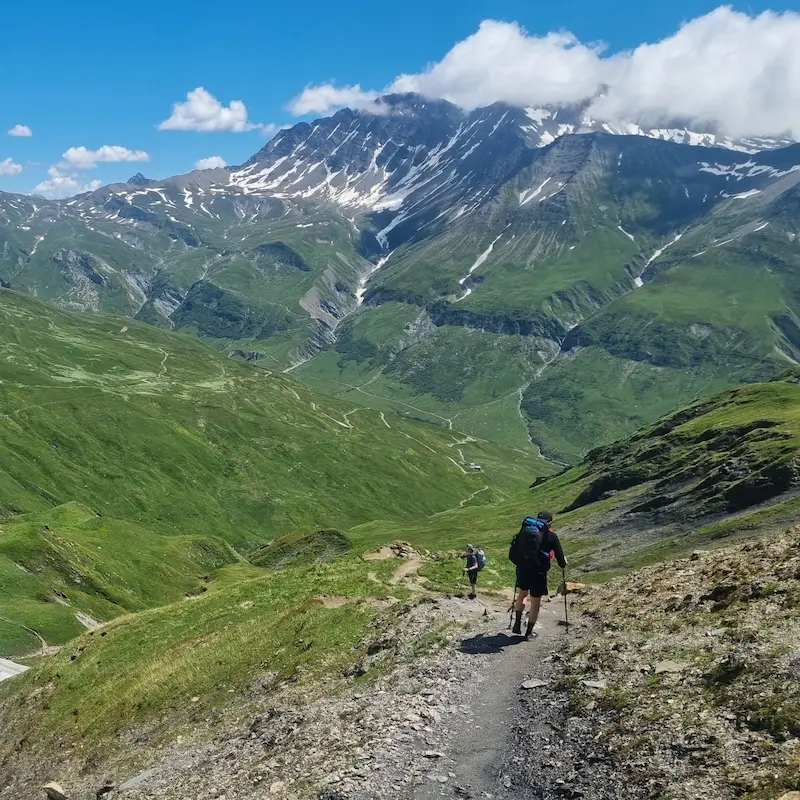
Anti-clockwise is the most popular direction as it offers the best panoramic views ahead of you.
The Tour du Mont Blanc can be done clockwise or counterclockwise. In addition to the bivouacking regulations by country and the best time to do the TMB, some elements should be considered before making your choice.
Choosing your direction based on the views
The Tour du Mont Blanc is full of breathtaking landscapes, offering magnificent views regardless of your walking direction. However, certain sections of the trail offer a unique perspective on major points of interest, varying depending on the orientation of your hike. While stopping and turning around remains an option to enjoy these views, the experience is not quite the same as naturally discovering them while progressing on the trail.
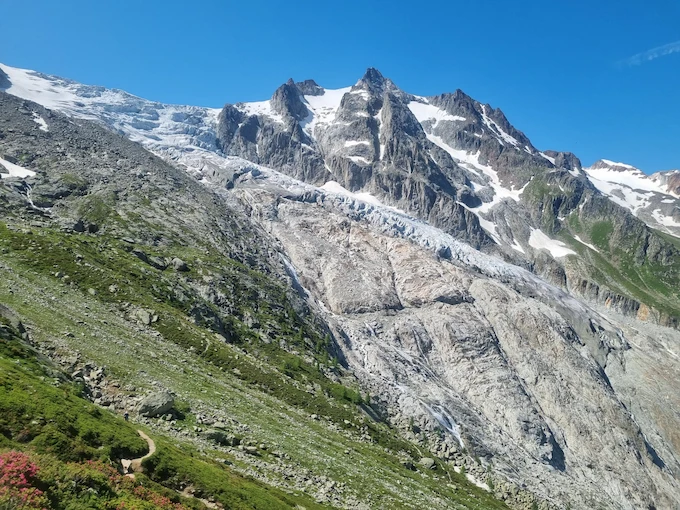
- Fenetre d’Arpette - Advantage Clockwise: The alternative route leading to the Fenetre d’Arpette, although one of the most demanding on the Tour du Mont Blanc, rewards hikers with striking panoramas of the Trient Glacier. Those who choose the clockwise direction are constantly drawn towards the Fenetre d’Arpette, with these majestic views dominating their path. In contrast, those taking the counterclockwise direction only capture these scenes at the top, turning around during their steep descent.
- Grand Col Ferret - Advantage Clockwise: On the Italian side of the Grand Col Ferret, hikers can enjoy impressive views of the Mont Blanc massif while descending the Val Ferret, a privileged spectacle during the descent. Conversely, on the Swiss side, the trail winds around La Dotse, moving away from the massif and the view of its snowy peaks.
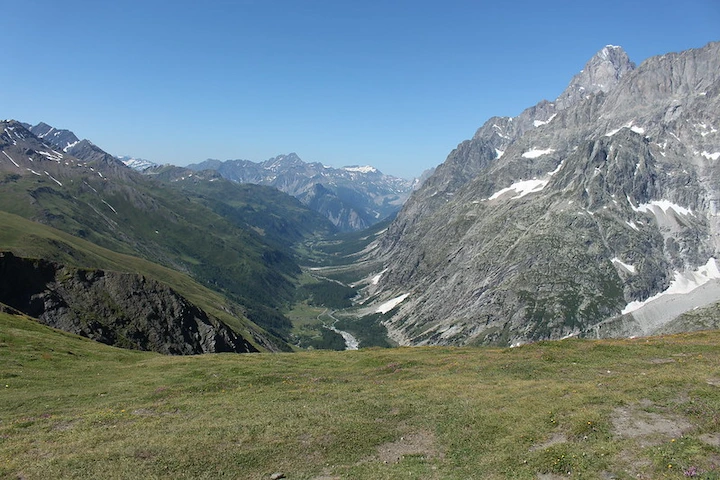
View of the Italian Val Ferret
- Grand Balcon Sud - Advantage Counterclockwise: The entire massif is full of natural wonders and splendors, but taking the Grand Balcon Sud counterclockwise offers a particular immersion facing Mont Blanc throughout your progress along the Chamonix valley.
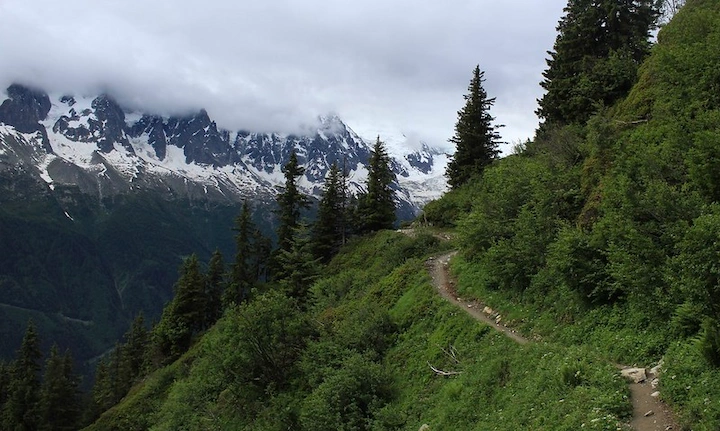
View of the Mont Blanc massif from the Grand Balcon Sud
Browse all our itineraries
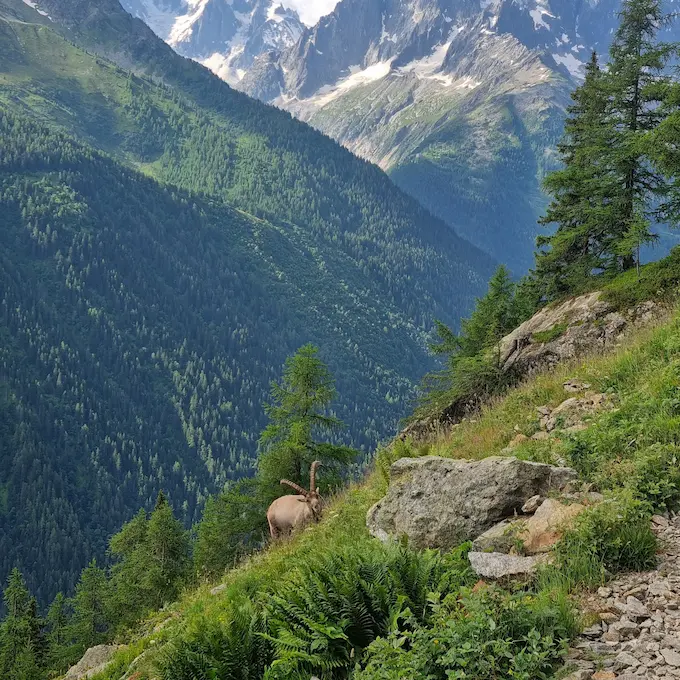
Tour du Mont Blanc in 7 days
Stages, route & accommodations
Tour du Mont Blanc in 10 days
Stages, route & accommodations
Choosing your direction based on your physical condition
Most hikers opt to start their journey on flat sections or those with moderate slopes, ideal for shaking off rust from inactivity and reacclimating to the load of a backpack. If this preference applies to you, here are then the optimal directions from our selected starting points:
- Starting from Les Houches and going counterclockwise, both routes require significant effort from the beginning. However, the 667-meter ascent to the Col de Voza is significantly less arduous than the 1,540-meter climb to Brevent, the highest peak of the trail.
- From Chamonix (Plan Praz) going clockwise, the path to La Flegere involves a modest elevation gain of 100 meters over the first 5 kilometers. In contrast, opting for the reverse route entails a more demanding 550-meter ascent over a distance of 3 kilometers to Brevent.
- Starting from Courmayeur, the difference between the two directions is minimal: hikers face an elevation gain of about 750 meters in the first 5 kilometers, regardless of the direction chosen. However, when hiking counterclockwise during the high summer season, it is possible to bypass most of this ascent by taking two chairlifts. Nonetheless, you will still face an ascent of over 450 meters in the first 5 kilometers towards Mont Favre.
- From Champex Lac, both routes present a negligible difference, requiring only an altitude gain of about 50 meters over the first 5 kilometers, making it the most accessible starting point. Following the trail clockwise involves a descent of 450 meters over this distance. This can be an advantage for some hikers but could raise concerns for others, particularly those facing knee issues.
If you are concerned about the impact of descents on your knees or about your physical condition for next summer, it is useful to know that on the Tour du Mont Blanc, many ascents and descents can be avoided using transport such as gondolas, cable cars, and buses. Going counterclockwise, it is possible to avoid about 1,602 meters of ascent, nearly 15% of the total planned. In contrast, clockwise, the avoidance is slightly less, with about 1,480 meters. If the descent is a major concern for you, opting for the clockwise direction might be the best option, as it further reduces the difficult descents.
Choosing your direction based on the crowd
The Tour du Mont Blanc enjoys great popularity among hiking enthusiasts, and it can be done with or without a guide, with an estimate of 20,000 people completing the route annually. Here are some key elements to consider regarding the orientation of your itinerary taking into account the attendance of the trail:
-
Clockwise: By choosing to hike clockwise, facing the majority trend of traversing the trail counterclockwise, you will benefit from regular moments of tranquility on the trail, conducive to establishing your own pace and mindfulness. This experience is explained by the fact that hikers moving in the same direction tend to form groups, as overtaking someone on narrow paths can be socially awkward. In contrast, briefly stepping aside to let those coming in the opposite direction pass is done naturally. Once you have passed a group of hikers who left from a specific accommodation, you enjoy a long period of calm before reaching the next cohort. Therefore, it is generally not necessary to leave your accommodation very early or stay late on the trail to enjoy moments of solitude.
-
Counterclockwise: It is estimated that 90% of hikers opt for the counterclockwise direction, with the majority starting their journey in Chamonix and Les Houches during weekends. For those planning to start their hike during the weekend, choosing a different starting point may be wise to avoid large flows of hikers. Once on the trail, leaving early in the morning from your accommodation can give you a significant lead over those who left from more distant places. However, by noon, convergence with other groups becomes inevitable, often placing you near other hikers. Considering a prolonged break during the day and resuming walking in the late afternoon could offer increased moments of solitude. Nonetheless, it is important to remain vigilant about the forecasts of potential afternoon storms before adopting this strategy.
We organize the logistics so you can focus on the trail. Get in touch with our experts today.
Direct contact with local TMB experts

More in tmb
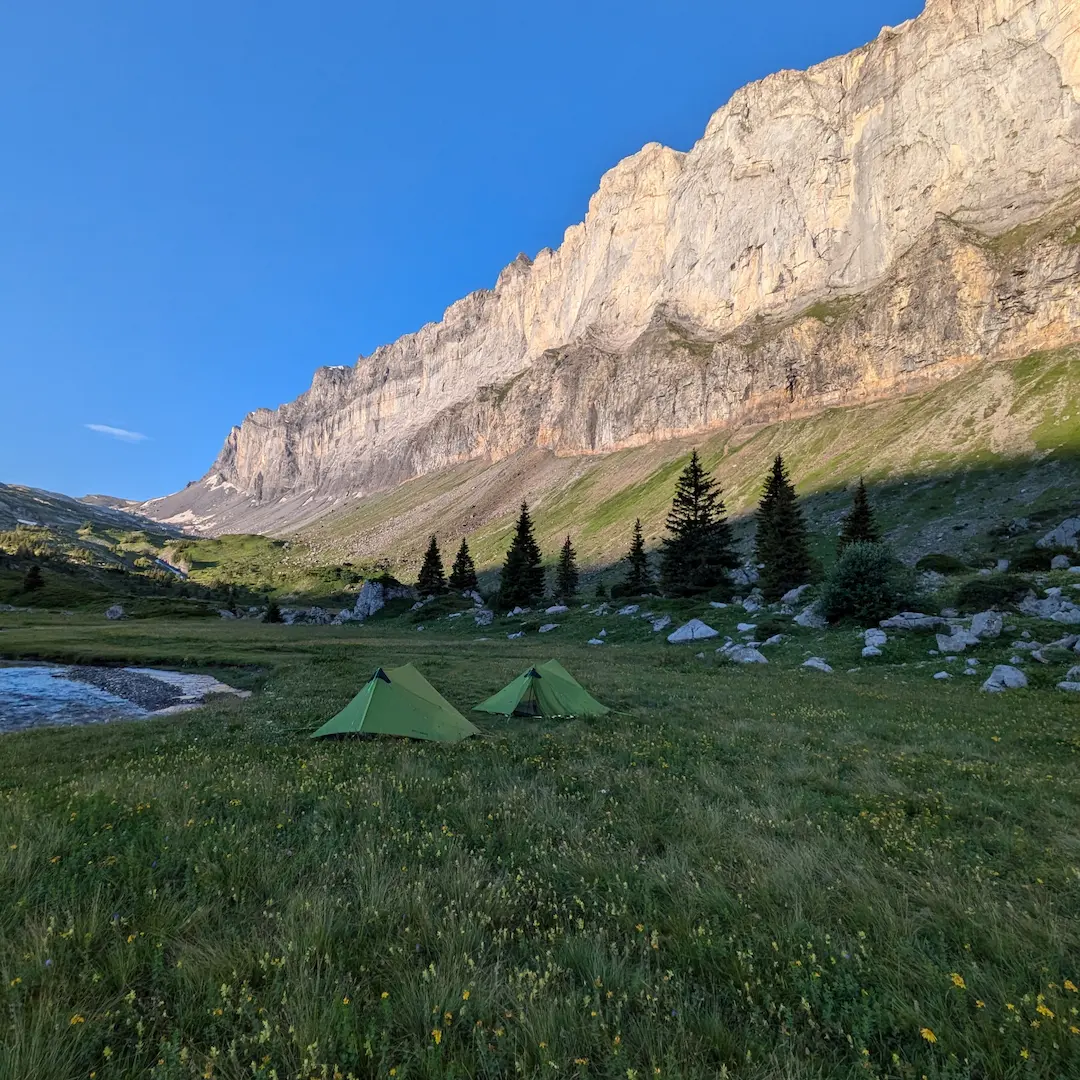
What gear and equipment for the Tour du Mont Blanc?
Complete checklist of gear to pack for the Tour du Mont Blanc.
Is the Tour du Mont Blanc Difficult?
Is the TMB difficult? It all depends on your fitness level and the itinerary you choose.
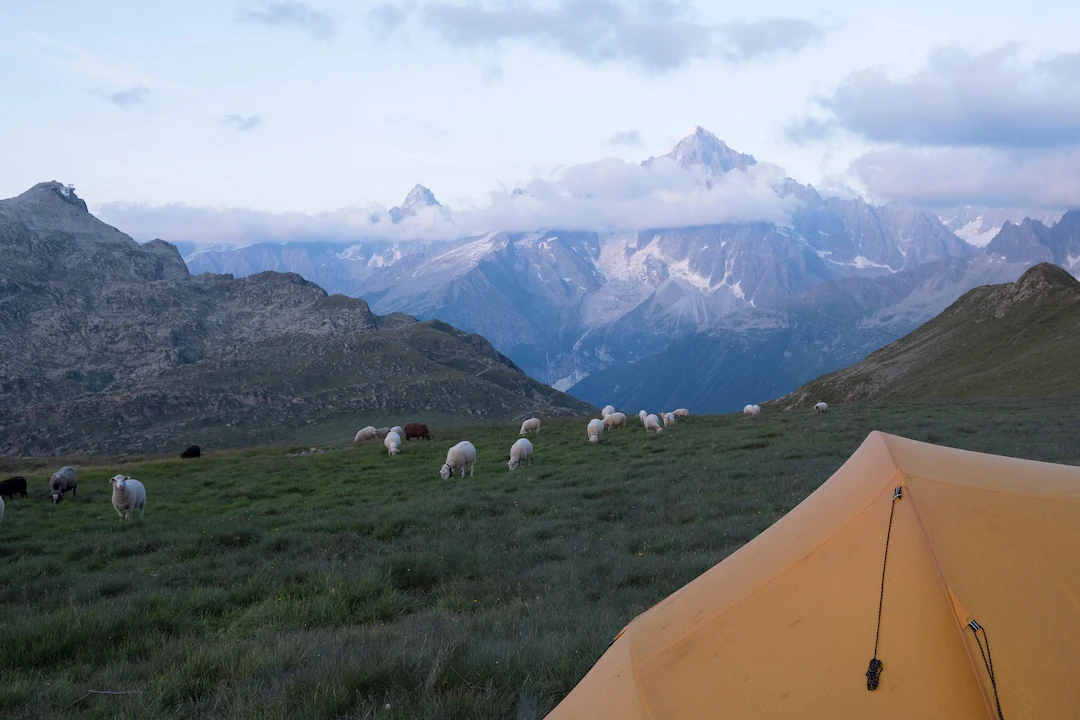
Camping on the Tour du Mont Blanc - Regulations
Complete guide to bivouac regulations on the TMB. Rules in France, Italy, and Switzerland, locations, and tips.
Self-guided Tour du Mont-Blanc: Everything you need to know
Everything you need to know for a self-guided TMB trek.
What is the best time to hike the Tour du Mont-Blanc?
Discover the best time to hike the TMB based on weather, crowds and refuge availability.
From our partner · 400+ Verified Traveler Reviews
"Un trek absolument magnifique. L'itineraire est parfait, et notre guide etait extraordinaire - competent, attentif et passionnne par la montagne."
"Des sentiers bien balises qui traversent trois pays avec des paysages a couper le souffle. Les refuges etaient confortables et la cuisine montagnarde excellente."
"Organisation impeccable du debut a la fin. Le transfert des bagages nous a permis de marcher leger et de vraiment profiter de chaque etape."
"Un trek inoubliable autour du Mont Blanc. Chaque jour apporte de nouvelles surprises - des glaciers suisses aux alpages italiens en passant par les aiguilles francaises."
"Excellente prestation. Le roadbook etait clair et precis, les hebergements bien choisis, et l'equipe disponible a tout moment en cas de besoin."
"Le Tour du Mont Blanc est un classique pour une bonne raison. La variete des paysages entre la France, l'Italie et la Suisse est remarquable."
"Une experience fantastique. Les etapes sont bien equilibrees, les refuges accueillants, et les vues sur le massif du Mont Blanc sont inoubliables."
"Un voyage extraordinaire qui nous a fait decouvrir le Mont Blanc sous tous les angles. La logistique etait parfaite et nous n'avions qu'a profiter du sentier."
"Superbe organisation. Les variantes proposees nous ont permis d'adapter le trek a notre niveau. Je recommande sans hesitation."
"Un tour complet et bien pense. Les passages entre les trois pays offrent une diversite culturelle et paysagere unique. A faire au moins une fois dans sa vie."
Plus de 40 ans d'expertise alpine
Notre agence partenaire opere dans les Alpes depuis plus de 40 ans. Leur equipe de passionnes connait chaque sentier, chaque refuge et chaque saison du Tour du Mont Blanc.
Voyages entierement proteges
Votre investissement est en securite. Nous travaillons exclusivement avec un operateur agree, cautionne et assure. Assistance 24h/24 et assurance voyage incluses.
Itineraires concus par des locaux
Pas de forfaits generiques. Chaque itineraire est concu par une equipe de specialistes qui parcourent ces sentiers eux-memes. Transfert de bagages, besoins alimentaires et chaque detail logistique sont geres pour vous.
Une vraie equipe, pas un centre d'appels
Une equipe dediee d'une douzaine de specialistes est disponible avant, pendant et apres votre trek. Vous parlez directement aux personnes qui ont concu votre itineraire.