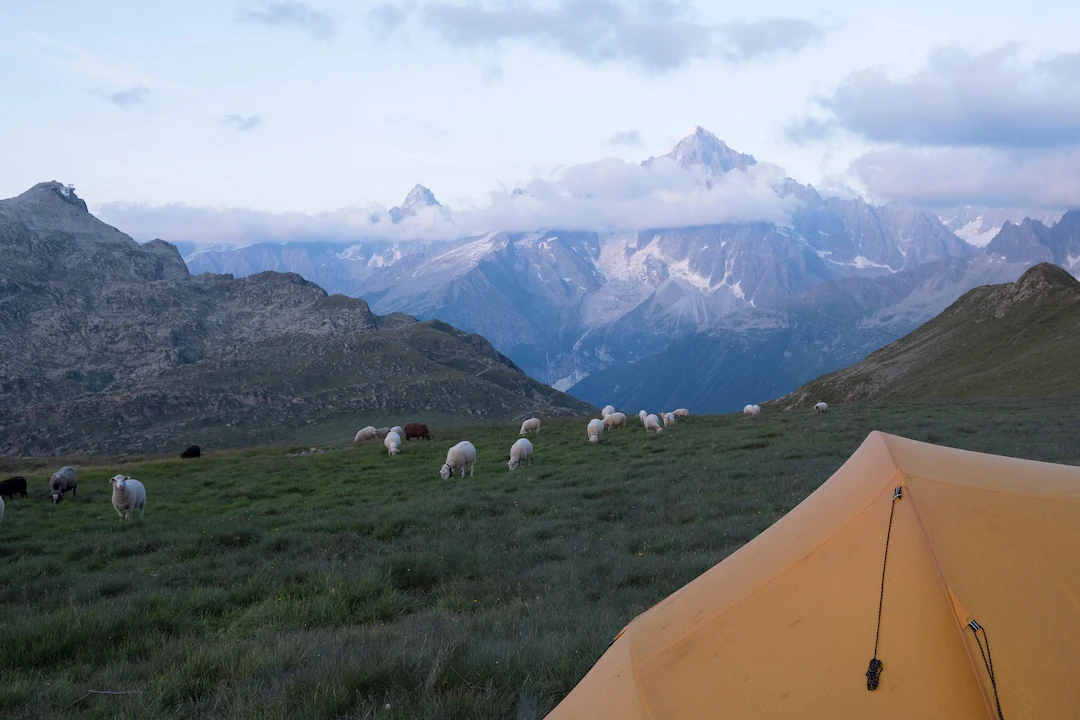
Camping on the Tour du Mont Blanc - Regulations
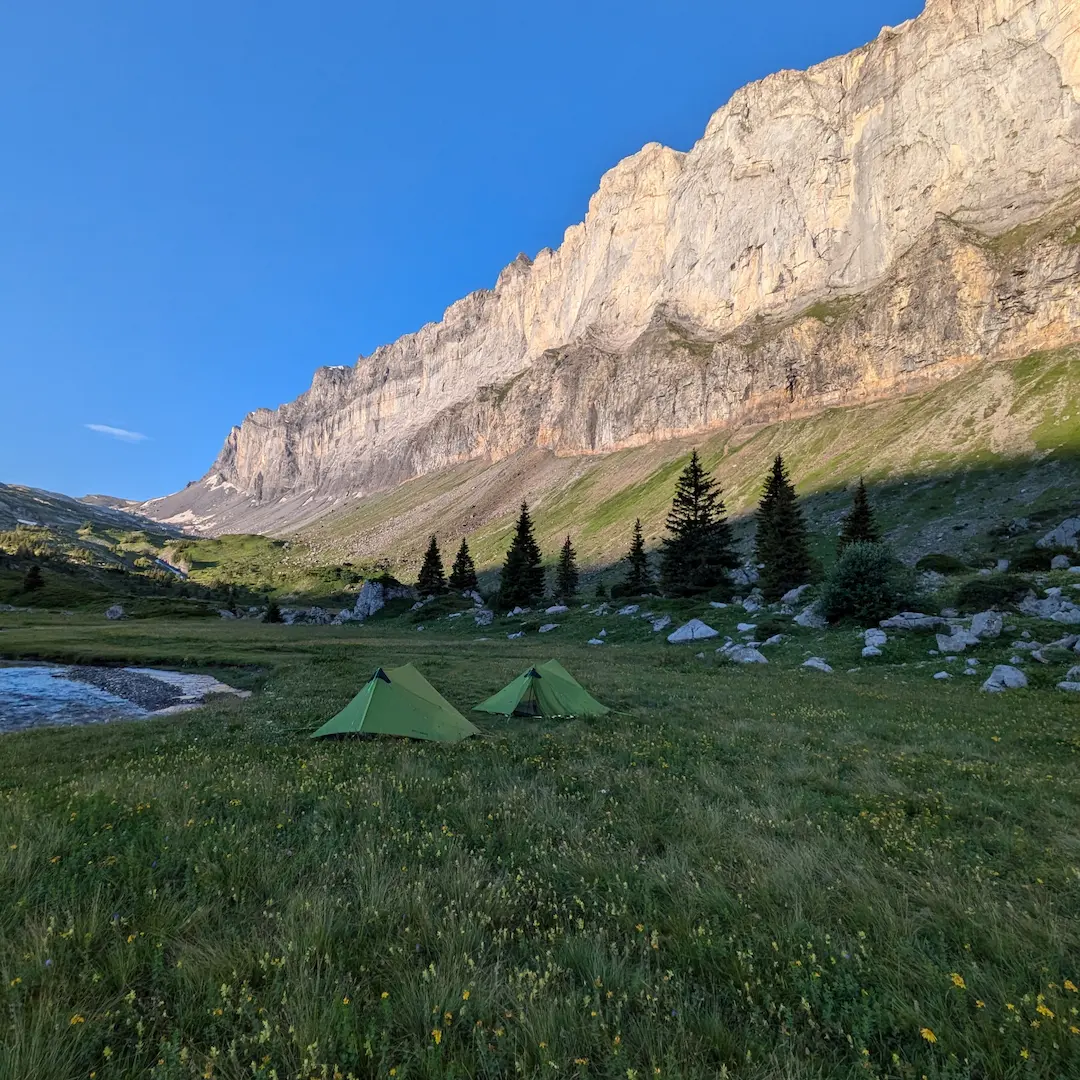
Bivouacking is tolerated in France from 7pm to 9am above 1 hour walk from the last road access. In Italy and Switzerland, rules vary by municipality.
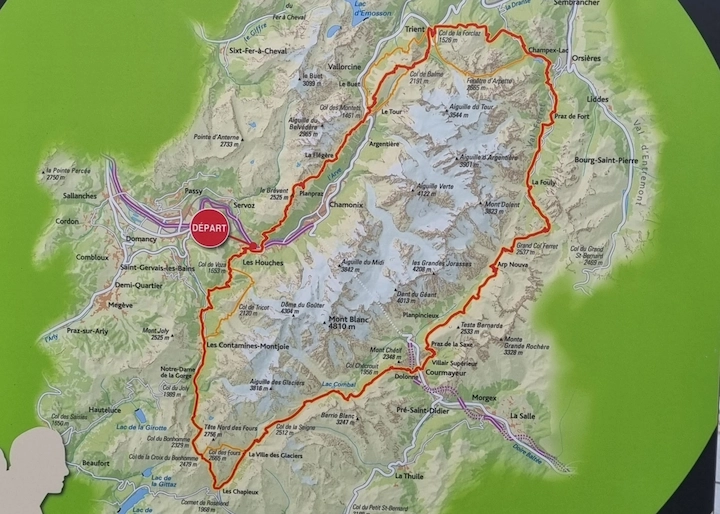
The Tour du Mont Blanc, this legendary journey of over 170 kilometers, winding through France, Italy, and Switzerland, is an essential hiking adventure for outdoor enthusiasts. As you prepare to immerse yourself in the Alpine landscapes, a crucial question arises: What are the regulations regarding bivouacking along this route? In this article, we’ll explore the guidelines and laws specific to each country traversed by the Tour du Mont Blanc, providing essential tips for a responsible and memorable bivouacking experience. If you’re considering doing the tour du mont blanc without a guide, this information will be particularly useful.
France: Respect Nature and Legislation
In France, bivouacking is allowed between 7 PM and 9 AM in most areas of the Tour du Mont Blanc, with restrictions in certain protected areas to preserve wildlife and flora. It’s important to check local regulations, as they can vary. Bivouacking is also permitted more than an hour’s walk from any motorized access and must not exceed one night in the same place. It’s advisable to check with refuge wardens for bivouacking near them, and you can find a complete list of refuges and hostels.
In summary:
- Bivouacking allowed between 7 PM and 9 AM.
- Forbidden in certain protected areas.
- Flexibility for wild bivouacking in designated areas.
- Importance of respecting wildlife and flora.
Where to Camp and Bivouac on the Tour du Mont-Blanc in France?
To help you plan your adventure, here is a non-exhaustive list of camping and bivouacking options in France along the Tour du Mont Blanc:
- Les Houches: Camping Bellevue.
- Les Contamines: Camping du Pontet, bivouac at Pont de la Rollaz and Balme bivouac (next to the refuge).
- Les Chapieux: Bivouac area on communal land.
- Col de La Forclaz: Camping de l’Arpille.
- Trient: Communal Camping of Trient, Camping/bivouac of Peuty.
- Vallorcine: Camping des Montets.
- Argentiere / Chamonix: Bivouac sites at Auberge La Boerne and numerous campsites in the valley.
These options offer flexibility for those looking to experience authentic bivouacking while respecting local legislation.
Browse All Our Itineraries
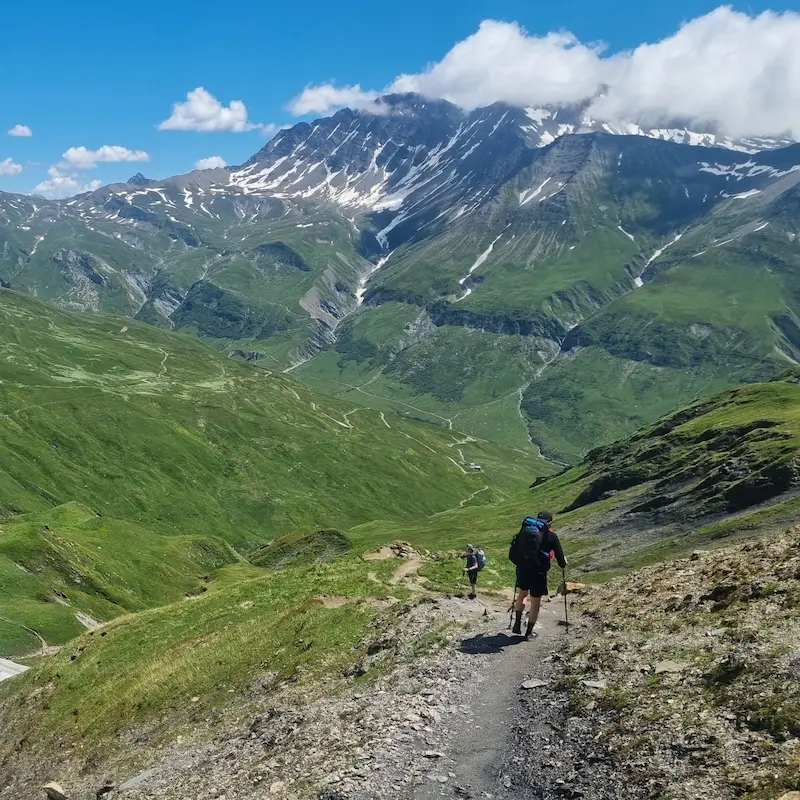
Tour du Mont Blanc in 7 Days
Stages, route & accommodations
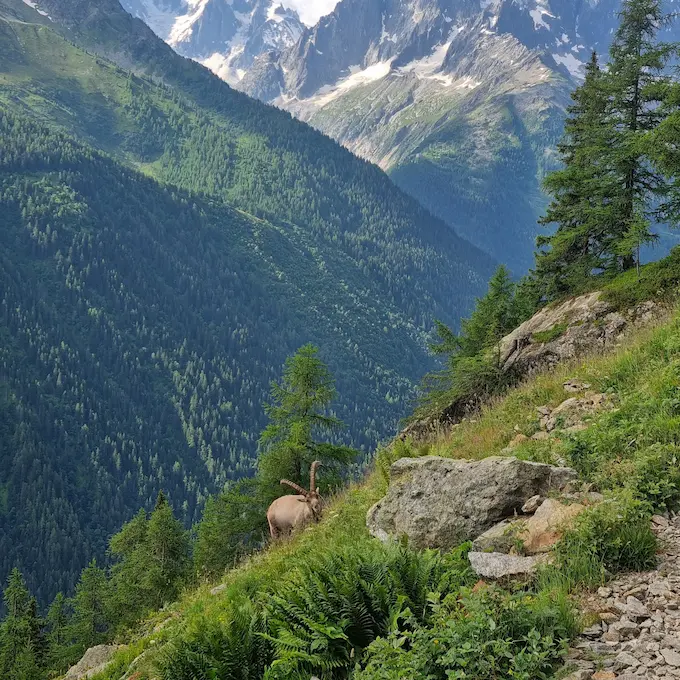
Tour du Mont Blanc in 10 Days
Stages, route & accommodations
Italy: Regulations with some exceptions
In Val d’Aosta, the regulation is specific:
- General prohibition of camping: Throughout the territory of Val d’Aosta, with specific exceptions.
- Occasional and mobile campsites: Allowed for non-profit establishments or associations, under certain conditions, for a maximum duration of forty-eight hours.
- Mountain bivouacs: Allowed above 2,500 meters altitude. This offers a unique opportunity for experienced hikers to immerse themselves in breathtaking alpine landscapes.
This information is crucial for hikers planning to cross this region and wishing to respect local laws. Hikers should therefore plan nights in refuges or campsites available in the villages crossed, and for those planning to complete the tour du mont blanc in 7 days, good stage planning is essential.
Where to Camp and Bivouac on the Tour du Mont-Blanc in Italy?
Here is a non-exhaustive list of camping and bivouacking options in Italy along the Tour du Mont Blanc:
- Val Veny: Camping Aiguille Noire, Campeggio Monte Bianco La Sorgente, Camping Hobo.
- Italian Val Ferret: Camping Grandes Jorasses, Camping Tronchey.
Switzerland: A strict regulation
Switzerland, with its strict regulation, has specific rules for each commune:
- Commune of Orsieres: Formal prohibition of wild camping and bivouacking, except in official campsites such as the camping des Glaciers in La Fouly, camping des Rocailles in Champex-Lac, and camping du Val d’Arpette.
- Commune of Bovernier: Camping allowed only at locations designated by the communal authority. Short-term (1 night) bivouacking allowed outside localities, nature reserves, and protection zones, subject to the agreement of private landowners.
Switzerland enforces strict regulation, prohibiting bivouacking in protected areas and near lakes. However, exceptions exist near certain mountain refuges with permission. The canton of Valais allows bivouacking above the forest line, under certain conditions. In principle, bivouacking is prohibited in Switzerland on the route of the Tour du Mont Blanc. Hikers should consider spending the night in a campsite, hotel, or refuge. The best period to do the TMB is also a factor to consider for a better experience.
In summary:
- Bivouacking generally forbidden in protected areas.
- Possible near certain refuges with permission.
- Allowed above the forest line in Valais.
Where to Camp and Bivouac on the Tour du Mont-Blanc in Switzerland?
Here is a non-exhaustive list of camping and bivouacking options in Switzerland along the Tour du Mont Blanc:
- Swiss Val Ferret: Camping des Glaciers in La Fouly.
- Champex: Camping Les Rocailles, Camping Gite Bon Abri, Camping du Relais d’Arpette.
Tips for Responsible Bivouacking
For responsible bivouacking, it’s essential to take all waste with you, use suitable equipment, respect other hikers, and use potable water sources. Practicing ecological toilets is also crucial to minimize environmental impact. Also consider exploring alternative routes like the Fenetre d’Arpette, Col des Fours, or Col de Tricot to enrich your experience.
We organize the logistics so you can focus on the trail. Get in touch with our experts today.
Direct contact with local TMB experts

More in tmb
What gear and equipment for the Tour du Mont Blanc?
Complete checklist of gear to pack for the Tour du Mont Blanc.
Is the Tour du Mont Blanc Difficult?
Is the TMB difficult? It all depends on your fitness level and the itinerary you choose.
Self-guided Tour du Mont-Blanc: Everything you need to know
Everything you need to know for a self-guided TMB trek.
Tour du Mont-Blanc: What is the best direction to start?
Discover which direction is best for your TMB trek and the advantages of each.
What is the best time to hike the Tour du Mont-Blanc?
Discover the best time to hike the TMB based on weather, crowds and refuge availability.
From our partner · 400+ Verified Traveler Reviews
"Un trek absolument magnifique. L'itineraire est parfait, et notre guide etait extraordinaire - competent, attentif et passionnne par la montagne."
"Des sentiers bien balises qui traversent trois pays avec des paysages a couper le souffle. Les refuges etaient confortables et la cuisine montagnarde excellente."
"Organisation impeccable du debut a la fin. Le transfert des bagages nous a permis de marcher leger et de vraiment profiter de chaque etape."
"Un trek inoubliable autour du Mont Blanc. Chaque jour apporte de nouvelles surprises - des glaciers suisses aux alpages italiens en passant par les aiguilles francaises."
"Excellente prestation. Le roadbook etait clair et precis, les hebergements bien choisis, et l'equipe disponible a tout moment en cas de besoin."
"Le Tour du Mont Blanc est un classique pour une bonne raison. La variete des paysages entre la France, l'Italie et la Suisse est remarquable."
"Une experience fantastique. Les etapes sont bien equilibrees, les refuges accueillants, et les vues sur le massif du Mont Blanc sont inoubliables."
"Un voyage extraordinaire qui nous a fait decouvrir le Mont Blanc sous tous les angles. La logistique etait parfaite et nous n'avions qu'a profiter du sentier."
"Superbe organisation. Les variantes proposees nous ont permis d'adapter le trek a notre niveau. Je recommande sans hesitation."
"Un tour complet et bien pense. Les passages entre les trois pays offrent une diversite culturelle et paysagere unique. A faire au moins une fois dans sa vie."
Plus de 40 ans d'expertise alpine
Notre agence partenaire opere dans les Alpes depuis plus de 40 ans. Leur equipe de passionnes connait chaque sentier, chaque refuge et chaque saison du Tour du Mont Blanc.
Voyages entierement proteges
Votre investissement est en securite. Nous travaillons exclusivement avec un operateur agree, cautionne et assure. Assistance 24h/24 et assurance voyage incluses.
Itineraires concus par des locaux
Pas de forfaits generiques. Chaque itineraire est concu par une equipe de specialistes qui parcourent ces sentiers eux-memes. Transfert de bagages, besoins alimentaires et chaque detail logistique sont geres pour vous.
Une vraie equipe, pas un centre d'appels
Une equipe dediee d'une douzaine de specialistes est disponible avant, pendant et apres votre trek. Vous parlez directement aux personnes qui ont concu votre itineraire.