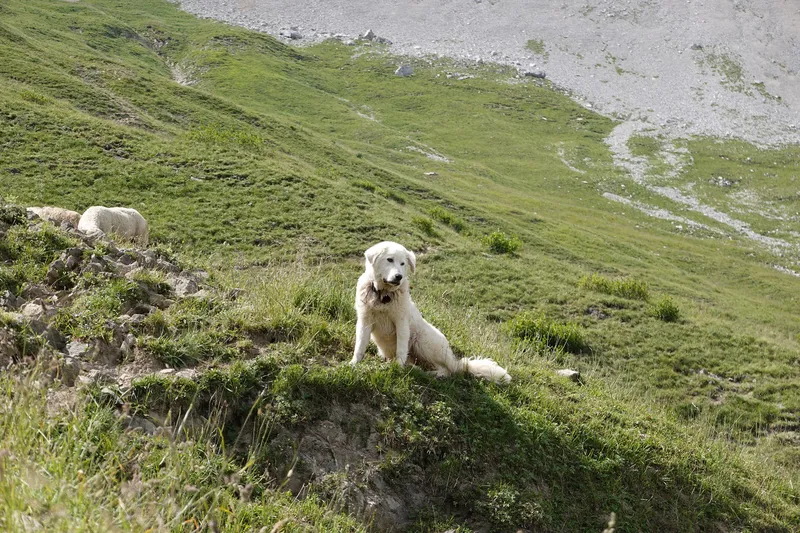
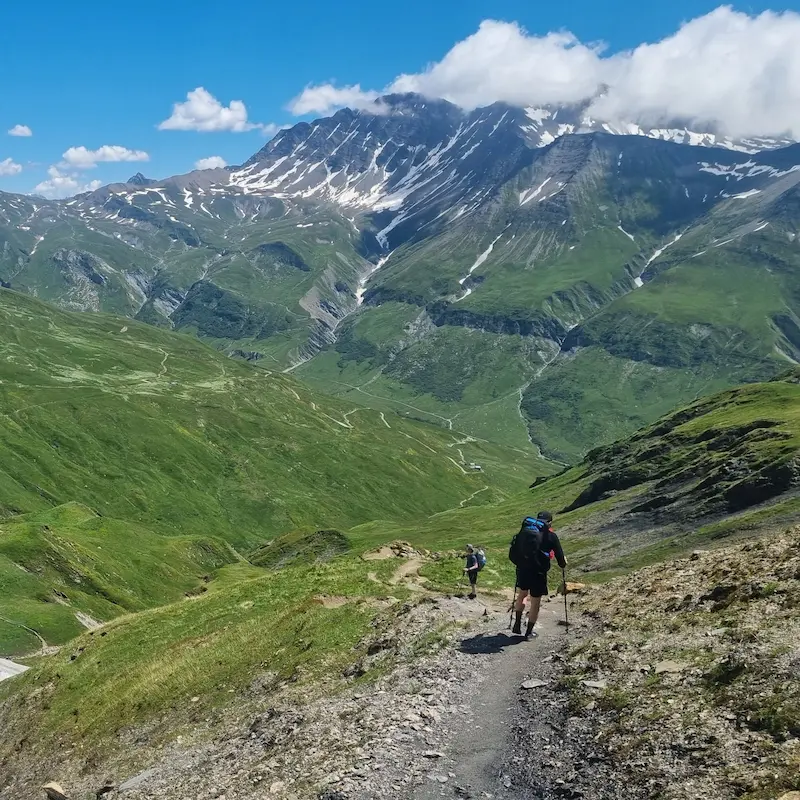
Livestock guardian dogs, also called patous, play an essential role in protecting flocks from large predators such as wolves and bears, as the French hiking federation points out. Hikers should know about these large dogs: how they behave, how to avoid meeting them and how to react when they do on a mountain hike.
The role of patous
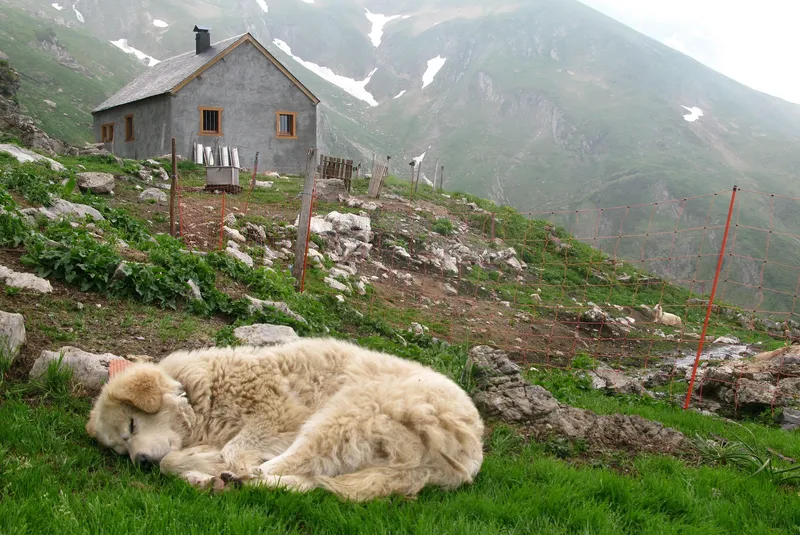
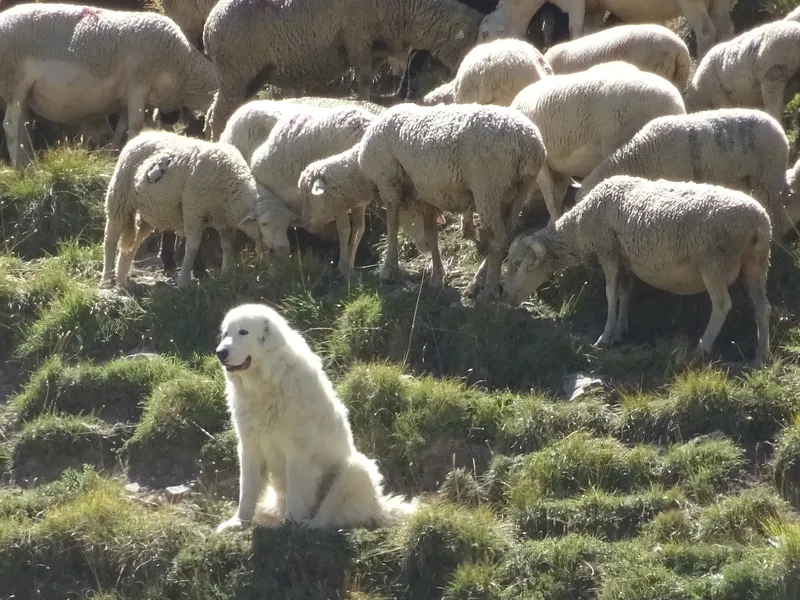
The main mission of patous is to protect flocks, especially flocks of sheep, from predators. They live with the flock at all times, so they can detect any potential danger. If a danger persists, the dog can go to meet the predator, bark loudly, look threatening and, as a last resort, attack to defend the flock (Chamonix tourist office).
Note: do not confuse guardian dogs, which watch over the flock against wolves, with working dogs, which help the shepherd move it.
Are patous a danger for hikers?
In general, a patou is not aggressive towards people: it “is not trained to be aggressive but raised to be dissuasive”, as the French State services in Haute-Savoie put it. Their purpose in life is to protect the flock (they never take their eyes off it and even sleep with the animals), to deter, not to attack the people who walk past. They can, however, react if they feel threatened or if the safety of the flock is at stake.
So it is essential for hikers to know about patous, their protective role and the right way to behave when meeting one, because incidents involving bites can happen. To avoid unexpected encounters with patous, ask the tourist offices about grazing areas before you set off.
How should you behave around patous?
If you meet a guardian dog on your hike, stay calm and follow these few tips:
- Go around the flock rather than through it, even if it is on the trail you are following.
- Watch for signs that indicate these dogs: if you see one, you are in an area where they work.
- Avoid direct contact: do not get too close to the dog, keep a safe distance and above all do not pet it. If it comes towards you, stand still and let it identify you.
- Do not provoke it: do not throw anything at it, avoid sudden gestures and do not shout. Stay calm, passive in the face of its behaviour, and talk to it quietly.
- If the dog tries to scare you, it sees you as a threat. Move away slowly and go around the flock calmly.
- Watch its behaviour: if the dog starts barking, it is signalling its presence and that of the flock; respect this and move away.
- Stay calm and do not panic: stop, stand sideways and do not look it in the eye.
- Keep your own dog on a leash if it hikes with you, where dogs are allowed, and do not pick it up as the guardian dog approaches; the FFRandonnée even advises against hiking with your dog on mountain pastures, leash or not.
Be aware: when you approach a flock, the guardian dog may come up to you until it can sniff you, sometimes barking: it is not trained to be aggressive but raised to be dissuasive. It often places itself between you and the flock and keeps barking until you have moved far enough away. This may look intimidating, but it is simply the dog doing its job.
How can hikers and guardian dogs get along?
To make hikers aware of patous and reduce incidents, the French State services in Haute-Savoie publish the right things to do.
It is also important that local authorities, farmers and hikers work together to find ways for guardian dogs and the people who use these natural areas to share them peacefully.