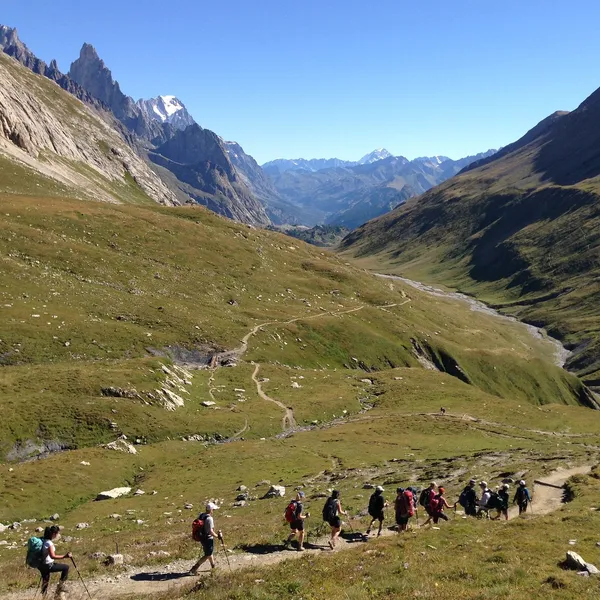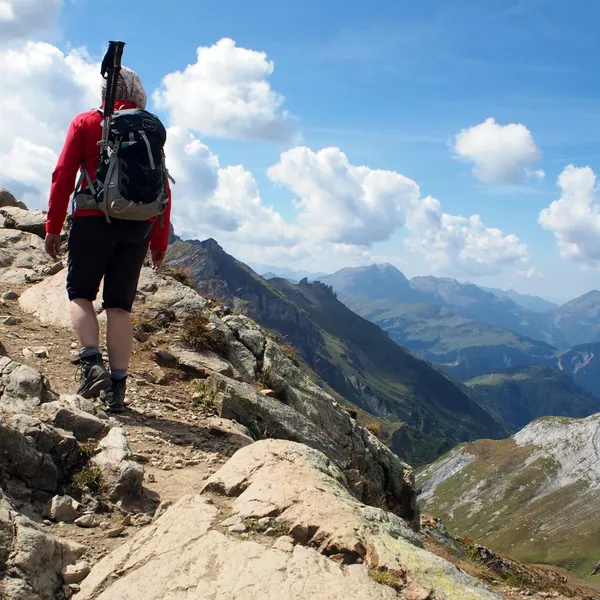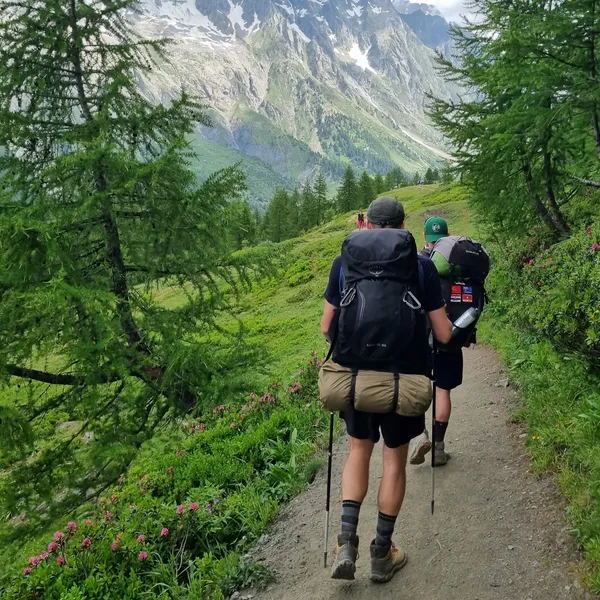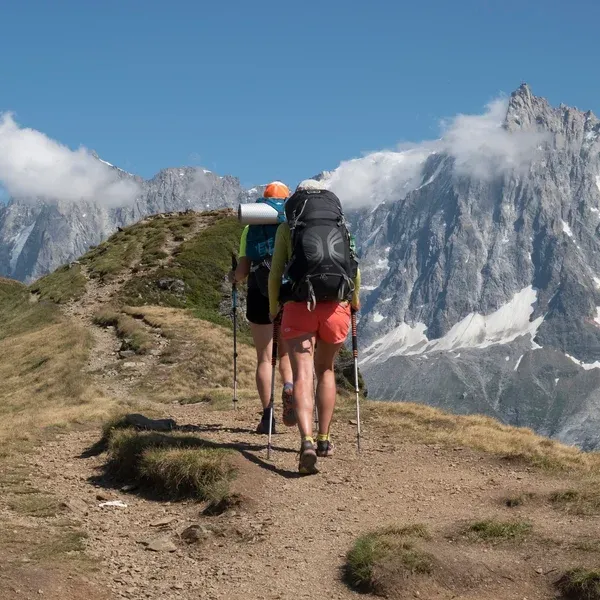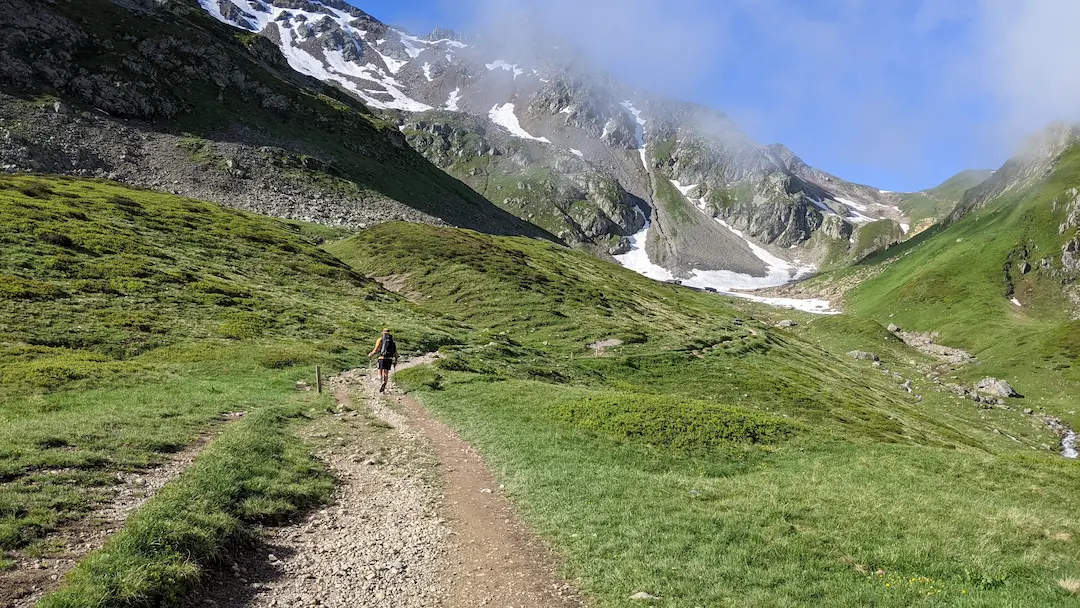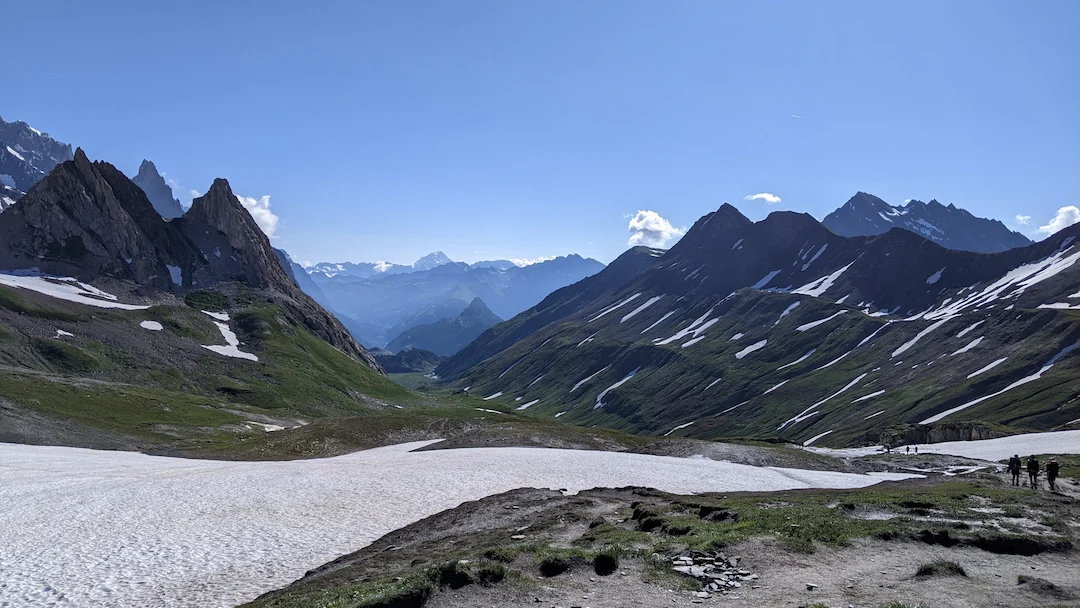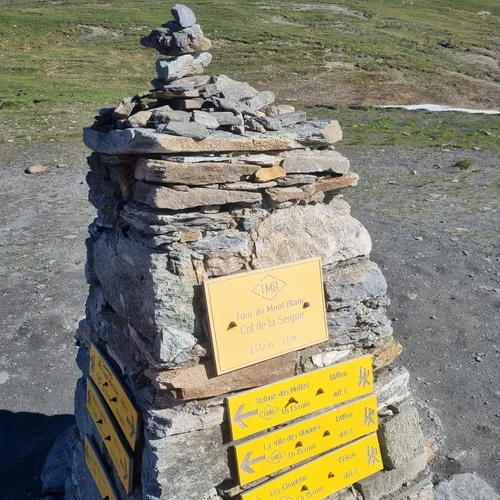
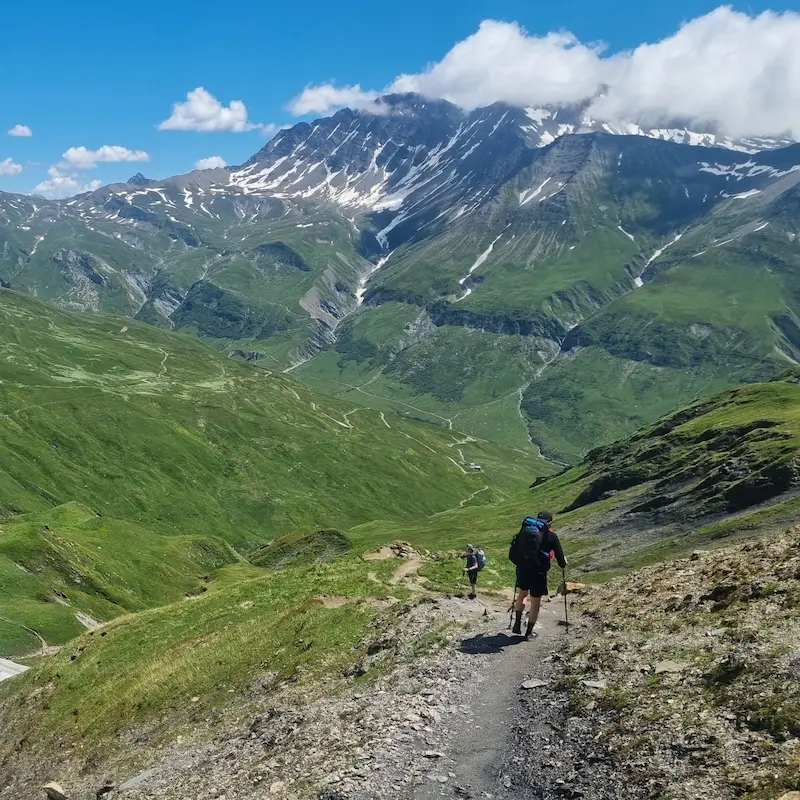
The Tour du Mont Blanc is a chain of passes: almost every day climbs from one valley to a pass, then drops into the next. The highest on the main route is the Grand Col Ferret, at 2,537 m8,323 ft; two variants reach 2,665 m8,743 ft.
We list them in the order of our 10-day itinerary, counter-clockwise from Les Houches to Les Contamines. To follow them along the route, keep the interactive TMB map open alongside this page.
What are the passes on the Tour du Mont Blanc?
Here are the passes of the main route in the order you cross them, along with the four variants (each links to its own page):
| Pass | Altitude | Country |
|---|---|---|
| Col de Voza | 1,657 m5,436 ft | France |
| Col du Tricot (variant) | about 2,120 m6,955 ft | France |
| Col du Bonhomme | 2,329 m7,641 ft | France |
| Col de la Croix du Bonhomme | 2,479 m8,133 ft | France |
| Col des Fours (variant) | 2,665 m8,743 ft | France |
| Col de la Seigne | 2,516 m8,255 ft | France - Italy |
| Grand Col Ferret | 2,537 m8,323 ft | Italy - Switzerland |
| Col de Portalo (Bovine route) | 2,049 m6,722 ft | Switzerland |
| Fenêtre d’Arpette (variant) | 2,665 m8,743 ft | Switzerland |
| Col de la Forclaz | 1,527 m5,010 ft | Switzerland |
| Col de Balme | 2,191 m7,188 ft | France - Switzerland |
| Col des Montets (variant) | 1,461 m4,793 ft | France |
| Col du Brévent | 2,368 m7,769 ft | France |
What is the highest point of the Tour du Mont Blanc?
- Main route: the Grand Col Ferret, 2,537 m8,323 ft, just ahead of the Col de la Seigne (2,516 m8,255 ft).
- Variants: the Fenêtre d’Arpette and the Col des Fours, 2,665 m8,743 ft each.
Col de Voza, the warm-up
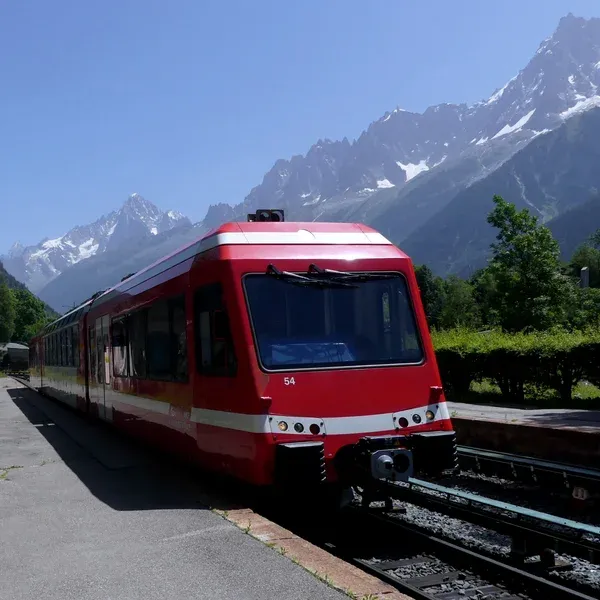
The first pass of the tour, at 1,657 m5,436 ft, is reached in 2 hours from Les Houches; the Mont Blanc Tramway also climbs there from Saint-Gervais-Le Fayet. It is a gentle climb, partly through forest, mainly a chance to find your rhythm: our first stage climbs only 640 m2,100 ft.
Strong walkers may prefer the variant over the Col du Tricot, past the Miage chalets and the Truc: a much longer day, but a much wilder one.
Col du Bonhomme, the big day at the start
This is the real difficulty of the first days: 1,200 m3,937 ft of climbing in 7 hours, the biggest ascent of our itinerary. At the Col du Bonhomme you leave the Val Montjoie behind and the peaks of the Beaufortain open out in front of you; one last effort leads to the Croix du Bonhomme. Early in the summer, snow can still cover the path.
Note that just below the pass, the Croix du Bonhomme hut is closed for works until summer 2029 (FFCAM announcement, in French). You will find neither a bed nor a meal there, so carry food for the whole day.
Col de la Seigne, the way into Italy
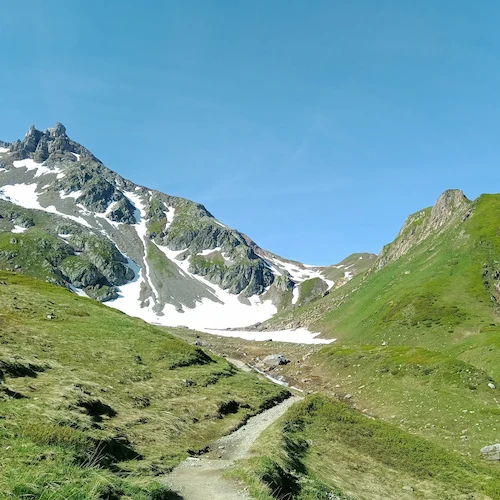
In our view, this is the most moving crossing of the tour: at the border, the view suddenly switches to the Italian side of Mont Blanc. The climb from Les Chapieux makes a moderate day (730 m2,395 ft in 5 hours); from the Les Mottets hut, allow 2 hours to the pass.
The next day, the climb to the Col de Chécrouit opens another great balcony above Courmayeur, where you can walk down or take the cable car.
Grand Col Ferret, the roof of the main route
The highest point of the route is reached from the Elena hut, at the head of the Italian Val Ferret: 725 m2,379 ft of climbing over the stage to La Fouly, in 5 hours. At the pass, you leave the Grandes Jorasses behind for the gentler pastures of the Swiss Val Ferret.
Bovine or the Forclaz, on the way to Trient
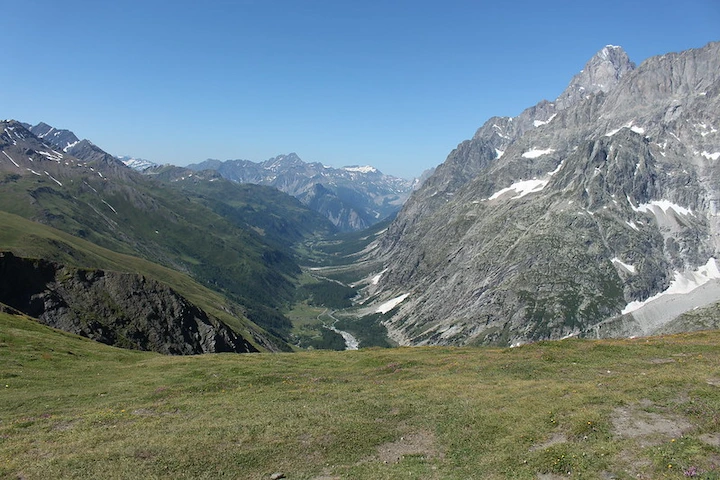
Between Champex and Trient, the route goes over the Bovine pasture and the Col de Portalo, facing the Rhône valley and the Bernese Oberland, then drops to the Col de la Forclaz. With 760 m2,493 ft of climbing in 5½ hours, it is the option we recommend to anyone who would rather skip the Fenêtre d’Arpette, especially families.
Col de Balme, back in France
On the French-Swiss border, the Col de Balme offers, in our view, one of the finest viewpoints on the Mont Blanc range. The climb from La Forclaz is long (1,000 m3,281 ft in 6½ hours): the Col de Balme hut, right at the pass, is perfectly placed for a break. The Compagnie du Mont-Blanc lifts also run up there in summer from Le Tour.
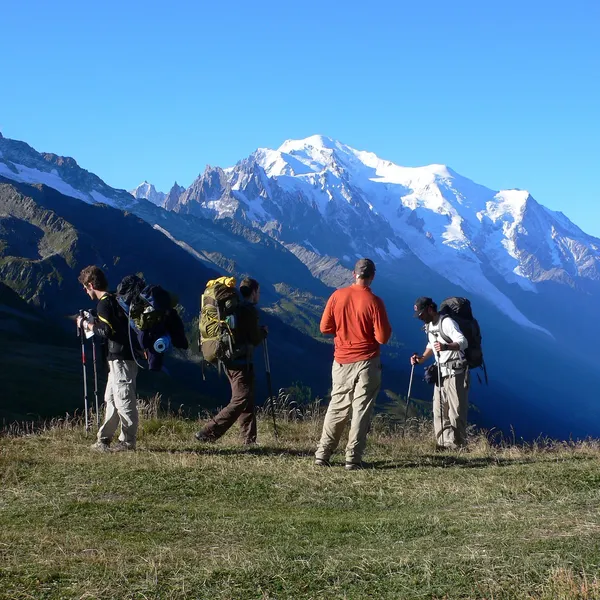
Col du Brévent, the last one
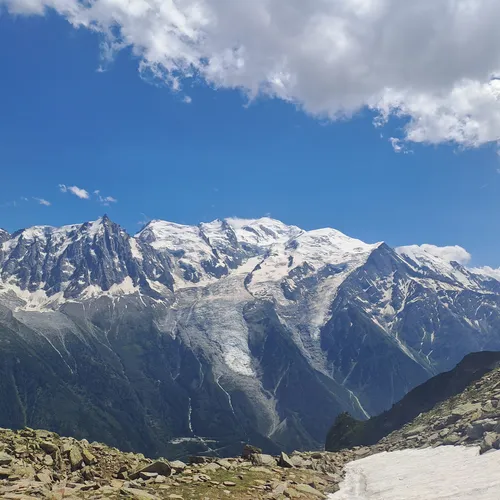
The last pass of the tour is also one of the finest balconies: from Planpraz to Les Houches, Mont Blanc stays in front of you all day. Do not confuse it with the Brévent summit, higher up, where the cable car goes. The stage climbs 515 m1,690 ft in 6 hours, and the Planpraz gondola can spare you the climb from Chamonix.
What are the passes on the TMB variants?
- Fenêtre d’Arpette: the most spectacular, but a demanding and exposed variant, with 1,938 m6,358 ft of climbing over the day. Avoid it in bad weather.
- Col des Fours: as high as the Arpette, with a fine descent towards the glacier valley and the Les Mottets hut; 1,080 m3,543 ft of climbing.
- Col du Tricot: the longest variant, 30 km18.6 mi and 2,653 m8,704 ft of climbing from Les Houches to the La Balme hut.
- Col des Montets: the shortest variant, from Argentière to Vallorcine through the Aiguilles Rouges reserve, 550 m1,804 ft of climbing.
With a light pack, the Arpette becomes much more manageable, and that is what our self-guided tours offer: your luggage is transported from stage to stage. Both our 8-day and 12-day tours cross the Fenêtre d’Arpette:
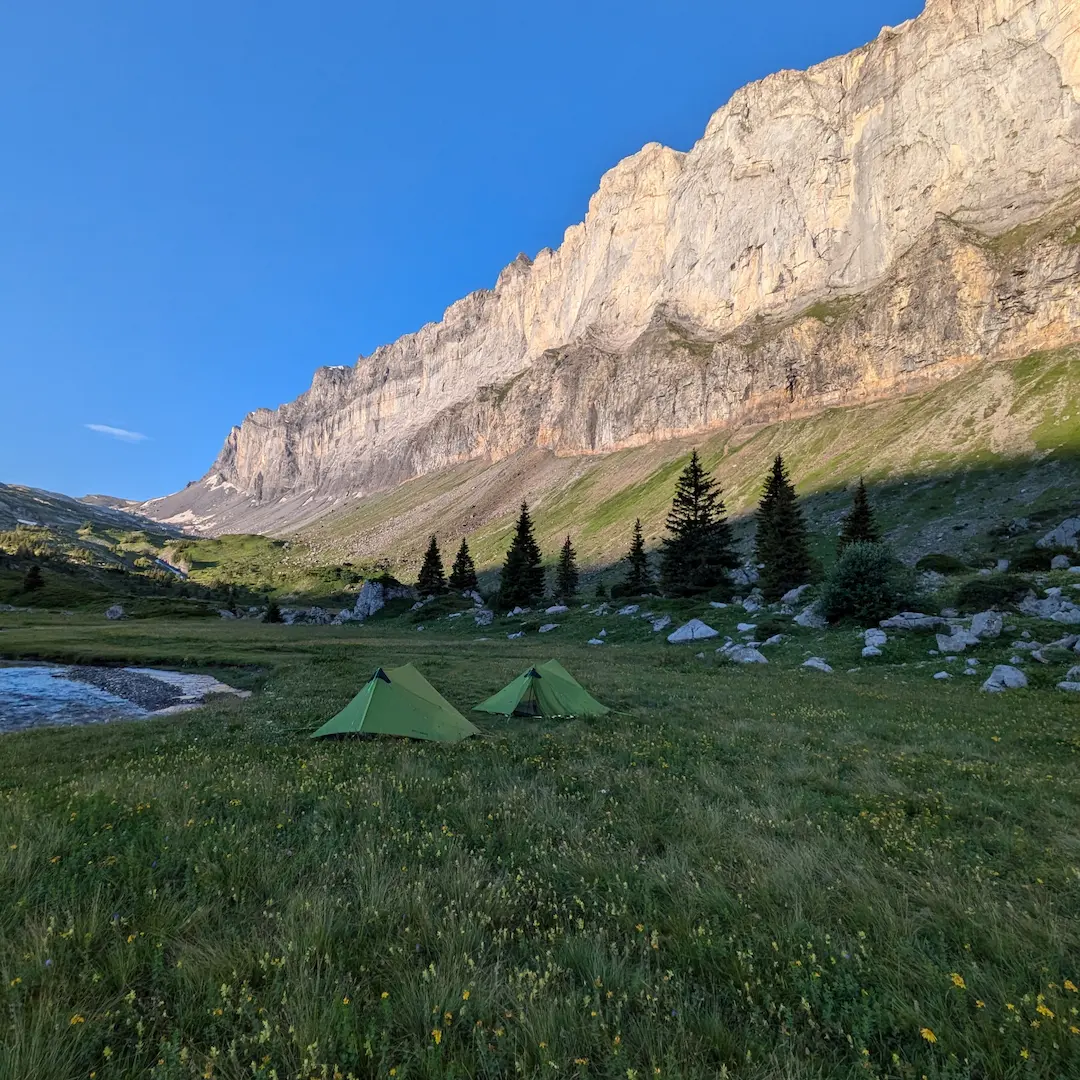
If you plan to camp, the rules change from one country and one altitude to the next: read our article on camping on the TMB before pitching a tent near a pass.
When are the TMB passes free of snow?
Allow for late June or early July. Before that, passes can stay snowy and the crossing can become tricky: light crampons, trekking poles and sometimes an ice axe are then useful. The hut season runs from mid-June to mid-September.
To choose your dates, see the best time to hike the TMB, and to check snow conditions before you leave, our article on TMB training and preparation.
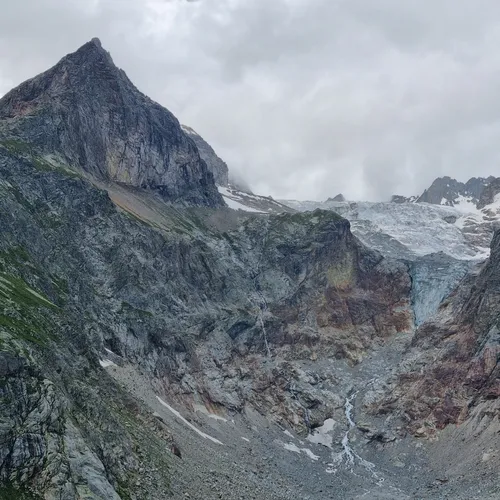
TMB Classic 8 Days - Self-Guided
Classic Tour du Mont Blanc in 8 days, self-guided. 84 km52 mi trek through France, Italy and Switzerland with hotel accommodation and luggage transport.
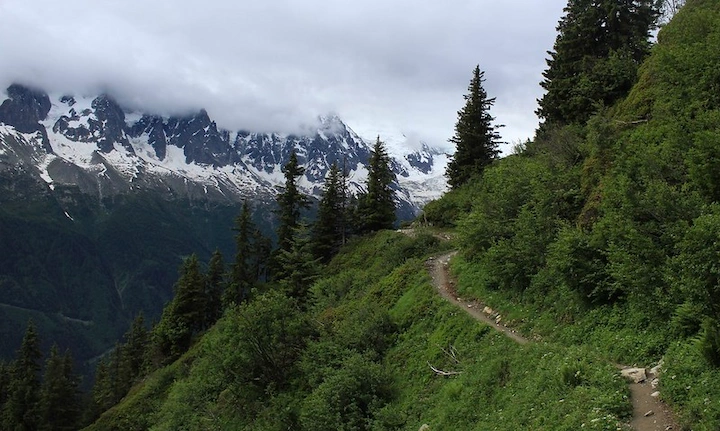
TMB Classic 12 Days - Self-Guided
Complete Tour du Mont Blanc in 12 days, self-guided. 120 km75 mi trek through France, Italy and Switzerland with hotel accommodation and luggage transport.