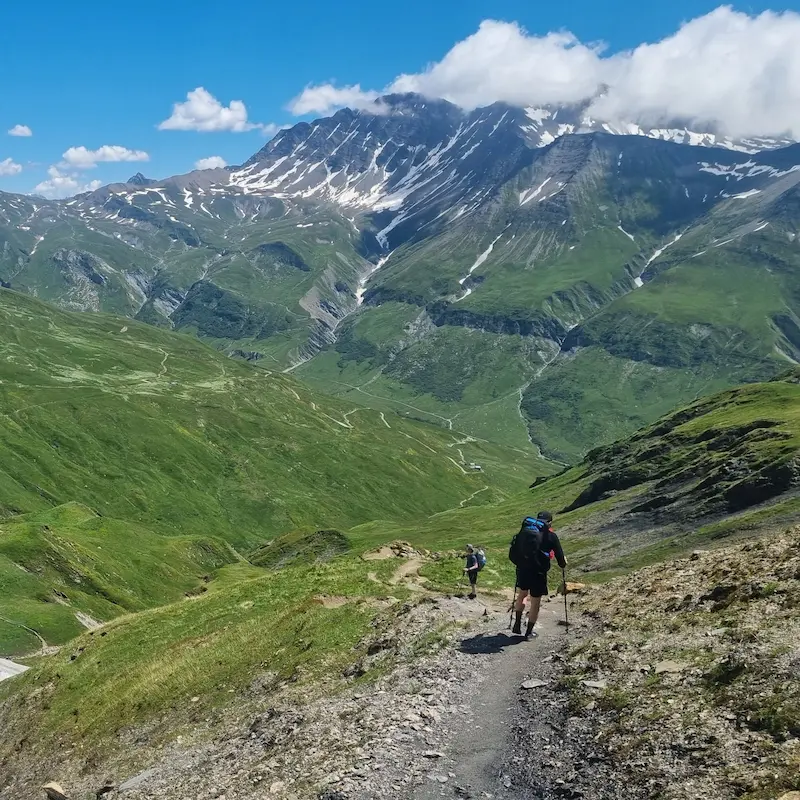
The evening in a refuge is often the best part of the day on the Tour du Mont Blanc. Packs off, you meet the hikers you passed on the trail out on the terrace, raise a glass facing the peaks, then everyone sits down to dinner together.
A mountain hut, or refuge, is neither a hotel nor a gîte: you share the table, the dormitory and often the lack of phone signal. A few customs and a little preparation are all it takes to make the most of these evenings.
What is an evening in a TMB refuge like?
Refuge life is communal and simpler than at home, and that is its charm. Arrive before 5 pm if you can: you will avoid the queue for the shower and be ready for drinks and dinner. Tell the warden as soon as you walk in. Walking boots stay in the boot room by the entrance, and Crocs are waiting for you for the evening.
Every refuge sets its own times, but a typical evening goes like this:
- Late afternoon: you arrive, settle into the dormitory as soon as it opens, then shower.
- Pre-dinner drinks: hikers gather before dinner, on the terrace when the weather is good or inside, over a beer or a glass of wine. It is when you go back over the day’s stage and compare notes on tomorrow’s.
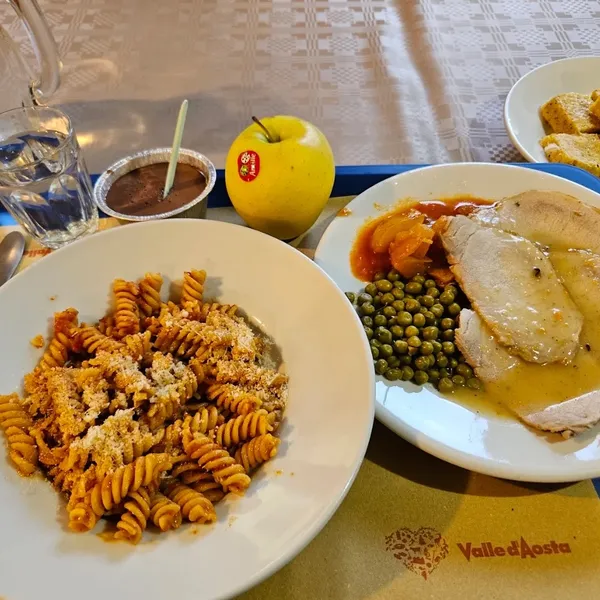
- Dinner: usually served around 7 pm, shared, with a single set menu, often at long tables with other groups.
- Evening: pack your bag for the next day, then quiet in the dormitory, usually from 9 to 9.30 pm.
- Breakfast: early, so you can set off in good time; fold your blankets and pack your liner before you leave.
At the table you eat what is served, like everyone else, and you help set and clear: that is the custom.
Can’t make it? Cancel your night with a simple phone call: your bed will go to another hiker, and the warden will not worry about your absence.
What should you bring to sleep in a refuge?
A sleeping bag liner is compulsory in every refuge on the tour, in France, Italy and Switzerland alike, from Bonatti to the Relais d’Arpette. Blankets and pillows are provided, but you sleep in your own liner.
Worth packing for the night:
- A headlamp and a charged power bank: a refuge may not be on the electricity grid, or may run on solar power with limited electricity. Recharging your phone there is not guaranteed.
- Earplugs: a dormitory is never completely silent.
- Warm spare clothes for the evening on the terrace.
The rest of the kit is covered in our TMB gear list, and the choice between refuge, gîte and hotel in our article on where to stay on the TMB.
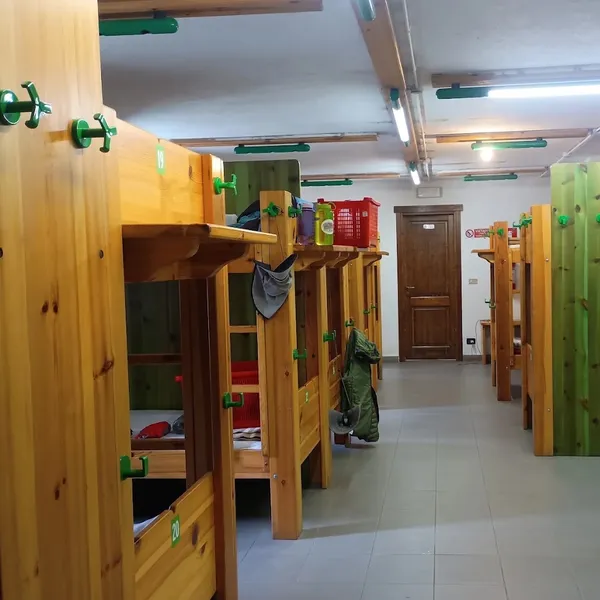
How comfortable is a refuge?
Comfort varies from one refuge to the next, but the same rules apply almost everywhere:
- Showers: often paid for (a token or a supplement) and short, because hot water is limited. Arriving early saves you the queue.
- Wi-Fi and phone signal: as a rule, there is no Wi-Fi for hikers. When a refuge has it, it keeps it for bookings and emergencies. Phone signal may be weak or absent: tell your family you will be out of reach on some evenings.
- Charging: few sockets, shared by everyone; rely on your power bank.
- Towel: rarely provided, a microfibre towel is enough.
With children, most refuges offer a reduced rate, and some have family rooms or small dormitories: ask when you book. Refuges very often have board games and books, and sometimes a few outdoor activities for children: enough to keep them busy before and after dinner.
How do you pay in a refuge?
Carry cash. In the vast majority of refuges on the tour, you pay in cash: cards are not accepted, or only work when the connection allows. The night, meals, the next day’s packed lunch and drinks are all paid on the spot.
In Switzerland, you pay in Swiss francs. Euros are often accepted, with change given in francs, and cards work more often than in France or Italy, though not everywhere: ask when you book.
How do you respect the refuge and your dormitory neighbours?
- Carry your waste back down: do not empty yours into the refuge bins, everything that came up must go back down to the valley. Some refuges really appreciate help taking their own waste down: offer it to the warden as you leave.
- Water is precious: it is for drinking first, then for a quick wash. Do not flush wet wipes or other products down the toilets.
- Respect other people’s sleep: pack your bag the night before, use your headlamp and keep conversations for the terrace.
What are the best refuges on the Tour du Mont Blanc?
Some refuges stay with you longer than others, for their view or their setting. Here are our favourites, in the classic direction of the tour.
In France
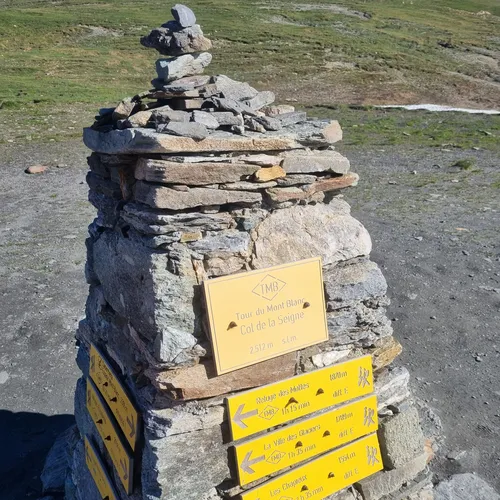
Above Les Contamines-Montjoie, Refuge de Nant Borrant is a traditional 19th-century chalet with a flowered terrace. Further on, Refuge des Mottets, a former mountain-pasture chalet in the Vallée des Glaciers, waits at the foot of the Col de la Seigne.
In Italy
Just after the Col de la Seigne, Rifugio Elisabetta Soldini is your first night in Italy, in the Val Veny. Above Courmayeur, Rifugio Bertone has a panoramic view of Mont Blanc, and Rifugio Bonatti faces the Grandes Jorasses and the Fréboudze glacier in the Val Ferret.
In Switzerland and back towards Chamonix
The Relais d’Arpette offers the quiet of the Val d’Arpette and its terrace, above Champex-Lac. On a variant near the end of the tour, Refuge du Lac Blanc sits in the heart of the Aiguilles Rouges, facing Mont Blanc.
All our accommodation pages along the route are gathered on the TMB refuge map.
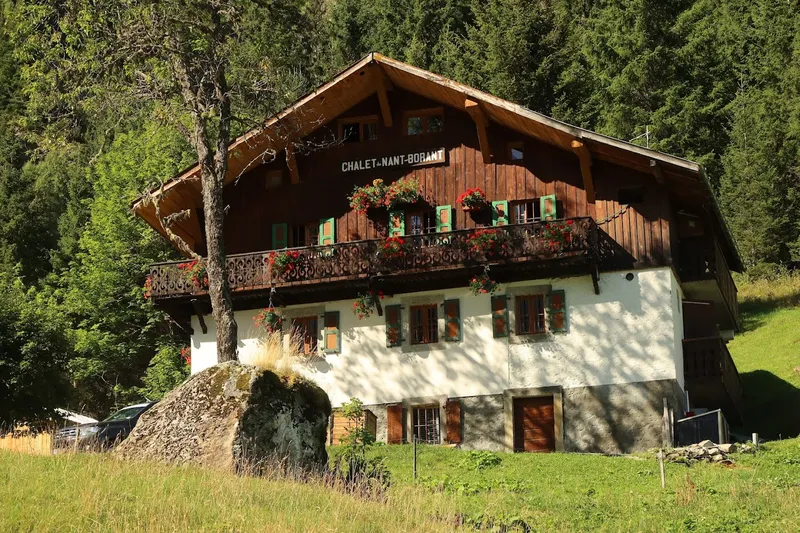
Refuge De Nant Borrant (1459m), Les Contamines - France
Traditional chalet in Les Contamines offering comfort and refreshments on the Tour du Mont Blanc.
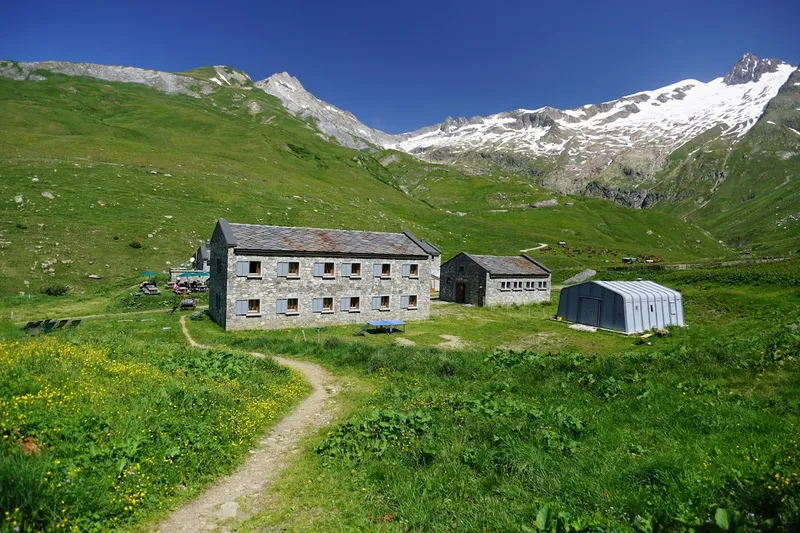
Refuge Des Mottets (1864m), Bourg Saint Maurice - France
Charming chalet in the Glacier Valley in Bourg Saint Maurice, on the Tour du Mont Blanc.
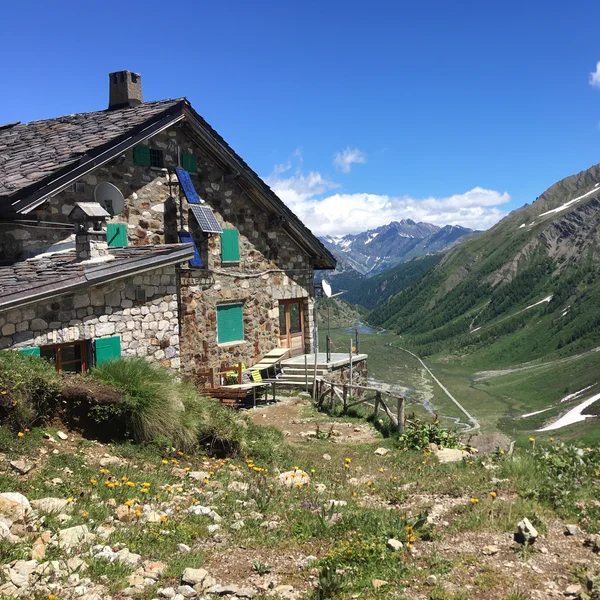
Rifugio Elisabetta Soldini (2195m), Courmayeur - Italy
Refuge at 2195m in the Val Veny, at the foot of the Col de la Seigne, where the Tour du Mont Blanc enters the Aosta Valley.
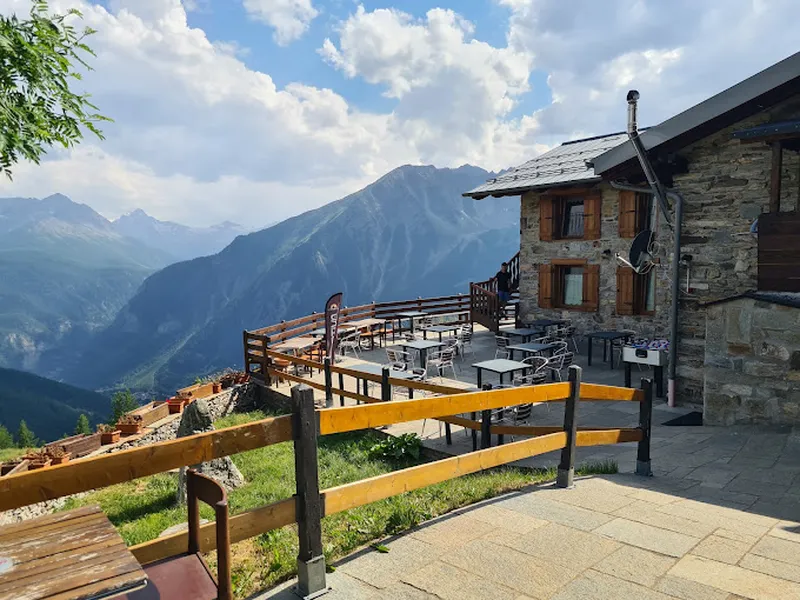
Rifugio G. Bertone (2000m), Courmayeur - Italy
Italian refuge in Courmayeur offering stunning views of Mont Blanc.
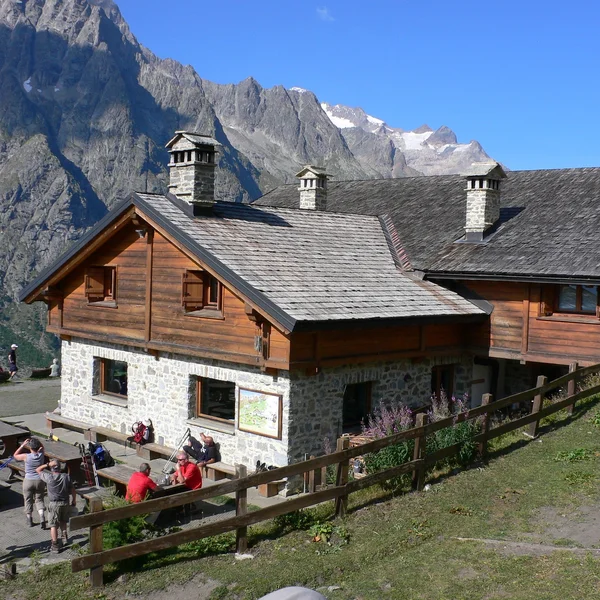
Rifugio Walter Bonatti (2025m), Courmayeur - Italy
Refuge at 2025m in the Italian Val Ferret, at the foot of the Grandes Jorasses and facing the Fréboudze glacier, a stop on the Tour du Mont Blanc.
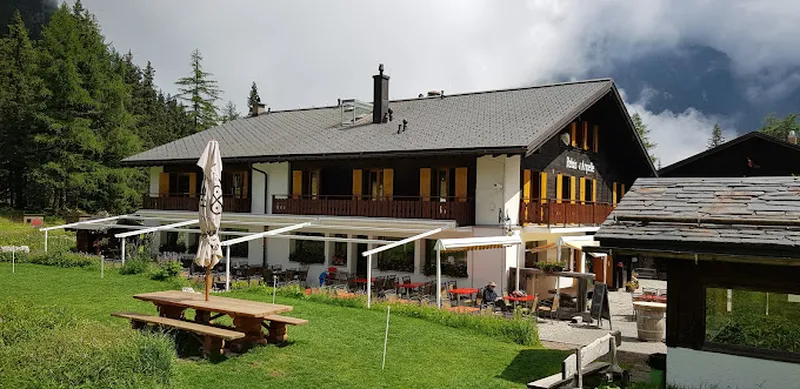
Relais D'Arpette (1630m), Champex-Lac - Switzerland
Relay with wild and soothing charm in Champex-Lac, Switzerland, on the TMB.
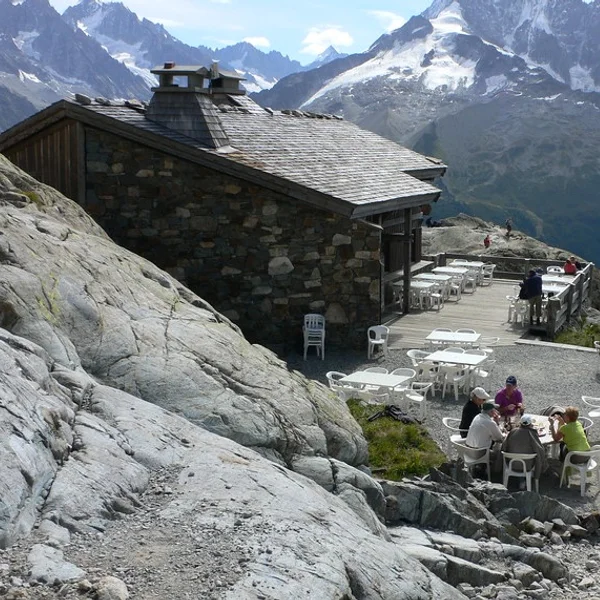
Refuge Du Lac Blanc (2352m), Chamonix - France
Refuge at 2352m above Chamonix, at the heart of the Aiguilles Rouges nature reserve, facing Mont Blanc, its glaciers and its needles.